When honoring a loved one’s life with a meaningful service, it’s important to find ways to tap into the essence of who they were as a person. By adding personalized elements, you can really celebrate and lovingly remember what made them who they were. One way to add a special touch to any final tribute is to choose musical selections and funeral songs that align with your loved one’s personality, beliefs, or preferences.
You may not know where to start when choosing meaningful music, so we’ve compiled a list of funeral songs for your review. You will find songs of many genres – spiritual, classical, rock, country, and more. Browse through the list and review the articles that best fit your loved one’s lifestyle and musical preferences. May you find the perfect songs to salute your loved one’s life and highlight what made them unique and loved.
By Style or Genre
In this section, you will find songs from different types and styles of music. If something appeals to you, simply click on the heading to review the songs.
If your loved one found more comfort in modern praise and worship songs (or enjoyed a range of spiritual genres), these more modern Christian songs could add an element of hope and peace to the service.
Loved by millions around the world, country music has established itself as a musical genre that speaks to the heart in a poignant way. If your loved one had an affinity for country music, check out this list of 12 funeral songs.
Classical music transcends and brings out emotions that are resting just below the service. If your loved one enjoyed classical music or was a classical musician, you might consider including one of these lovely songs in their funeral ceremony.
With songs from multiple genres, this list encourages you to pick what feels like the most appropriate tribute. There’s no right or wrong when choosing music for a loved one’s service. There’s only what reflects who they were as a person.
By Decade
Did your loved one gravitate toward a particular decade of music? That could be another way to choose music to honor your loved one’s life. In this section, you will find beloved songs from each decade that could also serve as a beautiful tribute.
The 1940s saw the beginning of new things in the music industry. The decade included everything from stirring ballads of wartime sorrow to Big Band music and the blossoming careers of artists like Bing Crosby and Frank Sinatra. The 1940s offers a bounty of beautiful songs to choose from.
With the rise of artists like Elvis Presley, Nat King Cole, and Buddy Holly, the 1950s introduced a new sound. For loved ones who grew up during this decade or had a particular affinity to it, consider checking out these funeral songs.
With instantly recognizable classics, this list includes popular hits by Ben E. King, Elvis Presley, Johnny Cash, and The Beatles. If you are looking to add a little more groove to a loved one’s final tribute, this list may provide you with a few song ideas.
From Simon & Garfunkel to John Denver, this curated list provides you with 9 stunning options for a celebration of life. Whether your loved one grew up in the 70s or came to appreciate its music later, you are sure to find a song to honor their life in a meaningful way.
The 1980s brought a distinct sound with it, and for many, it’s the anthem of their youth. On this list, you will find heartfelt tunes from Cyndi Lauper, Bette Midler, Queen, and others. Perfect for any 80s aficionado, browse the list to see if anything reflects your loved one’s unique life.
Hopefully, this compilation of musical selections helps you find music that sets the tone for your loved one’s final tribute. And if you’d like more information about personalizing the funeral, check out these resources.
Music is an important element of a funeral ceremony because it helps us process feelings that are difficult to put into words. As Dr. Alan Wolfelt tells us, music imprints itself on our hearts more than any other experience in life. For people of faith, these feelings are often best expressed in hymns, which are songs of devotion or praise to God. If you are looking for timeless songs of faith to honor the life of a loved one, you may want to consider using one of these 10 beautiful hymns.
1. It is Well With My Soul (written by Horatio Gates Spafford, 1873)
When peace like a river attendeth my way,
When sorrows like sea billows roll;
Whatever my lot, thou hast taught me to say,
“It is well, it is well with my soul.”
Spafford’s devout hymn was composed in the midst of great tragedy. In 1873, he and his family planned to visit England via steamship, but Spafford was delayed due to business responsibilities. His wife and four daughters went ahead of him, but tragically, he received a telegram from his wife informing him that their ship had sunk in the Atlantic and their four daughters had all perished.
In the aftermath of the event, Spafford wrote one of the most memorable of all hymns. Devoid of bitterness, the song is a testament to the level of Spafford’s faith even in the worst of times. His firm belief in the return of the Lord, vividly described as a day when the clouds will be “rolled back as a scroll,” is a beautiful sentiment that reminds Christian believers of the true home ahead.
2. Great is Thy Faithfulness (written by Thomas O. Chisolm, 1923)
Great is Thy faithfulness! Great is Thy faithfulness!
Morning by morning new mercies I see;
All I have needed Thy hand hath provided
Great is Thy faithfulness, Lord, unto me!
After the loss of a loved one, people often experience disorientation and confusion. How do we respond to loss, and how do we find a way to move forward in our own lives? When a loved one dies, so much changes in our lives, and the natural response is to find something to cling to. For many people, that thing is their faith.
The words of this 20th century hymn provide a reminder that some things are constant in the world. People of faith will find great comfort in singing, “Thou changest not, Thy compassions, they fail not, / As Thou hast been, Thou forever wilt be.” While nothing can take away the pain of loss, this hymn reminds us that some things in life, like God and His love, always stay the same.
3. I Need Thee (written by Annie Hawks and Robert Lowry, 1872)
I need Thee, oh, I need Thee;
Every hour I need Thee;
Oh, bless me now, my Savior!
I come to Thee.
In times of grief and loss, leaning on faith can become even more important. The lyrics say, “Every hour I need thee.” Not monthly, weekly, or daily. Hourly. The speaker requires the assistance of the Lord in every activity and situation to see it through to completion. Every step of the journey is difficult and requires the presence of God.
A cry of devotion in times of hardship, this 19th century favorite touches on themes of perseverance, faith, suffering, and comfort. Funeral attendees may view this song as a request for God’s guidance through every stage of the grief journey. The acknowledgement of God’s presence encourages mourners as they prepare for a new way of life and set out on the road to healing.
4. Abide With Me (written by Henry Francis Lyte, 1847)
Abide with me, fast falls the eventide;
The darkness deepens; Lord, with me abide.
When other helpers fail and comforts flee,
Help of the helpless, O abide with me.
Faced with tuberculosis and the knowledge of his impending death, 54-year-old Henry Francis Lyte used his time of illness as an opportunity to write one of the most beautiful and well-loved of all hymns. Not surprisingly, it has become a popular choice for spiritual funerals.
The fact that Lyte was so close to death’s door makes this reflection on mortality and his personal relationship with God all the more powerful. But the song appeals not only to those nearing the end of their days, but also to mourners who are facing the end of life with their loved one’s presence. Even as “the darkness deepens,” God answers the heartfelt request that He remain near.
5. ‘Tis So Sweet to Trust in Jesus (written by Louisa Stead, 1882)
‘Tis so sweet to trust in Jesus,
Just to take Him at His word;
Just to rest upon His promise;
…to know, Thus saith the Lord.
Like most of the hymns on this list, this 19th century classic gives mourners a source of stability, a rock to lean on in times of hardship. Funeral audiences can find peace of mind in the knowledge that the stress, fear, and doubt that often accompany a loss are in the hands of a higher power.
Stead suggests that there is no need to hold on to anything or to assume a heavy burden. Our sole responsibility is “Just from Jesus simply taking, / life, and rest, and joy, and peace.” While this assurance does not eradicate the pain of loss, it does provide some comfort and can serve to alleviate the guilt, frustration, and stress people often wrestle with on the road to healing.
6. Guide Me, O Thou Great Redeemer (written by William Williams, 1745)
Guide me, O thou great redeemer,
Pilgrim through this barren land;
I am weak, but thou art mighty,
Hold me with thy powerful hand.
William Williams frames his most famous hymn in terms of a journey. Throughout all three stanzas, he asks God to guide him on his course. In the first stanza, he is a pilgrim wandering through a barren land. In the second, he uses imagery from Exodus 13, asking God to bring fire and a pillar of cloud to lead the way. And in the third, he is traveling across the Jordan to get to the land of Canaan.
All three images correlate to the path that the mourner takes on his grief journey. Williams’ steadfast reliance on God during times of painful and frightening transition is relatable to mourners, making this three-and-a-half-century-old hymn as timely and relevant as the day it was written.
7. In the Sweet By and By (written by Sanford Fillmore Bennett, 1868)
There’s a land that is fairer than day,
And by faith we can see it afar;
For the Father waits over the way
To prepare us a dwelling place there.
This hopeful and faith-driven song communicates a sense of peace to the listener by drawing upon imagery of another, happier land. For funeral audiences, the song’s words of a faraway shore imply that loved ones are at peace with the Lord. While this knowledge doesn’t take away the pain that mourners feel, it offers some light during a difficult time.
Bennett claims that after death, “Our spirits shall sorrow no more, / Not a sigh for the blessing of rest.” This emphasis on rest and peace encourages loved ones and provides them with inner strength as they work through their grief.
8. Leaning on the Everlasting Arms (written by Anthony J. Showalter and Elisha Hoffman, 1887)
What have I to dread, what have I to fear,
Leaning on the everlasting arms?
I have blessed peace with my Lord so near,
Leaning on the everlasting arms.
When it comes to comforting hymns, this beautiful song of surrender is unmatched. The three stanzas, accompanied by a simple refrain, contain everything that you could want in a song for a religious funeral: a gorgeous melody, a modest length, and reassuring words of peace. Leaning on the Everlasting Arms is to religious hymns what Psalm 23 is to religious writing. It is a perfect lyrical distillation of the human soul’s devotion to God.
For mourners faced with the emotional exhaustion that accompanies the loss of a loved one, it’s a blessing to hear that one can lean on the everlasting arms of God and rest “safe and secure from all alarms.” The theme of security applies equally well to those who are living and to those who have passed on. God’s love and peace is available in the here and now, as well as in the hereafter.
9. Amazing Grace (written by John Newton, 1779)
When we’ve been there ten thousand years,
Bright shining as the sun,
We’ve no less days to sing God’s praise
Than when we’d first begun.
Probably the most famous of all hymns, this song of redemption penned by a slave-trader-turned-abolitionist has captured the hearts of countless Christians. While certain stanzas dealing with sin and repentance may seem less suited to a funeral audience, the song’s reputation as a Christian anthem makes it a great choice for any religious event.
And there’s no doubt that the final stanza, with its beautiful depiction of the afterlife, will speak directly to mourners. Amazing Grace taps into the essence of what it means to believe in God, and the universal love that believers bestow on it indicates that it is a powerful representation of faith. For a funeral ceremony, you may want to consider singing at least a few stanzas of this masterpiece.
10. I’ll Fly Away (written by Albert E. Brumley, 1929)
Just a few more weary days and then,
I’ll fly away;
To a land where joy shall never end,
I’ll fly away.
This extremely popular gospel song speaks to our desire for peace and how death is a time of joy and rest. By framing life’s transience in a positive light, the song encourages us to see the full scope of the story, the larger picture. The troubles and pains of this life are but a tiny moment in time compared to the eternal land that awaits.
The upbeat melody conveys not only joy and peace, but also confidence and steadfastness. “I’ll fly away” is not spoken as a mere possibility but as a true reality. To sing this familiar gospel song in a funeral setting is to feel the pain of absence while simultaneously receiving the assurance that the spirit of a loved one has “flown away” to be with the Lord.
This list is far from comprehensive, so if you didn’t find a hymn that speaks to your heart, that’s okay. Look at songs in your faith tradition. What hymns did your loved one often sing? Are there any hymns that came up often in church or at home? No matter what they are, choose the hymns that best reflect your loved one’s life, personality, and beliefs.
When someone you know loses a loved one, how can you support them and share your condolences? Sympathy flowers are a great way to show support to a grieving family. As Dr. Alan Wolfelt tells us, symbols such as flowers convey love and help us express our emotions.
For centuries, people have assigned symbolic meanings to flowers. While the general message of a sympathy flower will be understood in any context, individual types of flowers can communicate slightly different meanings. For this reason, we’ve decided to explore the meanings of seven of the most popular types of funeral flowers.
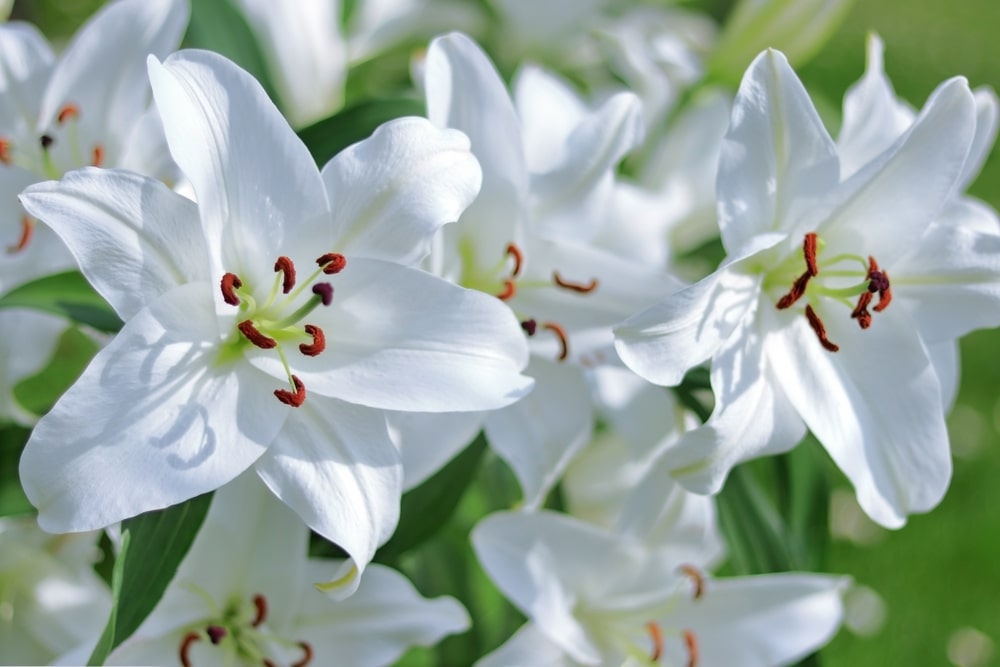
1. Lilies
This lovely flower usually blooms in summer and is often interpreted as a symbol of renewal and rebirth. The lily can be a powerful symbol of a loved one’s spirit, offering hope and encouragement to a grieving family.
The idea of rebirth and renewal is particularly applicable for people of faith who believe they’ll someday be reunited with their loved one. The white color of the lily also carries associations with purity and youth, making it a good choice for someone who died at a young age.
2. Roses
This enormously popular flower has very different meanings associated with different colors. Like the lily, white roses represent purity and innocence. Pink and peach roses represent sincerity and gratitude. You could give them to a family whose loved one was a blessing in your life. The yellow rose is a symbol of friendship that expresses your support. All these colors of roses make great sympathy gifts for a grieving family.
3. Carnations
The carnation is a symbol of love. Some people believe that the word “carnation” came from “incarnation,” the Latin word that refers to God in the flesh. With this in mind, you can give a carnation as a gift to a family to honor a life that reflected the spirit of Christ.
More generally, carnations can express love for the family or the loved one who has passed. And since the carnation is the traditional flower of Mother’s Day, it can be the perfect choice to honor the life of a person who was a great mother to her children.
4. Hyacinths
Much like roses, different colors of hyacinths have different meanings, but the purple hyacinth is a popular symbol of sorrow and regret. Sometimes, a simple acknowledgment of the family’s grief is enough. These beautiful flowers let the family know that you are aware of their suffering and that you care. They communicate the pain that you feel upon hearing of their loss, and this simple sentiment is often just what the family needs.
5. Chrysanthemums
This gorgeous flower has a variety of meanings, but many people use it as an expression of support or encouragement to “get well soon.” In some European countries, the chrysanthemum is placed on graves and viewed as a symbol of death.
Fusing the more positive American associations with the European emphasis on mourning, we find a perfect balance between mourning and hope. A symbol of death but also support, a chrysanthemum can encourage the grieving family during this difficult time.
6. Gladioluses
The gladiolus is a beautiful representation of strength and character. By giving a grieving family this flower, you essentially remind them of their loved one’s strength and encourage them to persevere on their grief journey.
As a sympathy gift, the gladiolus does not ignore the pain of loss and communicates your compassion. But it’s also an uplifting reminder of the grieving family’s and their loved one’s strength, which can encourage them as they adjust to their new normal.
7. Forget-Me-Nots
The meaning of these tiny flowers is pretty easy to decipher. An emblem of remembrance, the forget-me-not communicates this simple but essential message to a family: your loved one lives on in our memories.
We tend to shy away from painful emotions, and for this reason, we often avoid the topic of a loved one’s death to spare the family additional discomfort. While this approach is well-intended, it’s often unhelpful. These lovely flowers let the family know you won’t forget their loved one and their impact on your life.
As you look at your options for sympathy flowers, think about ways to personalize your gift. You could opt for the deceased’s favorite flower or choose a classic flower in their favorite color. You can include a sympathy card or condolence letter with your gift. However you choose to share your condolences, let the family know that you’re there to support them while they’re grieving.
The technological developments of the 21st century have touched every aspect of our lives, including how we deal with loss and grief. The rise of social media, livestreaming, and other new technology has changed how we interact with each other, which has affected the way we navigate our grief journeys.
These advances in technology have the potential to aid us in the grieving process. As you navigate your new normal and work to understand your grief, here are a few ways technology can help.
1. Post Obituaries Online
The days when obituaries were only printed in the newspaper are long gone. Most funeral homes now post obituaries on their websites, which makes it easier for friends and family who aren’t nearby to read the obituary, share condolences in an online guestbook, donate flowers, and more. These online obituaries make it easier to share service information with friends and family and have a place where your loved one’s memory will live on.
2. Announce the Loss
After a loss, it’s important to find a way to communicate the news of the death as efficiently as possible. Of course, those closest to the deceased, like family and close friends, should be told in person, but online obituaries and social media sites allow the information to go out to the deceased’s entire social network of friends. That keeps you from making the painful announcement multiple times to different groups of people. Once you are sure that everyone closest to the deceased has been informed in person or by phone, announce the loss on social media.
3. Receive Social Support
Social media allows you to receive the support of loved ones both near and far. Friends can share caring words, condolences, and memories on social media. You can turn your loved one’s account into a memorial page, which mourners can return to from time to time to express their feelings and remember the impact your loved one had. This online support network can benefit you as you begin your grief journey.
4. Set Up a Memorial Website
You may wish to do more than a Facebook post to honor a loved one. If so, consider making a memorial webpage. Memorial websites allow you to create an online memorial that friends and family can access for years to come. These sites also enable you to write tributes, add photos, and post videos of remembrance, and they give your family and friends an online space to return to periodically for reflection. Just as we return to the gravestone with flowers in hand to spend a few moments remembering, so can we also return to a memorial page to reflect on the life of a loved one.
5. Watch a Service Online
While attending a service in person is always best, watching online is a great option for those who can’t leave home or live far away. Many more funeral homes offer livestreaming, and others may record the service so people can watch it later. If your family is interested in a way for friends and family to watch the funeral online, talk to your funeral director and see what options they have for you.
6. Raise Funds for Services
Need help paying for a service? You can use crowdfunding websites to create a campaign and raise money for a funeral. GoFundMe.com is a very popular way to raise funds for a service, or there are other websites, such as Funeral Fund, that are specifically tailored to funeral fundraising. These sites provide efficient ways to receive the financial support you or a loved one needs to craft a meaningful ceremony.
7. Create a Memorial Video
Memorial videos are a great way to honor the life of a loved one and highlight their unique personality and legacy. You can create a video with photos of your loved one to use in a service or to include on a memorial webpage. Additionally, some funeral homes can make a video for you with images you provide, so check with your local funeral home to see if that’s a service they offer.
8. Add a QR Code to a Headstone
One new option for customizing a headstone is adding a QR code. If you have more you want to add to a headstone but don’t have the room, you can use a QR code to link to an online memorial or obituary. Friends and family members who visit the grave can scan the QR code and see photos, videos, and stories of their loved one. While this option does require you to create a code and a page for it to link to, it can be a great way to make a highly personalized marker to honor your loved one.
9. Use Digital Grief Resources
In our digital age, receiving grief support is easier than ever! Many funeral homes offer digital aftercare services, which provide families with emails or texts to support them on their grief journeys. In addition, online grief therapy options provide a way for the grieving to receive ongoing support from the comfort of their own home. Check with your funeral director to learn more about the options available to you!
As technology continues to change, new resources become available to help people better understand their grief. While in-person contact will always be essential, technology can provide additional support, especially for those who are more isolated. As you begin your grief journey, consider how technology may benefit you and your family. Don’t be afraid to try something new!
Readings are a great way to enrich and personalize a funeral ceremony. As Dr. Wolfelt tells us, readings play an essential role in the service because they help us search for meaning in the loss, bring mourners together, and speak to “word people.”
Poems, in particular, can have a powerful impact at a funeral. Because poets put so much thought into a poem’s word choice, arrangement, and flow, they can address relatable themes in a compelling way. For this reason, we’ve compiled a list of ten great poems that can enhance a funeral ceremony. If you are thinking of including a poetry reading in memory of a loved one, consider using one of these profound poems at the funeral.
Famed Harlem Renaissance poet Langston Hughes was a master of economy, and “Dear Lovely Death” beautifully showcases his “less is more” approach. Hughes suggests that death does not destroy or eradicate but merely changes the nature of those it touches. When a loved one dies, our relationship with them changes from a physical relationship to one of memory. Hopeful but not naïve, this poem allows us to see the situation in a more comforting light without denying the reality of death.
This short piece by Whitman turns conventional poetic imagery on its head. While many poems use midnight to evoke negative, frightening emotions, Whitman sees the night as a time of calm and peace. When applied to a funeral setting, the flight of the soul “into the wordless” can be viewed as a metaphor for death, providing comfort to mourners by depicting death as a place of peace and rest.
Nancy Byrd Turner uses the metaphor of a door to portray death as a time of transition and change. She uses nature imagery to evoke a sense of peace and rest and implies that death gives birth to new life, though we can’t yet see what this new life looks like. Turner’s assertion that the “willing and weary feet” eagerly cross the threshold of death implies that whatever lies on the other side of the doorway of death is more encouraging than frightening.
Robert Louis Stevenson, author of the famous novels Treasure Island and The Strange Case of Dr. Jekyll and Mr. Hyde, also penned many poems. The short and simple “Requiem” is written from the perspective of the deceased, who is satisfied with the life that he lived. His contentment regarding the journey from life to death is comforting and encouraging. Families who feel that their loved one lived a full and wonderful life may consider using this poem at the funeral to remind themselves that their loved one is at peace.
One of the most famous poems of all time, Robert Frost’s masterpiece is not strictly a “funeral poem.” While it isn’t specifically about death, it’s a beautiful tribute to a well-lived life. The closing lines, “I took the road less traveled by, and that has made all the difference,” describe a person who broke the mold and embraced life to the fullest. If you are looking for a piece that celebrates the unique life of your loved one, consider reading this ode to the different paths we travel in life.
Another poem that deals less with death and more than with celebrating life, this famous essay-turned-poem by Bessie Anderson Stanley analyzes the true meaning of success. True success isn’t found in shallow achievements like popularity or material wealth but in deep relationships with others and in leaving a positive impact on the world. A fitting tribute to the life of a loved one who understood the true value of life, this classic poem will encourage those at the funeral to reflect on the meaningful life of the deceased.
This extraordinary work by the late Maya Angelou emphasizes the ripple effect created by a great person’s death. Angelou suggests that the deep hurt that we feel when losing a loved one is a testament to the brilliance of that individual’s life. While grief may hurt, we can find comfort by remembering that our loved one made a difference and positively impacted the lives of others. And eventually, we can find hope and peace as we let our memories of the deceased motivate and change us.
Perhaps the most famous poem to address mortality, John Donne’s 17th-century classic refutes the permanence of death. Donne challenges death by comparing it to rest and sleep, arguing that both states are temporary. The poem’s ending suggests that hope can be found in life after death, making it a great choice for religious ceremonies. While we must acknowledge that death is real and it’s okay to grieve, those who are religious can find comfort in remembering that death is not the end of the story.
What makes a life truly meaningful? This short Emily Dickinson poem shows how caring for others and sharing small acts of kindness are enough to leave a beautiful legacy. A person need not have his or her good deeds recognized as grand accomplishments to live a great life. Instead, we can create a full and meaningful life by spreading love however we can. Dickinson’s heartfelt poem is an excellent choice for the funeral of a loved one who dedicated their life to helping others.
10. Psalm 23, a Psalm of David, The Book of Psalms (KJV)
The most famous of all the psalms speaks directly to our desire for peace for ourselves and our loved ones. Psalm 23 is perfect for a funeral ceremony because it applies to both the mourners and the deceased. The “valley of the shadow of death” can refer to those who are making the transition from life to death and to those who are trying to face life after losing a loved one. For religious ceremonies, Psalm 23 can serve as a beautiful testament to God’s ability to bring comfort and peace to his children in dark times.
As you look for possible poems to read at your loved one’s funeral, you can also consider writing one yourself! Whether you read your own poem, choose one from this list, or use a different one, we hope you find the perfect poem to reflect your loved one’s life.
*”Success” is often incorrectly attributed to Ralph Waldo Emerson, usually with the inclusion of the famous line: “To know even one life has breathed easier because you have lived. This is to have succeeded.”
After losing a loved one, finding support from your friends and family is important. Also known as a reception, a gathering takes place after a funeral and provides a final opportunity to experience community with others and to offer support before returning home. The gathering allows friends to strengthen their relationships in a casual setting, share memories of the deceased, and remind each other that they are not alone as they continue their grief journey.
A gathering can be personalized in many ways to suit the grieving family’s needs and reflect the deceased’s personality. As you begin planning a gathering, here are a few things to remember.
Decide on a Location and Food
Even though the gathering is typically more casual than a funeral, you’ll still need to make a plan. Where will you host the gathering? Some funeral homes have spaces with tables where you can host a gathering, or you can host it at your home, a restaurant, a church, or an event center. You could even choose a location that was meaningful to your loved one.
Most gatherings also involve food and drink. This could be light refreshments or a full meal, depending on the family’s preference. Often, the family will prepare food or snacks for guests, or you can plan a potluck and encourage guests to bring their own dishes. You could also opt for catering, maybe from your loved one’s favorite restaurant. Remember that the day of the funeral will be busy, and you may be stressed, tired, and emotional. It’s okay to go with an option that requires less effort from you!
Allow Time for Transition and Reflection
In some ways, the gathering is similar to the visitation, a time to reflect and pay respects before the funeral ceremony, although the gathering is usually more casual. These two events surround a funeral ceremony: a visitation that functions as a transition from the frantic pace of daily life to the contemplative mood of the ceremony and a gathering to help people slowly transition back from ceremony to daily life.
At the gathering, friends and family members often share stories about the loved one. These stories may be inspiring and moving, or they might be light and amusing. You may hear stories you hadn’t heard before and learn new things about your loved one. Tears and laughter both have a place at the event as you spend time with others who love and care about your lost loved one.
Find Support
Above all, the gathering is about support. It’s a time of fellowship that encourages and comforts the bereaved. To the family of the deceased, it’s a reminder that the loved one touched the lives of others and that everyone is working together to help them get through the difficult time.
It can be challenging for those who have lost a loved one to accept help from others, but the gathering allows friends and family to provide support to the grieving family. A gathering opens the door for the family to ask for help and friends to offer it.
The gathering is an essential element of a meaningful funeral that strengthens the bonds between mourners. You aren’t meant to face your grief journey alone, and neither are your friends and family members. By having a gathering, you can care for each other and activate your community of support.
When you lose someone dear to you, grief is a completely normal response. Everybody experiences it. The fact that you are going through feelings of grief means that you had deep emotional ties to the person who has died. For many people, grief starts out intense, and in time, it begins to ebb and flow. But what happens when the intensity of your grief will not subside? What if you find yourself unable to cope, even though many months or years have passed since your loss? It could be that you’ve developed complicated grief, and it’s time to consider the benefits of professional grief therapy.
Is it Complicated Grief?
If you find yourself unable to function in daily life long after the loss of your loved one, you may want to consider the possibility that you are experiencing complicated grief. While grief is a perfectly normal, healthy response to loss, complicated grief is a psychological problem that, if left untreated, can severely impact your quality of life.
Here are several signs of complicated grief to look out for:
Intense sorrow, pain, or pining over the loss, focusing on little else
Problems accepting the reality of the death
Strong attachment to mementos/reminders or a strong avoidance of them
Trouble carrying out normal routines, including personal hygiene
Increasingly isolated and withdrawn
Denial and defensiveness when asked about the grief
Guilt over feeling that they did something wrong, could have prevented the death, or should have died along with the loved one
If you or someone you know is experiencing these symptoms, it’s time to consider getting help from a professional therapist.
How Does Grief Therapy Help?
If you think you may be struggling with complicated grief, professional grief counseling or therapy can be a useful resource for dealing with it. A trained counselor can give you the tools that you need to start enjoying your life again. It is important to realize that counseling is not an attempt to make you forget about the life of your loved one or diminish their legacy. Rather, it is a way to help you accept the reality of their death and make tangible steps toward finding joy in life.
Here are a few ways grief therapy can help:
Inspires Rational Thinking
Counseling can be especially beneficial if you find yourself suffering from extreme guilt, anxiety, or fear. Getting an outside perspective could help you to see when your thoughts become irrational. For instance, if you are someone who blames yourself for the death of a loved one, hearing a fresh perspective might allow you to see things differently. A liberating insight from a therapist could provide just the boost you need to get back to finding joy and meaning in your life.
Helps You Accept the Reality of Loss
Of course, it is unhelpful and unrealistic to believe that we will ever fully “move on” or “recover” from a loss. Even if this state of mind could be achieved, it wouldn’t be desirable. You will always remember the person you love, and the knowledge of their loss will always be painful. This knowledge falls under the category of grief that is considered normal. The pain of loss is part of what it means to love.
But if your thoughts of your loved one border on obsession, and even long after their death you find yourself ignoring everything except those thoughts, then you may be struggling to accept the reality of the loss. Grief therapy can help you get to a place of acceptance and can provide you with advice on how to carry this experience with you as you continue to navigate your life journey.
Encourages You to Honor Your Loved One’s Memory
One of the best ways to work through grief is by confronting the pain of loss. Dr. Alan Wolfelt, a nationally-recognized grief counselor and educator, puts it this way:
“Someone you love has died. In your heart, you have come to know your deepest pain. From my own experiences with loss as well as those of the thousands of people I have counseled over the years, I have learned that we cannot go around the pain of our grief. Instead, we must learn to embrace and express it. This is hard but absolutely necessary work.”
With a trained professional by your side, you can begin to do the hard but necessary work of grief. Honor your loved one’s memory. Confront the things that are holding you back. Find ways to hold onto your loved one’s legacy that are healthy and inspiring. Finding a way forward doesn’t mean forgetting; it means learning how to carry the wound without letting it negatively affect you.
How Do I Know if Counseling is Right for Me?
Studies suggest that people who are struggling with complicated grief respond better to therapy than those who struggle with normal grief. For the grieving, time is the most important factor in the healing process. So how can you know that therapy will be useful for you? At what point can you reasonably estimate that your grief has become complicated?
There’s no definitive answer. You have no way of knowing with absolute certainty if counseling or the mere passage of time will be the best approach for your mental health. But if you feel that a significant amount of time has passed and that you are still unable to cope with daily life, consider giving counseling and therapy a try. At the very least, you’ll have a trained professional to talk to, an experienced person who will listen as you get some things off your chest. This simple step could end up making the biggest difference in your grief journey and your life.
Also, if you are already comfortable with professional counseling, you might consider speaking with a grief counselor or therapist soon after your loss. There’s no need to wait until you are experiencing complicated grief to see someone. You can speak to a professional at any time during your grief journey, and if you do it sooner rather than later, you may prevent complicated grief entirely.
For those in hospice care, improving quality of life is an important goal. Much like music therapy, art therapy can bring joy to hospice patients and improve their mental and physical health.
While art has been used as a form of therapy and grief care in cultures around the world for hundreds of years, the term “art therapy” wasn’t used until the 1940s. In the decades since, art therapy has taken on new forms and been used in new ways, with formal training and licensing regulations now in place.
When used for those in hospice, art therapy can provide substantial benefits for patients and caregivers. Let’s take a closer look at art therapy in hospice care!
What is Art Therapy?
Art therapy uses the creative process to help alleviate pain and improve patients’ mental health. For those in hospice, it can improve quality of life, reduce some symptoms, and provide a way for patients to express their emotions.
Art therapy programs come in many different forms and can be tailored to a patient’s specific needs. Typically, art therapy involves drawing, painting, creating collages, or another artistic endeavor. An art therapist will often offer group or one-on-one sessions.
Benefits for Patients
The benefits of art therapy have been observed in many different studies, and researchers have seen physical, mental, and emotional benefits for patients. From reducing patient pain to helping patients come to terms with their diagnoses, here are a few of the main benefits:
1. Reduce Pain
Many patients who have participated in art therapy have reported decreased pain. This can be because art provides a distraction from the pain a patient feels. Creating art also releases endorphins, which can help block pain. Plus, the creation process involves movement, which encourages patients to actively engage with their art and the environment.
2. Increase Quality of Life
One of hospice care’s main goals is improving a patient’s quality of life, and art therapy does just that! Patients who participate in art therapy have said that they feel calm, entertained, and motivated throughout the process. Art therapy can also give patients a sense of empowerment and increase their self-worth, which improves their quality of life.
3. Express Emotions
When coming to terms with a terminal diagnosis, hospice patients may struggle to put their emotions into words. Art provides a creative outlet for patients to express their pain, confusion, and inner conflict, allowing them to communicate without words. This act of self-expression, especially with the guidance of a licensed art therapist, can help patients better understand the emotions they’re trying to process.
4. Improve Mental Health
Many patients in hospice struggle with mental health issues like anxiety and depression. Because art therapy causes endorphins to be released and encourages self-expression, it can also improve patients’ mental health. By strengthening positive feelings, alleviating distress, and helping patients relax, it can even help reduce anxiety and depression.
5. Process Questions About Life
One of the hardest parts of receiving a terminal diagnosis is processing and accepting it. Many patients find themselves reviewing their lives, wondering if they left behind a meaningful legacy, or facing their fear of death. Art therapy can help patients face their questions about life and examine their feelings about life and death. Plus, the creative process gives the patient a piece of art that helps them leave a legacy for their loved ones.
6. Find Support
Many hospice patients struggle with loneliness and isolation. Receiving a terminal diagnosis can shift relationships and leave a patient feeling alone. Art therapy provides patients with the support of a licensed art therapist, who can help them process what they’re going through. Plus, group sessions can help a patient build community and receive support from others in similar situations.
Benefits For Caregivers
While most hospice art therapy programs are mainly for hospice patients, families and caregivers have also seen benefits. Seeing their loved one involved in art therapy can give them good memories of their loved one to hold onto.
If a caregiver can participate, art therapy can be a great source of self-care, helping them cope with their own feelings of grief. Plus, if caregivers participate alongside their loved ones in hospice, they may be able to process any conflicts and open up about their emotions together.
In addition, caregivers can receive social support from the art therapist and other caregivers involved in the art therapy process. They can ask questions about their complicated emotions and find community with others in similar situations.
Processing a terminal diagnosis and entering hospice care can be difficult for both patients and caregivers. However, art therapy can improve quality of life and allow patients and caregivers to receive the support they need. Plus, it can help participants express their emotions and wrestle with the deep questions they face. Whether in a group setting or one-on-one with a licensed therapist, art therapy can be an excellent option for those in hospice to explore
For a parent, losing a child is devastating. Whether your child is a newborn or a teenager, they play a huge role in your life and are a big part of your identity, and losing them turns your world upside down. It feels unnatural for a child to die before a parent, and you may feel overwhelmed by confusion, anger, guilt, and many other emotions.
When something we can’t make sense of occurs, like the death of a child, our brains search for some reason in the situation. After the loss of your child, you may see a correlation between your actions and the death, and even if that connection wasn’t the cause of your child’s death, guilt can easily follow. Additionally, you may feel guilt because you believe it was your duty to protect the child and that there was something you could have done to prevent their death.
While it’s normal to feel guilt after the loss of a child, these guilty feelings can hinder the grieving process and tear you down. As you grieve the loss of your child, here are a few strategies you can use to cope with any guilt you feel.
Acknowledge what you feel guilty about
When we feel guilty, especially while grieving, our instinct is often to avoid our feelings. But to begin to overcome your feelings of guilt, you need to face them. Why do you feel guilty? It may be painful to face your feelings of guilt, but being honest with yourself can help you confront your fears and understand why you feel guilty.
If you’re not sure how to start, try taking some time to write down your feelings and explore them on paper. Your emotions may feel bigger in your head, and writing yours down may make them feel more manageable. You could also talk to a trusted friend, a family member, or a grief counselor about what you’re feeling who will let you be honest without judging or dismissing what you say.
As you acknowledge your guilt, remember that your guilt may be real or false. You may feel like you’re to blame, but in most cases, that feeling is misplaced. Examine what you feel, and don’t take the truth of your feelings at face value.
Let go of the “should haves”
After losing a child, many parents find themselves thinking of all the things they wish they had done differently. “I shouldn’t have let her go out with those friends.” “We should have talked together and resolved our argument.” “I should have seen the signs that she was sick.”
As painful as it can be to admit, you must accept that what happened was beyond your control. You couldn’t have known what would happen, and thinking about these “should haves” will only hurt you. There are things you can’t control or foresee, and you did your best with what you knew. Dwelling on what you should have or could have done will only lead to more self-blame and hurt.
When you catch yourself thinking of things you could have done differently, pause and take time to redirect your thoughts. If you find your thoughts drifting into self-blame, take a moment to acknowledge that there are things you just can’t prepare for or prevent. If you feel guilty for not spending more time with your child, think about some of your favorite memories with your child and cherish those instead. As hard as it may be, take a second look at your thoughts and be intentional about which thoughts you dwell on and which you reject.
Forgive yourself
Forgiving yourself may sound simple, but anyone who feels guilty knows that’s one of the hardest things you can do. We can easily focus too much on our perceived mistakes, flaws, and negative experiences. Psychologists call the tendency to fixate on negative qualities or experiences “negativity bias.” This bias can make it hard to let go of guilt, whether real or unfounded.
But forgiving yourself for the things you feel guilty about can break the cycle of guilt and self-blame. Forgiveness yourself doesn’t mean forgetting or dismissing your feelings; it’s letting go of your guilt and being gentle and understanding with yourself. This critical step isn’t a one-and-done action. You may need to take time each day to pause, take a breath, forgive yourself, and release your guilt. But over time, forgiving yourself will get a little bit easier.
Be patient with yourself
The loss of your child has likely turned your world upside down. As you grieve their loss and navigate any feelings of guilt, be patient with yourself. You may know that your guilty feelings are unfounded or impractical, but your heart may need time to acknowledge that.
Each day may bring a different struggle, and weeks or even months after the death, you may encounter a new emotion or think of something you hadn’t previously considered. There may be days when you feel like you’re backtracking or losing your progress.
In those moments, remind yourself that you have a right to feel what you feel. Give yourself time and space to grieve, and be kind to yourself. Grief changes shape over time, and it’s perfectly normal for some days to be more challenging than others. Be patient with yourself as you navigate your new normal.
Seek help
As you work through the emotions you feel, remember that you’re not on your own. Seek out trusted friends and family members for help and support. They may be going through similar struggles to you as they grieve the loss of your child, and they can be there to cry with you, support you, and talk through what you’re feeling.
In addition, if you find yourself continuing to struggle with guilt and your grief, seek out a professional grief counselor or a grief support group. That extra support can help you better understand your feelings and provide an outlet to talk about your emotions with people outside of your immediate circle.
As you begin to navigate any feelings of guilt after the loss of your child, take time to cherish the time you had with your child. Remember that your child loved you and wouldn’t want you to blame yourself for their death. While it will take time to heal, be patient with yourself, take care of yourself, and give yourself space to grieve your loss.
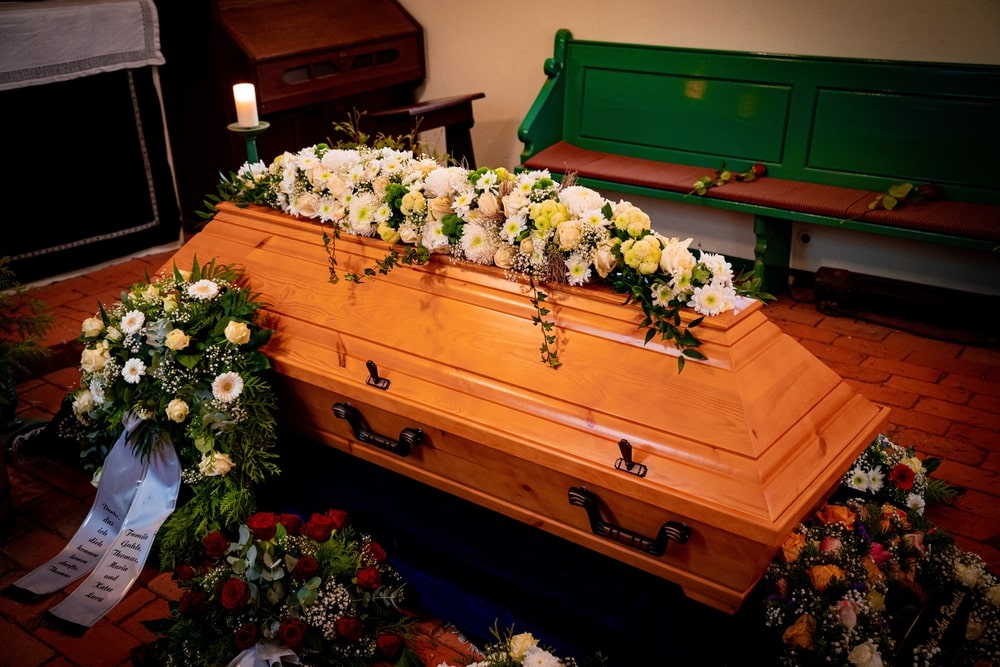
As you plan a funeral for a loved one or preplan for yourself, there are a lot of decisions you’ll need to make. If you choose burial, one question you’ll need to ask is what type of casket you should pick.
Caskets are one of the more expensive elements of the funeral and burial process, so it’s important to know what you want. Before purchasing, research various types of caskets and their associated costs.
To get you started, here are five questions to help you decide what you’re looking for in a casket.
1. Do You Want a Casket or a Coffin?
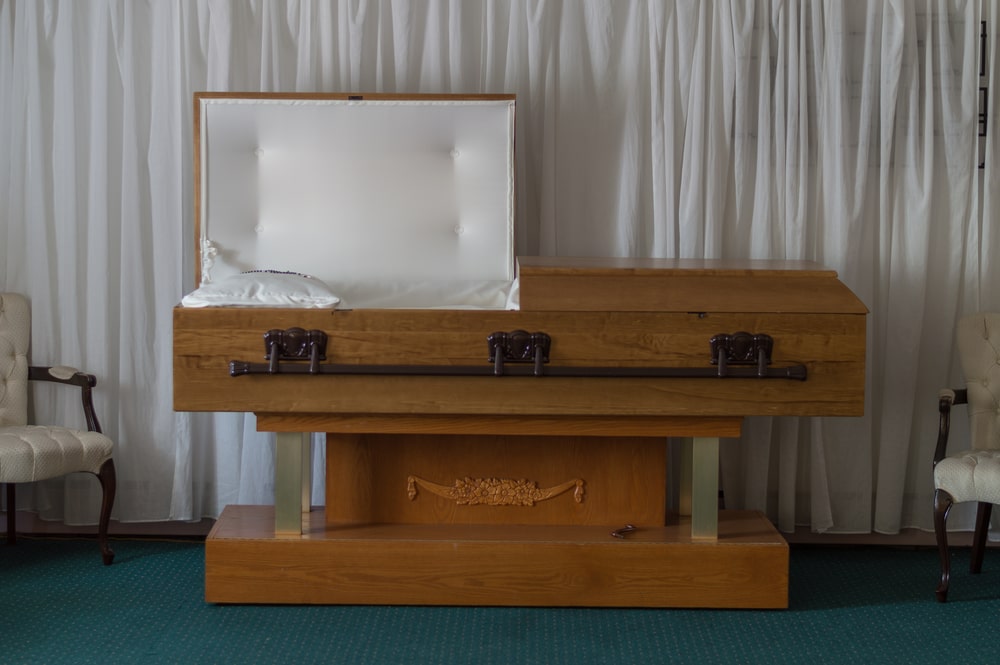
Before examining the different caskets available, we need to make sure that we know exactly what we are referring to when we use the term. While the word casket is often used interchangeably with coffin, there is an important difference between the two: a coffin is hexagonal or octagonal, while the casket is rectangular. Also, a casket often contains a split lid to view the body, while a coffin does not.
In the photo above, the two containers on the ends are coffins, while the one in the middle is a casket. Caskets are more prevalent in the U.S., while coffins have a long tradition of popularity in the U.K.
2. What Material Do You Want?
Most caskets are made of wood or metal, but there are many other options, too! Here are a few of the most common materials for caskets:
Wood
High-cost materials: Mahogany, Walnut, and Cherry
Medium-cost materials: Oak, Birch, and Maple
Low-cost materials: Pine, Poplar, and Willow
Metal
Standard Steel: The least expensive type of metal casket available. Available in 20-gauge, 18-gauge, and 16-gauge. The term “gauge” refers to the thickness of the metal. The lower the gauge, the thicker the material.
Stainless Steel: More durable than standard steel and a little more expensive. Available in the same gauges as standard steel.
Copper and Bronze: Durable, high-quality metals, but far more expensive than steel. These metals have rust-resistant properties that steel lacks, but they will eventually oxidize and break down in a manner similar to rusting. Unlike steel caskets, they are measured by weight instead of gauge.
Eco-Friendly
Want to go green? You also have environmentally friendly options! Wicker caskets made from bamboo, willow, or seagrass are popular choices. Cardboard caskets are another option, and some can be decorated with a digitally printed design. You can also look into burial shrouds made of wool, cotton, linen, and silk. If you want to be environmentally conscious but desire a traditional wooden coffin, consider a coffin made from sustainably sourced wood.
However, if you want the burial to take place in a natural or green cemetery, ask them about their guidelines for green burial first. Some cemeteries have regulations about what burial containers are allowed.
Alternative Containers, Cremation Caskets, and Rental Caskets
If you opt for cremation, you may still want to decide on a casket or container to use. A cremation casket is a wooden casket that can be cremated with the body after the service. An alternative container, generally made of wood, cardboard, or fiberboard, is a cheaper option. If you want a ceremonial casket at the funeral, most funeral homes offer a rental casket for the service, which isn’t as weird as it sounds. Rental caskets include a place to insert the cremation container to be placed inside for the service. After the service, the cremation container is removed for cremation, offering the best of both worlds.
3. Should Your Casket Be Gasketed or Non-Gasketed?
You may have heard people refer to certain metal caskets as “gasketed.” A gasketed casket, also known as a protective or sealer casket, is sealed with a rubber gasket to keep the elements from entering the casket. A non-gasketed or non-sealer casket doesn’t have a sealing system, but it still closes securely.
While a seal will protect the casket for a long time, it will not preserve it indefinitely. It simply keeps outside elements from entering the casket. Sometimes, a gasketed casket may be required, but talk to your funeral director or cemetery to learn about their guidelines.
4. Who Should You Talk to About Purchasing a Casket?
Visiting your local funeral home to browse their casket selection in person is a good idea. If you do, ask your funeral director to show you a list of available caskets before showing you the caskets they have in their showroom, so you can get a better idea of what options they have.
Make sure to ask to see a variety of caskets in different price ranges. Some customers buy the first casket they see and don’t review all the options. Don’t rush through the process of purchasing the casket. Get the full picture, explore all available options, and talk to your funeral director if you have any questions. Remember that the funeral director is there to help, and their experience can be beneficial.
5. Do You Need a Burial Vault or Grave Liner?
Grave liners and burial vaults are outer burial containers that play an important structural role in maintaining level ground in a cemetery. Over time, caskets deteriorate, weighed down by six feet of earth and the heavy machinery used to maintain the cemetery grounds. When this happens, the ground sinks, leaving an uneven landscape in the cemetery.
To avoid this, caskets are usually placed in solid structures that can bear the weight of the earth, helping to maintain the integrity of the cemetery grounds. The grave liner or burial vault holds the casket solely for this purpose.
Though not required by law, most cemeteries require a burial vault or grave liner. However, green cemeteries and nature preserves generally do not. Talk to the cemetery you are considering to find out if you need an outer burial container.
As you select a casket, take time to learn about all the different options. Your funeral director can help you understand what choices are available to you. No matter what you choose, remember that there are plenty of ways to personalize the casket of your choice and make it unique to you or your loved one.