family watching a Christmas movie together with lights

What Christmas Movies Teach Us About Grief

By Christmas, Grief/Loss, Seasonal

The holidays are always a hectic time, but when you’re grieving, they can be even more difficult because you feel your loved one’s absence more strongly. While you may not feel up to participating in your normal holiday traditions, it’s important to find ways to balance your feelings of grief with the joy of the season.

One way to balance joy and grief is by taking time to understand what you’re feeling and why. Learning how grief affects you personally and discovering positive coping mechanisms will help you begin to incorporate your loss into your life story. You may not realize it, but classic Christmas movies can teach us valuable lessons about grief and how it can affect you and those you love. Let’s talk about three of those movies!

bridge covered in snow with soft daylight

It’s a Wonderful Life

In the classic Christmas movie It’s a Wonderful Life, we get a glimpse into the life of George Bailey and see what the world would have looked like if he hadn’t been born. Through the story, we see how many people he influenced and how many lives he changed. As Clarence points out to him, “Each man’s life touches so many other lives. And when he isn’t around, he leaves an awful hole, doesn’t he?”

The importance of remembrance

If someone you love has died, you are probably very aware of the hole they left behind. Sometimes their absence might seem almost tangible. That’s one of the reasons why grief is so powerful – the person you lost was an integral part of your life, and your brain doesn’t know how to process the loss. That person impacted your life, and for that reason alone, their life is worth remembering.
While George Bailey’s life may have seemed insignificant to him, he had a positive impact on the world, and he eventually realizes his story is important. In the same way, each person’s story is important and worth remembering. One way to honor a loved one’s memory is by participating in different remembrance activities, like attending a remembrance service or creating a memory capsule.

Community and support

The movie also shows how important community and support are during difficult times. You might feel grief more strongly during the holidays, and you may feel lonely when you think of your loved one’s absence. That’s why it’s important to rely on the community around you. George Bailey tries to persevere on his own, carrying all the burdens of life on his own shoulders, and it breaks him down. At the end of the movie, though, George’s family and friends gather around him, supporting him and standing by him through thick and thin.

Just as George’s community supported him through his struggles, your community can help you through your struggles. Grief can be difficult, and you need people around you to help you along the journey. If you don’t feel like you have anyone you can rely on, you can look for a grief support group in your area. No matter what, having support in your grief journey will make the path easier to travel.

carving a christmas turkey with family

How the Grinch Stole Christmas

It’s hard to believe that the animated classic How the Grinch Stole Christmas first released in 1966! Generations of children have watched the Grinch’s plot to steal Christmas and his later redemption as he learns about the true reason for Christmas. Surprisingly, this movie has a lot to teach about grieving during the holidays.

Reach out to the grieving

While a grieving person’s heart isn’t “two sizes too small,” their heart is likely hurting at the holidays. Sometimes that pain makes someone who is grieving withdraw from those around them or act differently, just like the Grinch. When someone is hurting, they often erect walls between themselves and others.

If you know someone who is grieving, take the time to reach out to them during the holidays. By showing them kindness, you can help their heart heal. If the grieving person resists your efforts, that’s okay. Continue to be kind; they will still appreciate your thoughtfulness.

Open up to your loved ones

If you personally are grieving this holiday season, it’s important to know that spending time with family or friends can help you begin to heal. As we see when the Grinch realizes the true meaning of the holiday and joins the Whos for their Christmas dinner, ritual, tradition, and fellowship can help soothe your aching heart. Participating in traditions and rituals help people grieve together and can help you find meaning in the loss you’ve experienced.

If your relationship with your loved ones has been strained, it may be hard at first to reach out to them. However, asking for help and realizing your limits are important steps in your grief journey. While it may be tempting to stay in your comfort zone, opening yourself up to relationships and sharing with others how you feel is an important part of the grieving journey.

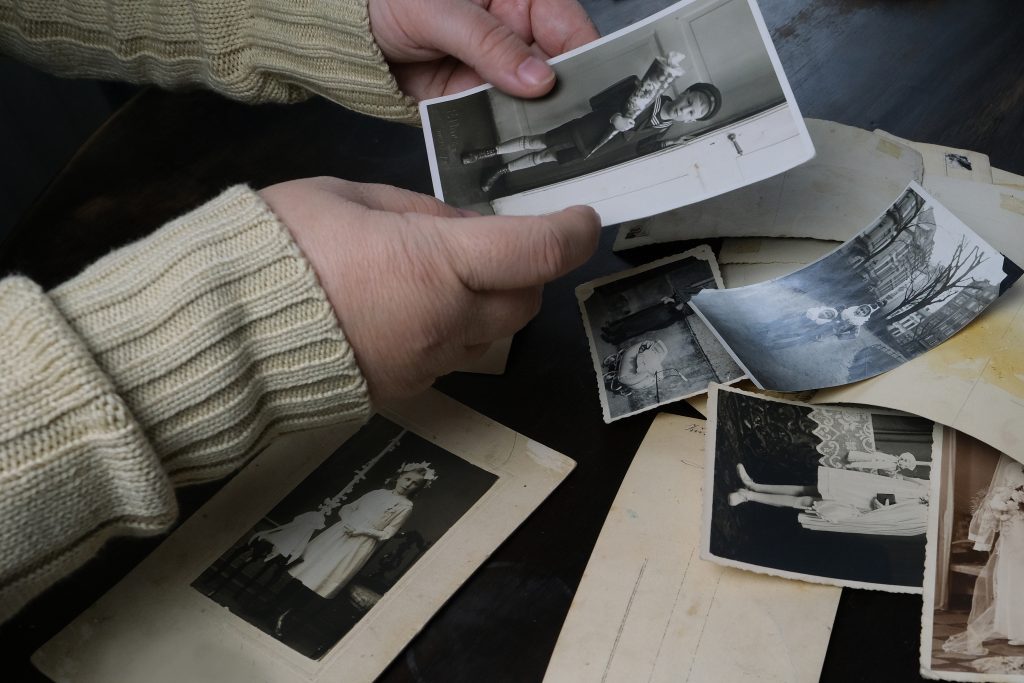
Christmas photos and memories

A Christmas Carol

When you’ve lost a loved one, it can be difficult to feel joyful during the holidays. Maybe, like Ebenezer Scrooge, you’ve found yourself avoiding personal connections with others, withdrawing into yourself and refusing to open up. In a way, the classic Christmas movie A Christmas Carol is a tale of a man who has been hurt in the past and has erected walls to protect himself.

Reflect on Christmas past, present, and future

As both the book and its many movie adaptations show, isolation only leads to loneliness. Scrooge resists the kindness and Christmas spirit of his nephew Fred and his employee Bob Cratchitt. That attitude leads to him eating alone in his house, all his scrimping and saving leaving him alone and miserable in a dark, gloomy room. It’s only when he’s visited by the ghost of Jacob Marley and the different spirits of Christmas that he finally learns what life is all about and opens up to his friends and family.

While Scrooge is terrified by the spirits who remind him of the true nature of life and Christmas, you don’t have to go through that. Instead, take stock of how you feel and reflect on the best ways to help yourself grieve this holiday season. If you’ve lost sight of the joy of the season, these moments of reflection can help you rediscover the meaning and purpose of the holidays.

Christmas Past

Try thinking about your own “Christmas Past.” If you have pleasant memories of Christmases past, examine why they are so memorable to you. What made those times special? Was it the presents, or was it the time spent with family or friends? By contemplating those Christmas memories, you can learn what you value most and remember why you celebrate the holidays. As you rediscover what makes the holidays meaningful, you can find a way to embrace both joy and grief.

Christmas Future

However, not everyone has positive Christmas memories. If your holiday memories are more painful, you might find it helpful to ponder “Christmas Future.” What do you want for your holidays in the future? Isolation will lead to more lonely Christmases, so consider ways you can reach out to family, friends, or support groups in your area.

Christmas Present

Even more importantly, think about now – “Christmas Present.” There are things you can do this Christmas – or any day – to make progress on your grief journey. That could mean creating fellowship with people around you, taking time to pursue something you’re passionate about, or serving others in your community. By opening yourself up and finding ways to engage with your grief, you can continue to heal in a healthy way. While you may not be dancing around town like Scrooge, you can still find joy while you’re grieving.

Perhaps the lessons in these three classic tales resonated with you and gave you a new perspective on your grief this Christmas season. Throughout the holidays, keep in mind that grief takes time. It’s okay if you aren’t feeling 100 percent or if you need to bow out of a few engagements. You’ll need to give yourself grace while you’re grieving. But remember – you need joy to balance out your grief as you learn how to live life again and find your new normal.

Woman choosing a color from a color wheel

Using Color to Personalize a Service

By Meaningful Funerals, Personalization, Plan Ahead, Planning Tools

Creating a personalized funeral or memorial service is the first step toward finding the healing and reconciliation you need after a loss. Why? Because if the service details truly reflect the hobbies, interests, personality, and quirks of the person who has died, then it feels like a true tribute – something with meaning, purpose, and poignancy. Using color can be a simple way to uniquely personalize a service – let’s look at a few examples.

4 Simple Ways to Use Color to Personalize a Service

While the color black has traditionally been associated with mourning in the western world, it’s not a hard and fast rule. In fact, in other areas of the world, white, red, purple, gray, and even gold are considered colors of mourning. With the increase in personalized services, it’s become much more accepted to use different colors, especially if that color has special significance.

Beautiful pink tulips

1. Select Specific Flowers

If you are decorating with flowers or accepting flowers as sympathy gifts, you could request a specific color. To be the most meaningful, select a color that is special in some way – either to you or to the one who has died. Or, if the deceased person loved pumpkins, succulents, or even tiny cactus plants, you could encourage well-wishers to give those, instead. Imagine how sweet it would look and feel to see a loved one’s service filled with the color that brought them so much joy in life.

Decorating with seashells and the color ivory

2. Decorate with Intentionality

Another option for using color to personalize is by choosing your decorations intentionally. If you choose to focus on a specific color, you can use it in a multitude of places. For example, you could display photo frames in that color. At the gathering or visitation, use tablecloths or centerpieces in that color. Place themed decorations on memorial tables. Provide a keepsake to mourners that showcases the theme color. The options are endless. Think on what the person loved and use that information to create something one-of-a-kind.

Four men wearing matching polka dot socks

3. Request that Mourners Wear a Certain Color

Perhaps one of the easiest ways to incorporate color into a service is to ask mourners to wear it. This way, when people attend the service, there’s a sea of pink, green, orange in honor of your loved one. If you’d rather focus on a theme than a color, you can. For instance, you could ask that mourners wear a certain team’s jersey, Star Wars gear, something with unicorns, or whatever is most appropriate. You can include the color/theme when you announce service details, whether that’s through the funeral home or a personal announcement on social media.

Bright green casket

4. Customize the Urn or Casket

Urns today come in many shapes, sizes, and hues. If you plan to have a memorial service after cremation, you can select an urn of a specific color. Simply speak with your trusted funeral home or go online to review your urn options.

As for caskets, there are a few different personalization options. First, you could request a certain color for the casket lining and pillow top. Second, you could customize the casket itself. Rather than selecting one of the standard colors or wood types, you could commission a casket of any color. Third, you can ask that the interior or cap panel (the rectangle of space just above the deceased when the casket is open) be customized. You could select a specific hue, or alternatively, some funeral homes can place a photo in this space.

If any of these options appeal to you, contact your trusted funeral home. They will help you get the answers you need.

What If I Don’t Know What Color to Choose?

If a color doesn’t immediately come to mind, that’s okay. You can either personalize the service in other ways, or you could even choose a color based on its meaning.

Woman choosing a color from a color wheel

  • Red – Energy, passion, strength, love, sincerity
  • Pink – Love and romance, caring, tenderness, acceptance
  • Beige – Calm and simplicity
  • Ivory – Quietness and pleasantness
  • Yellow – Joy, happiness, imagination, hope, friendship
  • Blue – Peace, tranquility, trust, harmony, loyalty
  • Purple – Spirituality, transformation, wisdom, honor
  • Lavender – Femininity, grace, elegance
  • Orange – Enthusiasm, warmth, vibrancy
  • Green – Renewal, generosity, service
  • Brown – Stability, hearth & home, comfort, reliability
  • Gray – Security, intelligence, dignity, modesty
  • White – Purity, peace, innocence, goodness

Ultimately, color is just one option for creating a meaningful service. Whether you are planning ahead for your own funeral wishes or are planning a loved one’s services, you have options. If you have a specific idea of what you’d like to do or you need a little help, your local funeral home can help. They can brainstorm with you, offer ideas and solutions, and help you create a tribute that feels right and good.

If you’d like to learn about other ways you can customize a service to create something truly unique, go to Practical Ways to Personalize the 7 Elements of a Funeral for inspiration.

mother holding son looking at Christmas lights

Holiday Remembrance Activities for Grieving Parents

By Christmas, Grief/Loss, Seasonal

If you have lost a child, you are probably very aware of the pain the holidays can bring. It might seem impossible to connect with the joy of the season when all you feel is grief. Whether your child died recently or many years ago, the holidays can make your grief feel fresh, and you may feel overwhelmed by everything that needs to be done. But amid the hustle and bustle, taking time to honor and remember your child’s life by participating in remembrance activities can help you through the ups and downs of the season.

While cutting back on holiday stress will be beneficial, finding ways to honor your child’s memory can help you heal. Participating in healing actions can encourage you to express your feelings and acknowledge your emotions as a natural part of grieving. Even more importantly, remembrance activities can help you reconcile with the loss and continue your grief journey.

While you can do whatever makes the most sense for you, here are 6 remembrance ideas to get you started:

Christmas stockings hanging from a mantle

Put up a stocking

Putting up a stocking with your child’s name on it can be a great way to honor their memory during the holidays. In addition to using the stocking as a visual reminder, you can also put different items in the stocking. For example, you and your family members could write letters to your child and place them in the stocking. You could also put toys in the stocking that you can later donate to charity, honoring your child by caring for other children.

mother holding son looking at Christmas lights

Share happy memories

When a child dies, it’s easy to focus on the time you’ve lost with them. While sadness is a vital part of the grieving process, sharing happy memories with your family members can help you treasure the time you had with your child. In return, your family members may also share their memories, giving you the chance to learn new stories about your child. When you share stories and memories, your appreciation for the times you had with your child will grow.

woman making a Christmas wreath

Make holiday decorations

If you like DIY crafts, making holiday decorations can be a way to remember your child each year. You could make an ornament with their name or photo on it or decorate with your child’s favorite color. Maybe you could create a personalized wreath, incorporating your child’s favorite flowers or holiday-related items. Throughout the creative process, you (and anyone else you invite to join you) can engage with your grief in an uplifting and healthy way. After you’ve finished, you’ll have something tangible to bring out every year to honor your child’s memory and make them part of your holiday season.

cozy chair next to table with coffee and Christmas decorations

Create a grief corner

When someone you love has died, you or your family members may need time alone. One way to encourage that is by creating a grief corner in your house. A grief corner is a specific spot where any family member can go to sit by themselves to grieve. This could be something simple, like a chair with a cozy blanket, or you could set up a photo of your lost child with some of their favorite toys. If you have other children, a grief corner could help them learn to recognize their feelings and take time alone when they need to.

toys and socks in a cardboard donation box

Give to a charity in their name

Giving time, money, or items to a charity in your child’s name can be a great way to honor their memory. Maybe your child had a specific cause they were concerned with, and you can support that cause. If your child died from a specific disease, you could also donate to support research about that disease to help families like yours. Or, if you lost your child during pregnancy or shortly after birth, you could create a gift basket to donate to a family in the NICU.

You could also consider things your child was passionate about. What was their favorite sport or activity? You could volunteer to teach other children about that activity. Did they have a favorite animal? You could sponsor a wildlife rescue or spend time volunteering at your local shelter. Whatever you choose, giving to something your child cared about will help you honor them in a meaningful way.

person icing snowflake and gingerbread man cookies

Create a new tradition

After a child dies, old traditions may be painful or feel difficult to enjoy. While participating in old traditions might bring up happy memories of your child, you could also start a new tradition in their honor. This could be anything from trying a new holiday recipe to volunteering at a local soup kitchen. If you have other children, creating a new tradition can be a way for them to remember their sibling. These traditions can become lasting remembrance activities you can engage in for years to come.

woman baking with two children

Remember – Include Your Living Children

As a parent, there will be times when you want to grieve on your own and work through your emotions in a private space. That’s perfectly normal and healthy. However, in your own grief, don’t forget that any other children in the home are also grieving.

Children and teenagers may have trouble processing their grief, so you may need to help them along their journey. Look for ways to discuss what they may be feeling. Invite them to participate in some of these remembrance activities with you. Let them see you cry and share memories, so they know it’s safe to do the same. Throughout the process, you will grow closer as a family and find a way to move forward.

It goes without saying that your holiday will look different after losing a child, but engaging in remembrance activities can be a beautiful way to grieve and mourn.

No matter what, don’t forget to take time to grieve and be gentle with yourself. You don’t have to put on a happy face just because it’s Christmas. You are a human being with complex emotions. You’re going to have good moments and bad moments – that’s okay. When good moments come, embrace them. When grief comes, engage with it. By doing so, you can balance the grief you feel with the joy of the season.

Cover of a casket with a white rose laid on top

Understanding Embalming & Your Options

By Planning Tools

Embalming may not be something you’ve given much thought to – other than a mild interest in Ancient Egyptian mummification practices. Thankfully, embalming today is much less complicated than in Ancient Egypt, but it’s still a process. Let’s take a moment to dive into what embalming is, the process behind it, and what your options are when embalming makes the most sense for your funeral planning needs.

man and woman at funeral, his arm around her shoulder in a comforting way

What is embalming?

Warning: There are a few squeamish details here, so be prepared or skip to the next section.

Following the Civil War (1861-1865) and the death of Abraham Lincoln, embalming became widely accepted in the United States. After seeing how lifelike Abraham Lincoln appeared during his lying in state period, people all across the nation selected embalming after death. This widespread approval led to the practice becoming a cultural norm, which continues to this day.

But how does embalming work? Well, embalming occurs in stages. Let’s do a quick (and abbreviated) rundown.

Stage 1

The body is disinfected and prepared (this includes massaging stiffening joints, shaving, sewing the jaw shut, etc.)

Stage 2

After the body is prepared, small incisions are made and the blood is replaced with a solution that preserves the body for a period of time.

Stage 3

After the blood is replaced, the body cavities must be embalmed as well. This includes allowing any gas or fluid contents to drain from the organs and the abdomen.

Stage 4

Now that the body is fully embalmed, the cosmetic part of the process begins (washing the hair and body, applying make-up and clothing, etc.).

Once these stages are complete, the body is ready for a viewing or visitation, depending on what the family has planned for final services.

Why do we embalm?

Different people have different reasons for choosing embalming, and ultimately, it comes down to personal choice. For some, embalming and seeing the person who has died is an essential part of the grieving process. Let’s look at a few reasons why people choose embalming.

  1. You want to have a funeral service with an open casket.
  2. You want to give far-away family members time to travel to the location of the service, so embalming will preserve the body for a longer period of time.
  3. The body needs to travel a great distance for burial (like in a national cemetery or in another state).
  4. You want to donate your body to medical research.
  5. You want to see the person you love one last time. For some people, when tragic accidents occur, it’s important to have a chance to see the body one final time. Also, it’s during the embalming process that any restorative work occurs, to repair any physical damage incurred by the cause of death.

If any of these ring true for you, then embalming may be the right choice for your needs.

Woman dressed in black standing next to casket with one hand on the casket and the other holding white lilies

What are my embalming options?

Whether you are planning ahead for your funeral wishes or planning a funeral for a loved one, it’s always beneficial to understand your options. If your family would like to have a viewing or visitation that will allow friends and family to see the deceased person one final time, then embalming is a good route for you.

It will ensure that the body is in good condition for whatever services are planned to honor the person’s life and allow the living to say their goodbyes. Currently, there are two options available for embalming: traditional embalming and green embalming. Let’s talk about each one in turn.

Traditional Embalming

With traditional embalming, a formaldehyde-based solution replaces the blood, acting as a preservative. It helps restore the skin’s natural color and appearance. This type of embalming is available widespread as it has been a common practice for more than 100 years. With traditional embalming, burial at most cemeteries is possible. The only ones that do not allow this form of embalming are green or natural cemeteries.

Green Embalming

As an alternative to the formaldehyde-based solution, some funeral homes now offer green embalming. Essentially, the process is the same, but the solution consists of non-toxic chemicals and plant-derived essential oils. While its effects do not last as long as traditional embalming, it still restores the body’s natural coloring and appearance. All cemeteries, including green or natural cemeteries, accept green embalming.

Cover of a casket with a white rose laid on top

Is embalming required?

In most cases, embalming is not required. In fact, it’s often only absolutely necessary in special cases. For example, officials may require embalming when a body needs to cross state lines or moves from one place to another via public transportation (like on an airplane).

For the most part, embalming is a choice, and families select it because they want the body to be present for the meaningful services they have planned.

Keep in Mind

Before we go, keep in mind that green embalming is fairly new. Not all funeral homes offer it at this time. If having a more eco-friendly option is important to you, the best thing to do is contact your local funeral home and see what they offer. Then, you can make the decision that makes the most sense for your family and your needs.

View of ruins of Ancient Greece with beautiful, dark cloudy sky

5 Ancient Greek Funeral Customs You May (or May Not) Recognize

By History of Funerals

The funeral ritual…is a public, traditional, and symbolic means of expressing our beliefs, thoughts, and feelings about the death of someone loved. – Dr. Alan Wolfelt

Since the beginning of time, human beings have honored the lives of people they love and respect. From RIP social media posts to attending a visitation or funeral service, we all feel the need to acknowledge the lives of others in a meaningful way. Unsurprisingly, the ancient Greeks felt the same. But what IS surprising is how similar some of their funeral customs are to what we practice today. Let’s take a look!

5 Ancient Greek Funeral Customs You May (or May Not) Recognize

While some funeral customs evolved and changed over their long history, the Ancient Greeks were consistent in their desire to ensure that every human being received proper burial rites. In fact, to deny someone the dignity of a final tribute was an intentional insult and could affect their ability to make a peaceful transition to the afterlife. While we no longer hold the same cultural or religious beliefs as the Ancient Greeks, we do still honor the dead in similar ways.

View of ruins of Ancient Greece with beautiful, dark cloudy sky

#1 – Prothesis (Preparation of the Body and Viewing)

Immediately after death, the first step in the process was to prepare the deceased’s body for viewing. Today, this process is completed by funeral professionals, but in Ancient Greece, female relatives prepared the body. These women:

  • Washed the body
  • Anointed it with oil
  • Placed a wreath on the chest
  • Sealed a coin in the mouth or placed them on the eyes (to pay for passage to the afterlife)
  • Dressed the person in clothing appropriate to their status (armor for a soldier, wedding dress for a newlywed, etc.)
  • Sang songs of mourning and lament as they prepared the body

Preparation was typically completed in one day. On the second day, the body was placed on a bed in the home and covered with a funeral shroud. Then, family and friends were allowed to stop by to mourn and pay their respects. During the viewing, either female relatives or professional mourners led a formalized lament.

Top of a white column in a Grecian style

#2 – Ekphora (Funeral Procession)

Before dawn on the third day, the body was removed from its place of honor in the home and either placed in a horse-drawn carriage or carried by pallbearers to the final resting place. Along the way to the cemetery, the ekphora (funeral procession) grew in number as more and more people joined the line of mourners. Often, singers and musicians walked alongside friends and family. Together, they expressed themselves through mournful songs and physical expressions of grief (like tearing of the clothing).

Once the procession reached the cemetery, the body was placed in an elaborately carved box, which was then either buried or burned on a funeral pyre. At this time, a eulogy was usually given to commemorate the person’s life.

Funeral processions are still a common practice today. In many places, drivers stop their vehicles to allow the funeral procession to pass without difficulty – a small way to honor life and pay respects to the person who has died.

#3 Perideipnon (Post-Funeral Gathering)

After the death of a loved one, it’s important to spend time together, share stories, reminisce, and draw comfort from each other. As human beings, we often do this around food.

In Ancient Greece, following the burial, it was customary for the women to return home and prepare a banquet in honor of the deceased. The men would stay behind at the gravesite and place a stele (monument) over the grave. The feast not only honored the person who died, it was also a way to bring people together and to thank those who came to pay their respects.

At many funeral or memorial services today, a meal is included – often called a gathering – where people are encouraged to talk, laugh, and share. It’s a time to support each other, to listen, and to remember the person who has died through the sharing of cherished memories.

Statues of women acting as columns on an Ancient Greek structure

#4 Acts of Remembrance

It’s so important to take part in acts of remembrance after a loved one dies. These acts give you a way to physically engage with your feelings, which in turn, helps you express them, rather than bottle them up.

In Ancient Greece, they:

  • Erected tombs, installed grave markers, or created marble statues
  • Included an epitaph in memory of the deceased
  • Visited the graveside on the 3rd, 9th, 13th, and 30th day after death
  • Conducted memorial services at 40 days as well as at 3, 6, 9, and 12 months
  • Prayed at the grave or sang songs of lament
  • Decorated the grave with ribbons or flowers and some even left offerings of oil, wine, or food
  • Placed mementos around the grave that were important to the deceased

Do some of these sound familiar to you?

While statues and tombs are less common now, grave markers and meaningful epitaphs are still widespread. We conduct services to honor a loved one’s life, though the practice has become more concentrated rather than spread over time. It’s not uncommon to see coins, flowers, or stuffed animals left at a graveside in remembrance. And some families or cultures participate in decorating the grave (a famous example is the Day of the Dead).

Ruins of an Ancient Greek temple against a blue sky

#5 A Mix of Burial and Cremation

While pop culture and movies often associate cremation with Ancient Greece, burial was just as prevalent, if not more so. Beginning around 3000 B.C, burial was the chosen final disposition (except in Athens), but around 1100 B.C., cremation on a funeral pyre began to appear. Eventually, the two existed together as options for families until the rise of Christianity made burial more popular again.

Today, we see this same paradigm in our own world. Some families choose burial and others choose cremation. Both are great options, depending on the family’s needs and wants. Thankfully, no matter which option is chosen, the family can still honor and celebrate life with a personalized service.

Looking back at Ancient Greek funeral customs just reinforces the importance of a final tribute. No matter what culture or year you look at, honoring life and individual people is valuable and important.

Well-kept headstones with flags and roses in a green national veteran cemetery

Top 4 Misunderstandings Around Veterans’ Burial Benefits

By Veterans

In a survey initiated by the Department of Veterans Affairs, it was found that more than 30% of veterans didn’t know the eligibility requirements for burial in a national cemetery. In that same survey, more than 60% of veterans didn’t know the full range of life insurance benefits available to them. What does this mean? While the VA provides many amazing services to veterans, there’s so much available that it’s hard to effectively communicate and spread the word. Veterans’ burial benefits are no exception. So, today, let’s review 4 of the most common misunderstandings about veterans’ burial benefits and set the record straight.

Ceremonial folding of the flag at veteran funeral

Misunderstanding #1:
After my death, all my spouse has to do is call the funeral home, and they will take care of everything.

As nice as it would be, one phone call isn’t going to be enough if you haven’t prepared in advance. Whether it’s planning a wedding, buying a house, or making funeral arrangements, many of the big events in life take time and coordination to put together. That’s why it’s so necessary to prepare ahead of time.

By taking time now to talk with the VA or the funeral home, you can preplan everything. If you do so, you can more easily ensure that all your spouse has to do is make a phone call. To get started, contact your preferred funeral home and ask them what documentation you need from the VA. Because of their experience with assisting other veterans, they can help you get all your ducks in a row.

Misunderstanding #2:
The VA will pay for my funeral entirely. (Or, the VA won’t pay for anything at all.)

The VA does provide burial benefits to eligible veterans, but they do not pay for everything. Burial and plot allowances assist the grieving family with funeral expenses, but they do not cover the full cost of a funeral.

Here’s what your family can expect to receive (if you are eligible and choose to apply):

Burial and plot allowances provide financial assistance to help your family offset the cost of 1) burial or cremation expenses, 2) plots costs, and 3) transportation costs. Your family receives these allowances as a reimbursement. Therefore, your family will pay for the funeral upfront and then receive partial compensation.

Make sure your family knows to keep all receipts. They will submit these receipts to the VA, who will review all documentation and provide the appropriate reimbursement.

Well-kept headstones with flags and roses in a green national veteran cemetery

Misunderstanding #3:
Veterans don’t receive anything if they are buried in a private cemetery.

Just like anyone else, you get to choose your final resting place. As a veteran, if you choose a cemetery, you have three options: interment or inurnment at a national veteran cemetery, state veteran cemetery, or private cemetery. However, keep in mind, your veteran burial benefits will change depending on which cemetery option you select. Let’s go over each one briefly.

National Veteran Cemetery

At a national veteran cemetery, the VA completely covers the cost of burial. The National Cemetery Administration will work with the family and the funeral home to ensure that everything is coordinated correctly. Interment or inurnment includes plot/niche, opening and closing of the grave, perpetual care, headstone or marker, burial flag, military honors, and Presidential Memorial Certificate.

While burial is free, national veteran cemeteries have limited space. Unfortunately, you cannot secure a plot in a specific national cemetery, but you can complete all the eligibility paperwork ahead of time. By doing this now, you will make the burial process easier for your family in the future. For more information, contact your preferred funeral home or click here to visit the VA website.

State Veteran Cemetery

While similar to a national veteran cemetery in many ways, state veteran cemeteries are run by individual states and subject to their specific laws and regulations. The VA will still provide a headstone or marker, burial flag, military honors, and Presidential Memorial Certificate, but it’s up to each state whether interment or inurnment is free. In many cases, burial is free or comes with a small charge. Additionally, it’s important to note that the cost of transporting the body to the cemetery may fall to the family.

Since there are differences from state to state, it’s always a good idea to work with the cemetery directly or coordinate through your preferred funeral home.

Private Cemetery

By far, most veterans choose burial in a private cemetery. Even so, they are eligible to receive certain burial benefits. The biggest difference with a private cemetery is that the family is taking on the full financial responsibility of burial. Because of that, they are eligible to request burial and plot allowances to assist with the overall cost. Additionally, just like veteran cemeteries, they can request military honors, burial flag, Presidential Memorial Certificate, and government-issued headstone or medallion…free of charge.

To apply for burial and plot allowance reimbursements, keep all receipts and submit them to the VA. Your preferred funeral home has done this many times and can walk you through the process.

Also, in case you didn’t know, there are local Veterans Service Offices located across every state, and they are an excellent resource. To see which locations are nearest you, click here. You can call or make an appointment to speak to a Veterans Service Officer, who can walk you through a discussion of your benefits.

Image of honorable discharge certificate

Misunderstanding #4:
The funeral home can order my DD 214 after death, and it will be fine.

If you want to access your VA burial benefits, the DD 214 is a must. Without it, nothing is going to move forward. That said, it’s best if you order this essential form ahead of time and place it in your personal records (and give a copy to your funeral home of choice). If you wait, it can take days (worst case scenario: weeks) before the form gets to your family. Not having this form could delay any benefits, including burial at a veteran cemetery. When your family is grieving, the last thing they need is extra complications, so take time now to order your DD 214. Click here to go to the VA’s website for instructions on how to request this important documentation.

What’s Next?

Now that we have these 4 misunderstandings cleared up, it’s time to take action. For some, that might mean ordering your DD 214 so that it’s ready. For others, it might mean planning ahead for your funeral wishes so you can complete the eligibility process for a plot at a national cemetery. No matter what the right next step is for you, your preferred funeral home can walk alongside you throughout the journey. Remember, they have assisted countless veterans over the years. They know exactly what needs to be done.

Two large rocks laying in grass with encouraging gratitude sayings written on them

Is Grief Stealing Your Joy & Thankfulness?

By Grief/Loss

Grief seems to have a mind of its own sometimes. At the most unexpected and inconvenient moments, it shows up unannounced. You may be having dinner with family, walking down the grocery store aisle, or simply taking a walk around your neighborhood. Right now, your world may feel colored in blues and grays. Your heart focused on the pain you feel and not on the things you have to be grateful for. That’s okay. Grief can feel overwhelming, and for a time, it may feel like it’s stealing your joy and thankfulness.

Just remember these three things as you work through the complex emotions of grief:

  1. Grief takes a different path with everyone.
  2. Grief is the result of deep love.
  3. Grief won’t steal your joy and thankfulness forever.

Person walking on a wooden walkway in a park, focused on the person's calves and shoes

Grief Takes a Different Path with Everyone

Did you know that grief manifests differently for every person? For example, your grief may include anger and sadness. For someone else, it may bring guilt and a deep sense of regret. In short, don’t feel like something is wrong if grief is stealing your joy because that’s just part of the process for you. Instead, acknowledge your feelings, accept them, and then begin to actively work through your grief. Taking intentional time to practice thankfulness can help, even when you don’t feel like it.

For helpful information on how to practice gratitude, go to Nature & Your Grief Journey or Practicing Remembrance & Gratitude During Times of Grief. It’s not going to happen overnight, but as you sort through your emotions, your view of the world will get lighter and lighter until you can see the silver lining again.

Two people holding hands by hooking pinkies together

Grief is the Result of Caring

Dr. Alan Wolfelt, nationally recognized grief counselor and educator, has found that grief is not a universal experience. In many ways, grief is closely related to care or even love. If you don’t care about something, then you won’t grieve it. Sometimes, the care is positive – like love for a spouse. Other times, the care is associated with a negative experience – like wishing you’d had a better relationship with a parent or sibling. Both situations will elicit feelings of grief for very different reasons, but both are because, at some level, you cared or loved.

Dr. Wolfelt says:

“Love inevitably leads to grief. You see, love and grief are two sides of the same precious coin. One does not – and cannot – exist without the other. People sometimes say that grief is the price we pay for the joy of having loved. This also means that grief is not a universal experience. Grief is predicated on our capacity to give and receive love. Some people choose not to love, and so, never grieve. If we allow ourselves the grace that comes with love, however, we must allow ourselves the grace that is required to mourn.

Knowing that your grief is tied to your complex, emotional feelings about a particular person doesn’t make the process any easier. But, in a way, it is comforting. What you’re feeling is natural and normal. Even if the relationship was not wholly positive, try not to suppress what you feel. Instead, find healthy ways to engage with your feelings and give yourself permission to grieve.

Two large rocks laying in grass with encouraging gratitude sayings written on them

Grief Won’t Steal Your Joy & Thankfulness Forever

It doesn’t feel like it right now, but grief won’t color your world so vividly forever. Will you always miss the person who has died? Absolutely, no question. Will you “get over” the loss? In many ways, you won’t. There will be moments throughout your life when grief may show up again. Can you find a way to move forward? Yes, there is hope after loss.

While time doesn’t heal wounds, it does give you the space you need to work through your grief. Right after a loss, the pain is at its sharpest. Over time, its sting does lessen and occurs less frequently. Taking time to sit with your pain, to experience it, and to wrestle with it will help you move toward healing and reconciliation. It won’t be easy, but it’s necessary to embracing life and thankfulness again.

Man quietly sitting at an outdoor cafe while writing in a journal

Tips & Tools for Working Through Your Grief

Dr. Wolfelt says, “It is not instinctive to see grief and the need to openly mourn as something to honor…[but] to honor your grief is not self-destructive or harmful, it is courageous and life-giving.” But perhaps you don’t know how to begin. How do you embark on the work of grief? How do you confront your pain, so that you can process it in a healthy way?

To help you on your journey, check out the resources below. They will help you work through your feelings and discover the best want for you to move forward and find joy in life again. Grief won’t steal your joy or your thankfulness forever – unless you let it. Above all, remember that with intentionality and fortitude, you will see the sun again, and it will be beautiful.

Resources:

Mustering the Courage to Mourn

Exploring Your Feelings of Loss

Grief & the Six Needs of Mourning

10 Helpful Tips When Grieving a Loss

5 Tips for Grieving When You’re Feeling Isolated

Grief & Difficult Relationships

How Creativity Can Help You Deal with Loss

5 Benefits of a Grief Journal

Finding Comfort in Ritual: Queen Elizabeth II’s Funeral

By Current Events

With the death of Queen Elizabeth, multiple nations and millions of people plunged into mourning. While it was not unexpected due to her age, death still brings out a multitude of emotions. In many ways, the Queen’s death brings with it a stark reminder of the importance of honoring life, paying tribute, and saying goodbye to the people who have impacted our lives.

From the moment of her death until her final commitment at St. George’s Chapel, every aspect of Queen Elizabeth’s funeral circled around the importance of ritual and healing actions.

3 Ways Queen Elizabeth’s Funeral Brought Comfort and Healing

1. Through Rich Symbolism

Steeped in history and British tradition, each act of symbolism brought a certain amount of comfort and security. From the Imperial Crown resting on her coffin to the elaborate procession through the streets of London and the fact that the Royal Standard was never lowered, signaling that even with the Queen’s absence, a monarch still reigned, each act was intentional and thought out. The moments when her children and later grandchildren stood vigil at her coffin were particularly compelling and beautiful.

For those living in the Commonwealth realms, this focus on traditional rituals and actions no doubt brought a sense of unity and rightness. The Queen’s life should be honored in such a way for her incredible contribution to her people and the world.

2. Through Sweet Moments of Personalization

In addition to the historically rich symbols seen throughout, there were many instances of personalization. Though many of the funeral details focused on Elizabeth the Queen, some were specific to Elizabeth the woman.

The wreath that adorned her coffin while she rested at Balmoral Castle was arranged with flowers from Queen Elizabeth’s own garden, including cuttings from her personal favorite blooms. In several key locations, regiments fired off 96-round salutes, one round for each year of the Queen’s life. In a particularly sweet touch, both the Queen’s corgis and her horse stood at attention, waiting as her coffin arrived at Windsor Castle. The Queen enjoyed riding throughout her life and famously adored corgis.

Each little touch of personalization added depth to the services honoring her life, making everything that much more meaningful.

Balmoral Castle in Scotland, where Queen Elizabeth spent her final days
(Balmoral Castle in Scotland, where Queen Elizabeth spent her final days)

3. By Providing Opportunities for Public Memorialization & Gratitude

Lastly, the fact that the Royal family has allowed and encouraged public displays of affection and gratitude is both touching and necessary. As human beings, we need to take action when something or someone matters.

For government buildings or businesses, this meant displaying posters of Queen Elizabeth or flying the Union Jack at half-mast. For the general populace, people have found different ways to express their grief and their gratitude. From leaving flowers, Paddington bears, marmalade, hand-drawn portraits and notes, to creating a one-of-a-kind sand mural, people are finding unique and personal ways to say goodbye.

And it seems that the Queen knew just how important this opportunity for remembrance is to the healing process. Not only was Westminster Abbey open to allow the public to pay their respects, the Queen commissioned a custom hearse with the public in mind. With its large windows and extra lighting, the vehicle enhanced the opportunity to say goodbye by giving a full and clear view of her coffin.

People took advantage of every possible opportunity. Some dropped off notes and mementoes, some watched the funeral on television, and some stood in line for hours to get into the Abbey. The point is, people were able to pay their respects and say goodbye in a meaningful way.

Windsor Castle where Queen Elizabeth spent a lot of the time and the location of St. George's Chapel, her final resting place
(Windsor Castle, a home dear to Queen Elizabeth and the location of her final resting place)

What Can We Learn from Queen Elizabeth’s Example?

While the vast majority of us are not extremely rich or Royal, our lives are still worth honor and remembrance. Queen Elizabeth had a funeral fit for a queen because that’s who she was. But who are you? What defines your life and makes you who you are? You can create a funeral that reflects your life and personality and provides your family and friends the opportunity to say goodbye in a personalized way.

Over time, the value of the funeral service has been minimized and overlooked, but it’s so necessary. Queen Elizabeth’s funeral brings that reality into sharper focus. Look at how many people came out in droves because they felt the need to participate, to heal, to feel that they had done right by the Queen. Your own family and friends feel the same about your life!

Dr. Alan Wolfelt, a nationally respected grief counselor and educator, has this to say about the funeral:

Rich in history and rife with symbolism, the funeral ceremony helps us acknowledge the reality of the death, gives testimony to the life of the deceased, encourages the expression of grief…, provides support to mourners, allows for the embracing of faith and beliefs about life and death, and offers continuity and hope for the living.”

So, here’s the challenge: be like the Queen and be intentional about how your life is celebrated. What traditions characterize your family? Are there things you are passionate about? What makes you who you are? Use the answers to create a funeral service that truly reflects your life. This will allow the people who know and love you to celebrate you uniquely and personally.

St. George's Chapel where Queen Elizabeth was interred
(St. George’s Chapel at Windsor Castle, the location of Queen Elizabeth’s interment)

Next Steps

If you decide to plan ahead for your funeral wishes, you might not know where to start. Here are some resources to help.

What is Advance Funeral Planning?

The 5 Basic Steps of Funeral Planning

Practical Ways to Personalize the 7 Elements of a Funeral

Funeral Planning Checklist

Can You Name the 4 Different Types of Cemeteries?

By Cemeteries, Explore Options, Memorial, Plan Ahead, Planning Tools

A cemetery is a cemetery, right? Well, to a degree, that’s true. However, there are actually several different types of cemeteries you should know about. Today, we’ll discuss the 4 main categories as well as some of the unique features that are available.

traditional upright headstones with flower arrangements

What are the 4 main types of cemeteries?

1. Public Cemeteries

Many cemeteries are public cemeteries. Often, they are the most affordable option. In short, a “public” cemetery simply means that anyone from the general public can inquire about purchasing a plot or niche. However, not all public cemeteries are run the same way.

Government-run public cemeteries

More than likely, a local government, like the city or the county, owns this type of public cemetery. Burial is open to anyone, and the local government maintains the grounds. However, they may not offer a full range of options and services.

Privately-run public cemeteries

On the other hand, privately-run public cemeteries are often owned independently or by a corporation. When you think of a cemetery, this may be the type that comes to mind most readily. They are commonly called “private cemeteries,” though they are open to the public. You can find them through the local funeral home, friends, or searching online. While the cost of a plot/niche may be higher, they also provide more services and options.

No matter which you choose, check on availability. In some cases, public cemeteries become full, sold out, or dedicated to those who die destitute (especially in the case of a government-run cemetery).

cemetery outside a beautiful old church

2. Private Cemeteries

Owned by individuals or businesses, true private cemeteries are not open to the general public. In fact, the owners have final say in who is allowed burial in a private cemetery. Let’s look at two primary examples of private cemeteries: family burial grounds and religious cemeteries.

Family burial ground

Very common in rural America in the 19th and early 20th centuries, a family burial ground is located on private land and designated for relatives only. Today, there are more regulations in place, but it is still a possibility. However, there’s one potential problem to consider: access. If land is sold, the family may no longer have access to the cemetery. Some states guarantee the family access to the cemetery, and other states do not. Therefore, make sure you understand your local or state laws before committing to a family burial ground.

Religious cemeteries

This type of private cemetery restricts availability to those of a certain faith or belief or even affiliation.

Examples include members of a certain:

  • Church
  • Fraternal/sororal group
  • Ethnicity
  • Lodge

In most cases, the organization owns the cemetery and only allows members to purchase a plot or niche. While there are a lot of religious cemeteries across the United States, each cemetery has its own rules. Because of that, some are more restrictive and others more inclusive. If you are interested in burial in a religious cemetery, start by talking with the organization most closely affiliated with it.

Veteran cemetery with white headstones and small American flags

3. Veteran Cemeteries

Have you heard of Arlington National Cemetery and the Tomb of the Unknown Soldier? This beautiful cemetery is an iconic example of veteran cemeteries across the nation. For eligible active duty servicemen and women, veterans, and their dependents, both national and state veteran cemeteries are an option.

Maintained by the Veterans Administration, there are more than 100 veteran cemeteries in the United States. For those who are eligible, burial benefits are available. These benefits include a plot, opening and closing of the grave, perpetual care, a headstone, and military honors…at no charge. Some state veteran cemeteries charge a nominal fee, but the funeral home can contact the cemetery on your behalf to confirm.

tree with heart marker, representing natural burial

4. Green or Natural Cemeteries

The natural or green cemetery focuses on minimizing environmental impact and limiting the carbon footprint. While natural cemeteries have all the hallmarks of a standard cemetery, there are some notable differences.

They require the use of a biodegradable casket or urn. While embalming is not prohibited, it must be done without specific chemicals or avoided entirely. Instead of headstones, some cemeteries plant trees with minimal markers. For more information on green or natural burial, talk to your trusted local funeral home. They can answer your questions.

Do cemeteries have special features?

Yes, some cemeteries focus on a certain aesthetic. Let’s review a few examples.

Monument Cemetery – features traditional, upright headstones made of granite, marble, or stone; additionally, may include a designated area for flat memorial plaques

Memorial or Lawn Park – uses lawn-level granite or bronze memorial plaques; by using ground-level markers, they intend to promote natural beauty and decrease maintenance costs

Garden Cemetery – similar to a memorial park, except the design of the cemetery includes specific garden elements; for example, Mount Auburn Cemetery is the earliest known garden cemetery in the United States

Columbarium or Mausoleum Niches – while burial is an option for cremated remains, columbarium or mausoleum niches are also available at many cemeteries

Bench overlooking a cemetery on a beautiful day

Is there a cost difference?

Absolutely. The cost of cemetery good and services varies widely and depends on several factors, including:

  • Where you live
  • Type of cemetery
  • Type of burial
  • Location of the plot
  • Memorialization selections
  • Perpetual care fee

Let’s recap. First, public cemeteries are most likely to receive funding from the local government, so their costs are lower. Second, with private cemeteries, there will be fees associated with opening/closing the grave, perpetual care of the grounds, grave liner, headstone, and so on. Third, in most cases, burial in a veteran cemetery will incur little or no cost to you or your family. And lastly, a green or natural cemetery will likely cost less than a private cemetery because they don’t require certain items, such as a grave liner.

Ultimately, the decision of which cemetery to use is up to you and what’s available in your area. Your trusted local funeral home can give you all the information you need to determine what’s best for your needs and your family.

Nurse holding patient's hand in a caring way

6 Signs that It’s Time to Consider Hospice Care

By Hospice

Choosing hospice care can be a difficult decision. Often, the conversation is hard and can bring a weight of reality to your situation. Even so, choosing end-of-life care may be the right and best next step for your family. Hospice care can actually lighten your load as a caregiver and make your remaining time as a family more enjoyable and comfortable.

If you’re wondering if it’s time for hospice care, here are 6 signs to consider. But first, let’s start with a basic understanding of the purpose of hospice care and how it can help your sick loved one as well as the rest of your family.

Female nurse helping elderly man with walker

The Purpose of Hospice Care

While the phrase “hospice care” may seem a little scary, it’s important to remember the true mission and purpose of hospice care organizations. Hospice programs are designed to support and guide families. The experienced staff will care for your loved one during their final days and assist your family with caregiving needs. The goal of hospice is to allow a person to die comfortably and with dignity in their home or hospice centers, surrounded by those they love.

6 Signs That it’s Time for Hospice Care

Now, let’s talk about 6 signs that may signal it’s time to consider whether hospice might be the right option for your family.

1. Rapidly declining overall health

Perhaps the biggest sign that it’s time to consider hospice care is when there is a significant decline in health. Frequent trips to the hospital or reoccurring infections can quickly lead to a lower quality of life. Even less severe trends such as increased sleeping, mental confusion, and falls can be causes for concern.

Another clear sign that end-of-life care may be needed is if the individual is experiencing constant pain or shortness of breath. Hospice nurses are equipped to care for these types of health issues and can offer relief from pain or discomfort.

Nurse holding patient's hand in a caring way

2. Given six months to live by a doctor

When a loved one receives a terminal diagnosis, end-of-life care is usually the next conversation to have. Hospice care organizations offer medical care, comfort, and support to families. If you have financial concerns, Medicare or Medicaid often cover many aspects of end-of-life care, provided the doctor determines that life expectancy is six months or less.

Even if you enroll in hospice care, it’s possible that the terminally ill person could make a full recovery or symptoms may lessen. If this occurs, great! You can always discontinue care or request to receive care for longer than the standard six months after talking with a doctor. If it seems likely that they won’t recover, though, end-of-life care could be the right option for maintaining the best quality of life.

3. Eating and drinking less

Have you ever had an older pet that stopped eating and drinking? Similarly, human beings also have a sense of when the body is letting go. Whether because of disease, diminished mental capacity, or simply old age, loved ones typically tend to eat and drink less when their time gets closer. They also tend to lose weight and experience changes in their body composition during this time. If you see this occurring, it may be time to consider asking hospice care to help.

Man sitting on couch with cup of tea

4. Unable to perform daily tasks

When a loved one is unable to care for themselves, especially if they live alone, it may be time to consider hospice care. Everyday tasks such as eating, getting dressed, walking around, using the restroom, maintaining personal hygiene, and more become very difficult as health deteriorates.

Talk to a doctor to have your loved one’s health assessed, and with approval, you can look into your care options. A hospice care professional can make sure that your loved one has all the assistance needed, while maintaining their dignity and making everyone feel as comfortable as possible.

5. Displaying unusual or abnormal behavior

It can be emotionally distressing to see a loved one go through sickness and enter the final stage of life. Not only do you see the sudden physical changes, you also witness changes in their behavior and actions, such as changes in how they interact with friends and family.

Many loved ones who are in hospice care often make statements and requests that seem out of character. They might also begin to give away their personal belongings on a whim. Another sign to keep in mind is if your loved one is making apologies or saying goodbye. Ideally, a person will already be receiving hospice care by this point, but if not, it’s okay. There is certainly still time to request it.

Woman sitting on couch thinking deeply

6. Feeling stressed and overwhelmed as a senior caretaker

Being a caretaker is a serious commitment. While you may want to commit to caring for your loved one, which is admirable, it can be stressful to take on that responsibility and maintain the other parts of your life. Choosing hospice care for your loved one is not a selfish decision, but an act of love. It’s giving them the care they need and deserve, just as they loved and cared for you.

In some ways, deciding to enroll in end-of-life care may feel like you’re giving up or that you’ve stopped caring. That couldn’t be further from the truth. Enrolling in end-of-life care is about making your loved one’s life more comfortable. It’s about doing everything possible to ease their pain and make life better.

What’s Next?

If your loved one is exhibiting any of these signs (or many of them), the first step is to get them an appointment with a doctor. It could be that something else is wrong, and it’s better to catch it early. However, if the doctor does determine that the end of life is near, you can request hospice care assistance.

With the help of a trained end-of-life care professional by your side, you and your family can cherish your loved one’s final days to the fullest and offer each other loving support during a trying time.

Skip to content