Mature woman sitting down with female doctor, reviewing paperwork together

Developing Your Advance Care Directive

By Educational, Estate Planning, Planning Tools

Have you recorded your preferences for medical care through an Advance Care Directive? Most people remember to write a will and put their funeral wishes in writing, but it’s also a good idea to lay out your wishes for medical care. By creating an Advance Care Directive, you give your family valuable insight into what type of medical care you prefer. That way, if you ever become incapacitated, they know what decisions to make regarding your health. Let’s take a deeper look at the Advance Care Directive – what it is and how to plan for it.

Mature woman talking with her doctor about her medical preferences

Advance Care Directives Explained

An Advance Care Directive (ACD), also known as an Advance Healthcare Directive (AHD), ensures that your medical wishes will be followed when you cannot speak or are no longer in a mental state to make decisions. By planning out your wishes in writing ahead of time, you provide healthcare professionals with important guidelines for medical care.

Three key documents make up the Advance Care Directive: the living will, the healthcare power of attorney, and the DNR/DNI order.

What is a Living Will?

The living will is the most common type of ACD. Not to be confused with a Last Will & Testament, which deals with decisions to be carried out after your death, the living will is written to explain the kinds of medical care you wish to receive and those you do not. It helps doctors and your family make important decisions regarding tests, medicines, surgeries, blood transfusions, CPR, and feeding tubes.

Paperwork for healthcare power of attorney and living will

What is the Healthcare Power of Attorney?

A living will does not technically allow you to designate a person to make decisions for you. For this, you will need to turn to a healthcare power of attorney. However, you can combine these two forms into one document. The person who represents your wishes is often referred to as a healthcare proxy, and their authority will be limited to decisions of a medical nature. Legal and financial choices do not fall under their jurisdiction. Choose someone you trust to follow your wishes and make decisions with your best interests in mind.

What are DNR and DNI Orders?

Though DNR (Do Not Resuscitate) and DNI (Do Not Intubate) orders may be included in the living will, they don’t have to be. A DNR prevents a medic from performing CPR, and a DNI prevents the use of breathing tubes.  You can also verbally communicate these orders to your physician, who will put them in their medical records.

Man sitting down with this doctor, talking together

7 Tips for Developing Your Advance Care Directives

According to the National Institute on Aging, more than one in four Americans will have medical decisions made when they are incapacitated. That means more than 25% of us will need loved ones to make medical decisions on our behalf. Without an ACD, this can be a very stressful time for physicians, friends, and family members.

To ensure you receive the care you want and make things easier for your family in a medical emergency, consider filling out your advance care directives.

Mature woman sitting down with female doctor, reviewing paperwork together

Here are some tips for getting started:

1. Consider your family’s medical history

By examining the medical issues that run in your family, you can construct a good genetic map for determining potential health problems. For example, suppose older family members have suffered strokes. In that case, you may spend some time researching strokes to determine the kinds of decisions that would need to be made if this ever happened to you.

2. Determine your values

What is most important to you? Would you like to be kept alive by any means necessary? If so, provide clear instructions for doing so. Or are there specific issues that would reduce your quality of life so completely that you would rather not have your life prolonged artificially? If feeding tubes and breathing machines are out of the question for you, make this known so that physicians and loved ones don’t have to worry about making the wrong decision.

Two people sitting across from each other at table, touching hands, focus on hands

3. Talk to your loved ones

Once you have started considering the medical decisions you would like to make, bounce your ideas off the people closest to you. Ask for feedback from family members to see what they think of your plan. Of course, at the end of the day, it’s your plan, and you don’t want to change your directives to conform to the will of others. But it can be useful to get the opinions of people you trust.

4. Research your state laws

As is the case with most medical issues, rules and regulations on advance care directives vary to a certain degree from state to state. Research your state’s laws ahead of time so that you ensure all of your wishes are interpreted or documented in a legally valid way. A lawyer can be helpful in this area, but it’s not required.

5. Seal the deal

Consult with your doctor and talk through your wishes together. Your doctor can help you identify any gaps in your medical preferences. Then, fill out the required forms according to your state’s laws.

Man and his elderly father looking at medical documents together

6. Keep it handy

Once you have completed your ACD, make sure that it is readily accessible. Provide copies for your doctor and your family members. Also, keep copies of your directives in a readily accessible location. It may be a good idea to put a copy in your wallet or the glove compartment of your car for quick and easy access.

7. Reviewing your ACD

If you change your mind about any issue, don’t worry. You can always update it to reflect more current wishes. If you do this, destroy all previous copies to avoid future confusion. Also, don’t forget to give copies of your new directives to family members.

Start Planning Today

While older adults most need ACDs, people of all ages can benefit from a little preparation. After all, tomorrow is never promised. A sudden onset of an illness or an accident could force your family and physician to make some tough decisions. Consider taking these precautionary steps. That way, you can rest assured that your family and healthcare team will know how to proceed.

DISCLAIMER: Individual circumstances and state laws vary, so any estate planning should only be undertaken with the help and assistance of an attorney licensed in your state.

Woman holding a credit card while sitting on her couch

5 Ways to Avoid Emotional Overspending on a Funeral

By Educational, Explore Options, Plan Ahead

Have you ever bought something because of your emotions, like sadness, anxiety, or stress? Most of us have used purchasing to make us feel better. In fact, as many as 69% of Americans say that their feelings have influenced their spending at one time or another.

Because the days following the death of a loved one are often filled with sadness, anxiety, or stress, it’s not uncommon for a family to emotionally overspend when making funeral arrangements. But there are ways to ensure that you honor and celebrate a loved one’s life personally and meaningfully without emotionally overspending.

Let’s look at 5 ways to prevent emotional overspending when planning a funeral for someone you love.

Woman in pink cardigan sitting at table at home making a budget

1. Set a Budget

After the death of a loved one, you will attend an arrangement conference at the funeral home. At this meeting, you will sit down with a funeral director and discuss all available options. It’s a time to ask questions, become familiar with the possibilities, and discover the best way to honor your loved one’s life.

However, before you head into the meeting, look at your finances. What type of budget are you working with? Are there any family members who can chip in to help you pay for funeral expenses? Did the deceased have a funeral insurance policy, a final expense plan, or a life insurance policy? With a little advance preparation, you can set a budget to guide your decisions as you speak with a funeral director.

Woman holding a credit card while sitting on her couch

2. Give Yourself Time to Think

Some people are more open about discussing death than others. But if your loved one never told you what kind of service they wanted, you’re left to make all the decisions on your own. Because you love them deeply, your first impulse may be to buy the absolute best of everything. The most expensive casket. The top-of-the-line engraving. The cemetery plot with the best location.

If you want these things for your loved one, go for it! However, if they don’t fit into your budget, take a day to think about it. If, after 24 hours, you decide you’d like to go all out, the funeral director will help you do that and pull out all the stops. On the other hand, if you decide to make some adjustments to the plan, the funeral director will offer solutions that will both honor your loved one and more closely align with your budget.

Older man with gray beard holding up hands as he says no to something

3. Resist Social Pressure

All kinds of external sources inform our decisions. “I need that dress because it’s ‘in’ this year.” “I should drive a sports car because that’s what people do who have it made.” “My sibling had a big wedding; I should, too.” When planning a funeral, don’t feel like you need to keep up with the Joneses. That can be very expensive, and what’s right for one person may not be right for another.

So, as you decide how to honor your loved one’s life, keep their life at the forefront of your mind. Were they an outgoing or quiet person? Did they like big parties or close gatherings? Did they like to eat? Ride horses? Crochet? Golf? Work with their hands? Read? Thinking about their personality and their life decisions will help you decide how best to honor their memory at a funeral.

Man and woman sitting down with a professional to discuss

4. Take a Level-Headed Friend with You

If you know you’re not in the best state of mind following a loved one’s death, consider taking a level-headed friend with you to the arrangement conference. Choose someone you trust who isn’t directly affected by the death. Their steadiness will help settle your emotions and possibly protect you from making an impulse decision. On top of that, they may think of questions or solutions you don’t because their mind is not clouded by grief.

Man and wife talking with professional in the comfort of their home

5. Plan Ahead for Funeral Wishes

While these tips will help you prevent emotional overspending at a time of loss, the best way to prevent emotional overspending is to prepare in advance. If you have communicated your funeral wishes to family and friends, then they know exactly what you want and won’t be left wondering on the day they plan the funeral.

You might also consider pre-funding your funeral plan. Funeral homes offer prepaid funeral insurance policies that allow you to pay for a funeral in advance. Essentially, you decide what kind of funeral you want, the funeral home gives you a cost estimate, and once you’re satisfied, you sign up for an insurance policy. Over the next several years, you pay premiums until the insurance policy is paid in full. This way, all your wishes are outlined and fully paid for when the time comes. Your family just needs to choose a time and date for the services. And there’s no need to worry about emotional overspending!

Whether you pre-fund your funeral or simply record your funeral wishes, your family will be able to make good financial decisions at a time of loss because they know what you wanted.

Husband and wife sitting on couch at home as they speak with a funeral professional

If planning ahead for funeral wishes is a new concept for you or you’re skeptical, check out these resources for additional information:

Hopefully, these 5 suggestions will you avoid emotional overspending as you plan a loved one’s final tribute. Remember, the funeral directors and funeral home staff are there to serve you. They don’t make decisions – you do! Share your ideas and preferences, ask questions, and consider all the options. The funeral director will work with you and offer affordable options that meet your budget AND honor your loved one.

group of elderly people in hospice playing guitar

The Healing Power of Music Therapy in Hospice

By Hospice

If you or a loved one are receiving end-of-life care, you may be looking for ways to bring a little joy to each day. Hospice care is focused on managing the patient’s symptoms and improving their quality of life, including their mental and emotional health. In recent years, music therapy has grown in popularity. Research shows that music therapy can mentally, physically, and emotionally benefit hospice patients.


But what exactly is music therapy, and how can it help? Keep reading to find out!

What is Music Therapy?

While listening to music can be helpful for hospice patients, music therapy takes things a step further. Typically, a certified music therapist will assess the patient and determine how to use music intervention to help them in a specific area.

group of elderly people in hospice playing guitar

Depending on the patient’s needs, a music therapist may use live music or a customized playlist. Some music therapists combine relaxation techniques, like visualization or breathing techniques, with music. Sometimes, the patient will play music, sing, move to music, write songs, or analyze lyrics.

It’s important to note that music therapy may not benefit everyone. Some patients may have music-related triggers. A certified music therapist will consider each patient’s needs and preferences.

Music therapy may provide the following benefits to hospice patients:

Benefit #1: Helps manage pain

two people holding hands to comfort each other

As surprising as it may seem, research shows that music can help with pain management. Because music acts as a distraction, it can provide short-term relief from pain. Additionally, music therapy can help with emotional pain and distress and improve patients’ mental health. If a patient is agitated, anxious, or depressed, music can create a calming atmosphere and help them relax.

Benefit #2: Encourages communication

woman putting her hand on an elderly man's shoulder to comfort him

Sometimes music helps us express emotions that we can’t put into words. As a patient copes with their terminal diagnosis, they may struggle to understand or communicate their feelings. Music can help them recognize their feelings – whether through lyrics that they relate to or through the emotions the music evokes. Plus, music provides an outlet to physically express those feelings by singing or moving to the beat.

Benefit #3: Boosts memory

Wooden brain with puzzle pieces on top of it

For patients struggling with dementia, music may boost memory. Have you ever listened to a song and remembered something you did in the past while it was playing? Sometimes, we associate songs with strong memories, like our first prom or walking down the aisle at a wedding. Listening to familiar songs can help patients, even those with Alzheimer’s or dementia, access their long-term memory.

Benefit #4: Connects people

group of people in hospice playing music together

Many people who are in hospice struggle with feeling isolated and lonely. But music has a way of connecting us to others. Not only does the patient develop a beneficial relationship with the music therapist, but music can also increase empathy. This increase in empathy may help ease tense relationships with family members. On top of that, music also brings other social aspects into play. Music brings people together, whether the patient shares their favorite songs with loved ones or connects with another patient who likes the same musical genre.

Benefit #5: Improves quality of life

elderly couple singing and playing guitar together

For many patients, music therapy can improve their quality of life by helping them relax and providing comfort. Favorite songs can create a familiar environment and help patients feel more at home. Additionally, music therapy can help patients remember the happy moments they’ve spent with loved ones.

While music therapy may not be the right fit for everyone, many potential benefits exist for those in hospice care. From managing pain to releasing tension, music therapy can help improve a patient’s quality of life and make the transition to end-of-life care a little easier.

group of people placing white roses on a casket

The Simple Guide to Funeral Etiquette

By Educational, Meaningful Funerals No Comments

A funeral is an emotional time for a lost loved one’s family and friends. If you have been invited to attend a funeral, it is helpful to know proper funeral etiquette. Keep in mind that as culture has evolved, so have funerals and funeral etiquette. Traditional services are at times being replaced by more informal celebrations of life. So when no two services are identical, how do you know what etiquette is expected?

Read More
Wooden casket with spray of white flowers on top

A Quick Guide to Oversized Caskets

By Explore Options, Planning Tools

Wooden casket with spray of white flowers on top

While you may have known that caskets come in different colors and are made from many kinds of materials, did you know that there are also oversized caskets available? In this quick guide, we’ll discuss what oversized caskets are, why you might need one, and other basic questions about their use.

Let’s get started!

 What is an oversized casket?

As the name implies, an oversized casket is one that’s larger than the standard size. A standard casket measures 84” long, 28” wide, and 23” high. However, oversized caskets typically range in width from 29 inches to 44 inches, depending on the need. If an even larger or longer casket is needed, a custom casket can be ordered.

Man in black suit holding white rose as he stands next to casket

Why would you need an oversized casket?

There are two main reasons why an oversized casket might be needed: a person’s weight or height.

Depending on the casket, most standard caskets can only support a weight of up to around 350 pounds. If the person weighs more than their chosen casket can support, then an oversized version of that casket may be needed.

In the same way, if a person is more than 7 feet tall, an oversized casket would better fit the needs of the individual. In some cases, a tall person’s legs may be bent at the knee enough to allow them to fit in a standard casket, but there are times when an oversized casket is the better option.

Your funeral director can help you determine whether an oversized casket is needed based on the deceased’s weight and/or height.

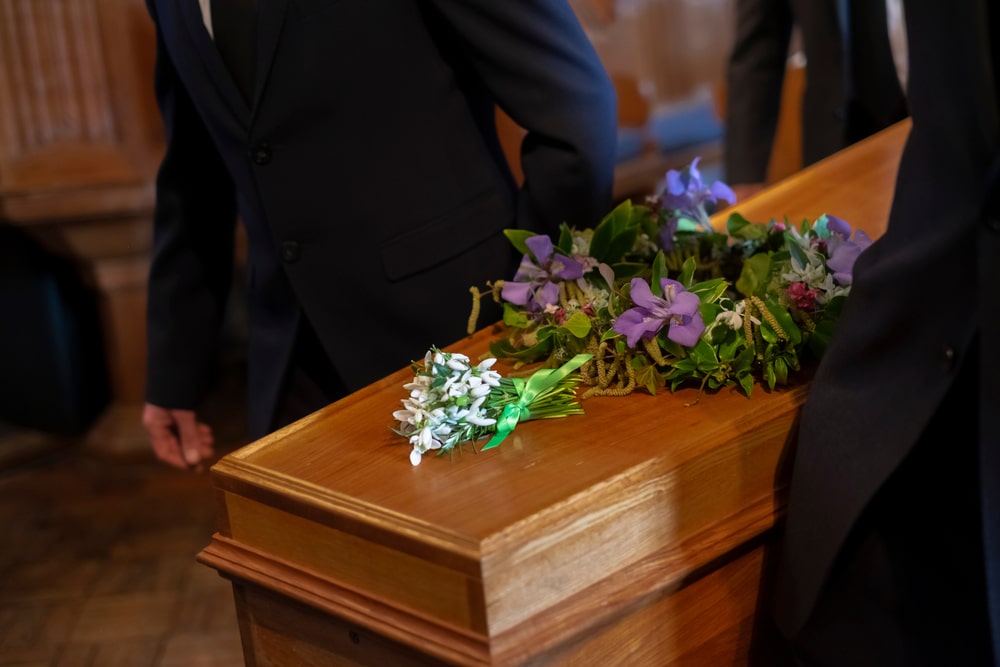
Procession as pallbearers carry casket into church for funeral service

How do they determine if an oversized casket is needed?

Most often, the deceased’s weight, height, and width are measured. To determine width, the body is measured from elbow to elbow.

Are oversized caskets easily accessible?

Absolutely. The funeral home will likely have oversized caskets available to choose from, or they can order a specific one, if you prefer. Roughly 10% of the population require an oversized casket, so they are readily available.

Do oversized caskets cost more?

Short answer, yes, but it’s based on the type of material you choose. An oversized casket made of mahogany is going to cost more than an oversized casket made of pine or willow. Generally speaking, an oversized casket isn’t going to cost much more than a standard casket, but you can keep costs down by choosing a lower cost material. For more information about casket materials, click here.

Aerial view of a casket with flower sprays set up around it

Will an oversized casket fit in a standard grave liner or burial vault?

Most cemeteries require the use of a grave liner or burial vault. Encasing a casket in a grave liner or burial vault prevents the ground around the grave from shifting as the casket decays. This is how cemeteries prevent uneven ground and keep maintenance costs down.

Standard burial vaults have a width of around 30 inches, so a small uptick in the casket size won’t affect the burial vault. However, if an even greater width is needed, then a larger burial vault or grave liner will add a little extra to the total cost.

Do oversized caskets come in all materials?

If you find a casket you like in standard size, it’s likely that the same casket is available in oversize. You can find oversized caskets in all the standard wood options (mahogany, walnut, cherry, oak, birch, maple, pine, willow, etc.) as well in steel, copper, and bronze. If you prefer green burial, there are oversized options available in bamboo, willow, seagrass, and even cardboard.

Woman wearing black dress stands next to open casket as she places red rose inside

Where can you purchase an oversized casket?

Your local funeral home will have oversized caskets available in their inventory, so they will be the easiest and most convenient option for you. If they don’t have what you want on site, they can put in an order specifically for your needs. Alternatively, you can purchase an oversized casket online. However, it will be your responsibility to ensure that the funeral home has access to the casket.

If you have additional questions about oversized caskets, contact a trusted local funeral home. They will ensure that your every question is answered to your satisfaction.

And if you’d like more information about caskets, check out these resources:

1970s music on a casette tape

9 Songs from the 1970s for a Celebration of Life

By Meaningful Funerals, Music

Music is powerful – it can help us express our emotions and open us up to feelings we’re avoiding. That’s why choosing the right songs for a funeral can make such a big impact on the service. Picking personalized music can help create a healing experience for you and your family.

1970s music on a casette tape

Choosing your loved one’s favorite songs can be a great start, but you can also consider music from the decade they were born in – or a decade of music that they always enjoyed listening to. If you’re looking for music from the 1970s to incorporate into your loved one’s funeral or celebration of life, here are 9 songs you can try.

Bridge Over Troubled Water (Simon & Garfunkel, 1970)

When tears are in your eyes
I’ll dry them all
I’m on your side

When you lose a loved one, you may feel like you are alone. But funerals remind us that others are grieving the loss just like we are. “Bridge Over Troubled Water” highlights how we can find comfort in each other during difficult times. At a funeral or memorial service, this song could serve as a heartfelt reminder to help each other through the difficult days ahead.

Farewell My Friend (Dennis Wilson, 1977)

You take the high road
And I’ll take the low road
And we’ll meet again

Saying goodbye to someone you love is hard. In “Farewell My Friend,” Dennis Wilson captures the idea of saying farewell to someone you care about. But this song isn’t just about saying goodbye. It’s also about embracing hope for the future and believing that you will someday see your loved one again, which would make it a hopeful addition to a funeral or celebration of life.

Take Me Home, Country Roads (John Denver, 1971)

I hear her voice in the mornin’ hour, she calls me
The radio reminds me of my home far away

A song full of nostalgia and longing, “Take Me Home, Country Roads” is a classic for a reason. These heartfelt lyrics speak about the desire to be with a loved one who is far away. At a funeral or memorial service, this song can capture the longing you feel to see that person you love, especially if they were someone you called “home.”

Lean On Me (Bill Withers, 1972)

Sometimes in our lives
We all have pain
We all have sorrow
But if we are wise
We know that there’s always tomorrow

After the death of a loved one, you need the support of friends and family members. “Lean On Me” encourages us to lean on each other for support during difficult times. Plus, this song reminds us that there is hope to be found on the other side of grief and pain. Life will get better, and you can trust that there are times of hope and joy to come.

I Will Always Love You (Dolly Parton, 1974)

Bittersweet memories
That’s all I am taking with me

When you lose someone you love, they’re still a part of your life through your memories. This classic song beautifully captures how love continues even when someone is no longer a part of your life. While looking back on your time with your loved one may hurt right now, this song can remind you that you feel grief because you loved them so much.

Let It Be (The Beatles, 1970)

And when the night is cloudy
There is still a light that shines on me
Shine until tomorrow, let it be

A song about finding comfort during dark times, “Let It Be” reminds the grieving that there is hope on the other side of grief. While you may be tempted to run from your emotions, embracing your feelings and allowing yourself to feel sad or angry is an important part of the grieving process. In a way, this classic Beatles song can help everyone remember that it’s okay to let yourself feel those negative emotions.

Going Home (Annie Haslam, 1977)

Work all done, care laid by
Going to fear no more

A solemn song with surprisingly hopeful lyrics, “Going Home” speaks about reuniting with loved ones after death. While death can be a scary topic for many people, this song suggests that peace can be found in a life well-lived and that death provides a release from pain. If you’re looking for the hope of reuniting with your loved one, this song could make a great addition to a service or a memorial slideshow.

For a Dancer (Jackson Browne, 1974)

And somewhere between the time you arrive
And the time you go
May lie a reason you were alive
That you’ll never know

“For a Dancer” tells a beautiful story about the way people’s lives touch each other. Even though your loved one is gone physically, they live on in your memory and in the impact they made on their family and friends. This song is a reminder that you can find meaning in the positive impact you make in other people’s lives, which can give you hope for the future.

Bright Eyes (Art Garfunkel, 1978)

There’s a high wind in the trees
A cold sound in the air
And nobody ever knows when you go

After someone you love dies, you may ask yourself deep questions about life as you search for meaning. “Bright Eyes” captures the way you can feel lost after the death of a loved one. As you and your family mourn the loss, this song can be a reminder that it’s okay to ask questions and search for meaning.

Songs from other decades

Other musical options for a meaningful funeral

stew with potatoes in a red pot

Cooking for One: Resources and Tips for the Grieving

By Grief/Loss

When you lose your spouse or partner, everyday tasks like cooking can feel impossible. Maybe your loved one handled all of the cooking and you don’t know where to start. Or maybe you love cooking, but every time you step into the kitchen, you remember that your loved one won’t be there to enjoy your food.

You’re not alone! Those who are grieving often find cooking difficult. Cooking can take a lot of energy, and as you adjust to life without your loved one, it’s normal to struggle to find the motivation to cook, especially if you’re experiencing a change in appetite.

But there are steps you can take to help yourself cook. From preparing meals ahead of time to taking cooking classes, here are some of our top tips for getting back in the kitchen when you’re grieving.

Take a Cooking Class

cooking class with people stirring food in skillets

Whether you have decades of cooking experience or are just now learning how to cook, taking a cooking class can be a huge help! If you’ve never had the role of cook in your household, a cooking class can help you expand your cooking skills and grow your confidence in the kitchen. If you already know how to cook but are struggling with motivation, a cooking class can help you rediscover your love of cooking and meet new people.

You may be able to find cooking classes at a local restaurant, support group, or even at your library! If you can’t find an in-person class, you can try an online cooking class through a website like America’s Test Kitchen Cooking School or explore cooking class videos on YouTube.

Cook Smaller Portion Sizes

small meal with chicken, pineapple, and greens

If you’re used to cooking for two, you may find yourself with too much extra food on your hands. While leftovers can be convenient, you may not want to eat the same food for a whole week.

Adjusting the measurements in recipes can be a great help. If you need to cut a recipe in half, Google can help you with weird measurements, like half of 1/3 cup. You can also check out resources that specifically create recipes for one. One Dish Kitchen is a great resource, and AllRecipes also has some great options for meals for one.

Make One-Pot Meals

stew with potatoes in a red pot

When you’re grieving, the idea of having to juggle multiple parts of a meal can be intimidating. You may not feel like making a main dish and sides. Plus, the more parts your meal has, the bigger the cleanup.

Instead of avoiding cooking because you feel like you have to make a lot of different things at once, explore one-pot meals! Casseroles, stews, skillets, and sheet pan meals that use only one pot or pan can make cooking and cleanup much easier. There are recipes for virtually every type of cuisine, and you never know when you’ll find a new favorite. Both Food Network and Taste of Home have long lists of one-pot meals you can try.

Try a Meal Box

Meal box with ingredients and woman holding the recipe on her phone

Sometimes going to the grocery store after losing your partner can be difficult, especially if they were the one who typically handled the groceries. One solution is to invest in a meal box subscription like HelloFresh or Home Chef.

Meal box services like these send you the exact amount of ingredients that you need for each recipe, so you don’t have to worry about food waste or cooking too much food. Most have the option to choose how many servings you want to receive, which means you can make enough for just yourself or order extra to have leftovers.

Freeze Extra Portions

beef and broccoli meal in a plastic container

Sometimes you want easy meal prep, but you don’t want to eat a lot of leftovers. One way around this issue is to freeze extra portions of the meals you make. After cooking a meal, you can freeze leftovers by the portion to make reheating at a later date easier.

There are also plenty of recipes that you can make and freeze ahead of time, then cook when you’re ready! Taste of Home has some great freezer recipes, and Good Housekeeping has options for fridge or freezer make-ahead meals. If you’re interested in creating single-serving meals ahead of time, consider investing in containers that fit exactly one portion.

Share Food With Others

Group of people sharing food at a table

For many people who have lost a partner, sitting down to eat by themselves reminds them of their partner’s absence. If you’re struggling to eat because of loneliness, try eating meals with friends or family members. While you may not feel like cooking for a group of people, you can invite everyone to bring a dish, potluck-style.

Additionally, you can have a meal exchange with friends or family. Each person can make extra portions of the meal they’re cooking and swap them for a homecooked meal from someone else. This can be a great way to get more variety in your diet without making a lot of meals yourself.

Fill the Space at the Table

Table with decorations and candles on it

While inviting family and friends to eat with you can be an easy way to fill the space left behind by your loved one, there will likely still be times when no one is available. Instead of avoiding the kitchen when you’re alone, try to fill the empty space at your table.

You can physically fill the space by adding a centerpiece or decorations to the table. Or you can listen to music or watch TV while you eat so you don’t have to eat in silence. While these won’t eliminate the empty space at your table, they can help you cope with your loved one’s absence.

Consult Your Doctor or a Grief Therapist

african american man in a brown shirt being comforted by a nurse in a blue shirt

If you find that you’re still struggling with motivation after a long period of time, especially due to depression, it may be a good idea to consult a grief therapist. And if you have a continuous lack of appetite, please consult your doctor. Taking care of your physical health is important when you’re grieving, and your doctor can help you find ways to improve your health.

As you begin to get back into the kitchen after losing your partner, be patient with yourself. It may take time for you to create a new routine and adjust to your new normal. Give yourself grace, and don’t hesitate to ask for help if you need it.

Open medical textbook with stethoscope lying on top

FAQ: Donating Your Body to Science

By Educational, Explore Options No Comments

If you’re reading this, you’re at least a little bit interested in donating your body to science. To help you make the decision that’s best for you and your family, check out this easy-to-understand FAQ list. And if you have additional questions, contact a trusted local funeral home to help you get more detailed information about state or local donation options.

Let’s get started!

Q: What’s the Difference Between Organ Donation and Whole-Body Donation?

Whole-body donation typically refers to the donation of the whole body to medical or scientific research. Once donated, the body may be used for surgical training, scientific research, and anatomy lessons for medical students, promoting the advancement of medical science.

Organ donation, on the other hand, refers to the donation of organs after death that, if approved for donation, would be transplanted to save a living person’s life.

Three medical students looking at a test tube of blood

Q: Is It Possible to Be an Organ Donor and a Whole-Body Donor?

It is technically possible to register as both an organ donor and a whole-body donor. However, when registering for both, applicants should understand that organ donation for transplant will take first priority. This means that if organs are selected and approved for transplant, your selected research facility may refuse the whole-body donation.

However, many registered organ donors are not approved for transplant because of the stringent restrictions and timing required for organ donation. Cancer, heart disease, lung disease, potentially malignant tumors, and other pre-existing conditions often rule out organ donation candidates. In addition, proximity to the hospital or the need to perform an autopsy can also prevent organ donation. Because of these restrictions, many bodies of organ donors remain uncompromised and could still be donated to science or willed to a university after death if the donor wishes.

So, consider your options carefully. If you value organ donation more highly, register for both forms of donation with the understanding that one may not happen. However, if you value whole-body donation to science more highly, consider only registering for that one form of body donation.

Drawing of the human heart with the different parts named

Q: How Do I Donate My Body?

The process will be different for each research facility, but always make sure you include the following steps.

Step 1: Talk to family

When considering whole-body donation, the first step is to communicate your wishes to relatives and next of kin to avoid any confusion after your death.

Step 2: Contact research facilities and ask questions

Next, you will need to contact several research facilities where you would consider donating your body. Fill out the necessary paperwork and request educational materials so that you and your family members can understand the specific procedures, requirements, and restrictions of whole-body donation at this specific location.

To be well informed, ask questions about the facility, costs associated with donation, and the procedures of donation. Check this list to find additional questions to ask donation facilities.

Medical professor teaching medical students

Step 3: Share the research facility’s contact information

Once you have everything arranged with your chosen research facility, provide their contact information and any instructions to your relatives. To make the process even smoother for your family, complete a funeral prearrangement with your local funeral home and give their staff all the body donation details, too.

Step 4: Inform your primary care doctor

Finally, you should inform your primary care doctor about your intentions. They can help you write clear directives regarding your medical care wishes that will help your family make healthcare decisions if you should become incapacitated.

Three medical students learning about the anatomy of the whole body

Q: How Do I Find a Body Donation Facility Near Me?

To find a research facility near you that accepts whole-body donations, visit the University of Florida’s website that lists whole-body donation programs in each state. You can also organize whole-body donation through private organizations, such as United Tissue Network and Science Care.

Q: How Much Does Whole-Body Donation Cost?

There is no set answer to the question of cost because policies differ among donation facilities. Be sure to consult with your donation facility of choice to plan for costs that will not be covered by the facility.

Often, donation facilities will arrange and pay for body transportation (within a designated distance), eventual cremation, and the return of cremated remains to the family. The family should expect to pay for the cost of any necessary legal documentation (like death certificates) and funeral services conducted before the release of the body to the donation facility.

Under no circumstances will your family receive monetary compensation for a body donation as the buying and selling of bodies is prohibited by federal law.

Open medical textbook with stethoscope lying on top

Q: What Does the Whole-Body Donation Process Look Like?

Some donation facilities allow a certain amount of time after death for a funeral service to be performed. However, some facilities require that notification and transportation of the body occur soon after death. This may mean that funeral services with the body present may not be possible. Make sure you know your specific facility’s policies.

After the death of a loved one, family members should notify the facility of the donor’s death and proceed appropriately. Often, this means coordinating with a representative of the donation clinic and a hospital or hospice healthcare representative, who will determine together whether the body can be accepted for whole-body donation.

Whole body studies are typically completed within 1-3 years, but they can last as long as five years. Upon the completion of study, bodies are typically cremated, and the ashes returned to the family.

Q: Are There Any Restrictions for Whole-Body Donation?

Although universities and medical facilities are in constant need of whole-body donations, most programs reserve the right to refuse donation. For example, organ donors may be refused if the research facility prefers to study an intact body.

Additionally, bodies may not be accepted if they:

  • Are significantly damaged
  • Are morbidly obese or emaciated
  • Carry a contagious or infectious disease
  • Have been autopsied
  • or for the simple reason that donations are not needed by the facility at the time.

Check with your chosen facility to learn more about specific restrictions.

And that’s it! If you have additional questions, speak to a representative at your preferred research facility. Alternatively, you can partner with a local funeral home to ensure that you get all the answers you need.

Two women and one man standing at a graveside service, one woman holding a white handkerchief

Why Your Presence at the Funeral Matters

By Grief/Loss, Meaningful Funerals

In our culture today, there’s a tendency to do whatever is necessary to avoid pain and unpleasant feelings. This is one reason why people want to avoid the funeral – it brings out emotions that don’t always feel good. But pain and difficult emotions are a natural part of the human experience. In order to have good mental health and positive well-being, we need to learn how to process difficult experiences.

Man and woman standing together next to a closed casket, woman's hand placed on casket as they pay their respects

Nationally recognized grief counselor and death educator Dr. Alan Wolfelt puts it this way:

The pain of grief will keep trying to get your attention until you unleash your courage to gently, and in small doses, open to its presence. The alternative—denying or suppressing your pain—is in fact more painful. If you do not honor your grief by acknowledging it, it will accumulate and fester. So, you must ask yourself, “How will I host this loss? What do I intend to do with this pain? Will I befriend it, or will I make it my enemy?” (To see Dr. Wolfelt’s full article, click here.)

Woman in black dress holding white lilies with left hand as she places right hand on casket

But why does your presence at the funeral matter? How will attending a funeral help you address any pain or complex emotions you may feel at a time of grief and loss? How will your presence provide support and encouragement to others? Good questions. Let’s discuss 7 ways attending the funeral or memorial service will help you (or your loved ones) on the grief journey.

Attending the funeral service gives you the opportunity to:

1. Honor and remember a person’s life

By attending the funeral or memorial service, you have a chance to acknowledge that a special person existed and their life was important. As human beings, we need to know that our lives matter, and the funeral provides an opportunity to affirm that. Even if you didn’t know the person well, you honor them and their surviving family members by paying your respects and participating in remembrance activities.

Woman in black dress placing purple flowers on a grave at the committal service

2. Say goodbye in your own way

While the funeral doesn’t make grief go away, it does help you grieve. Without a service, things don’t feel finished. Almost like something is missing. However, with a service, you have the chance to say goodbye in your own way and accept the reality of the death. Some may want to sit near the deceased for a while; for others, the act of attending the funeral is enough. We’re all different, but it’s important to say goodbye, especially for those who didn’t get to see the deceased before their passing.

3. Express your emotions

People expect to see emotions at a funeral service, which makes it a safe place to express yourself. You may be tempted to bottle up your emotions, but if possible, try to engage with your feelings. Let yourself experience what you feel and take note of your emotions. Someone you love has died, and that’s significant. Your emotions are normal, and it’s okay to express them.

Young woman who is sad

4. Offer condolences

Another reason why your presence matters is that it gives you a chance to offer your condolences. Whether you want to give the grieving family a hug or share an encouraging word, your presence can bring great comfort. Plus, by offering your condolences at the funeral, you make things simpler for the family. It’s easier to talk to 100 people at the funeral than to experience 100 different condolence encounters after the funeral.

5. Support the grieving family

Similar to giving your condolences, you can also offer practical support to the grieving family. This could mean that you drop off food for the family in the days following the service. You could sign up to be on “clean-up duty” at the gathering, give family members a ride, or help them pack up memorial items used to personalize the service. While the funeral home staff will take care of the major details, there are other ways you can step in to offer practical support to a grieving family.

Two women and one man standing at a graveside service, one woman holding a white handkerchief

 6. Reconnect with others

After a loss, you need good people surrounding you. Funerals bring family and friends together, so they provide an opportunity for people to reconnect. Though the funeral will bring tears, it will also bring laughter, joy, and connection. Families and friends who haven’t seen each other in a while can swap stories, share memories, and support each other. We’re not meant to live life alone, and we can lean on each other during times of grief and loss.

7. Realize you aren’t alone in your grief

Grief can feel lonely, but by attending the funeral, you see other people who are also grieving. You aren’t alone in what you’re feeling. The people around you at the funeral may not experience exactly what you are feeling, but they are processing emotions of their own. You can sit down together, talk with each other, unpack what you’re feeling, and provide much-needed love and support. You don’t have to grieve on your own – there are people who can stand with you.

Two white roses sitting on casket with clergy person in background holding an open book

Are there times when you shouldn’t attend the funeral?

In most cases, your presence will be welcome at the funeral or memorial service. But life isn’t always black and white; sometimes, it’s gray. Here are a few times when you should consider skipping the service or participating online:

  • Your attendance at the service would be disruptive, distracting, or upsetting to any member of the immediate family
  • The services are private and not open to the public
  • The services are out of town and you cannot get there
  • You cannot arrange for time off work
  • You are ill or physically unable to travel

White chrysanthemum resting in an open book

Additional grief resources

While attending the funeral is an important and necessary part of the grief journey, it’s not the end. For some, the deep emotions of grief last for a few weeks, and for others, they last for years. To help you (or a grieving loved one) in the days ahead, here are some additional grief resources.

Person standing in front of a heart drawn into the snow during the holiday season

Healing Your Holiday Grief

By Christmas, Grief/Loss, Seasonal

By Dr. Alan D. Wolfelt

If you could go back in time and relive a special holiday, which one would you choose? Close your eyes for a moment and think about this holiday. Now, slowly, walk through this memory in your mind.

What made it so special? What were the surroundings like? Who inhabits this memory with you?

Family of three - dad, mom, and pre-teen daughter - putting up Christmas tree together at holiday

Holidays have such rich associations for us because humankind created them as a way to honor and celebrate that which is truly important. We step out of the hustle and bustle of our day-to-day routines and into a world where our spiritual beliefs and connection to others matter above all else. We pause to give thanks, and we share of ourselves.

As the Grinch learned that memorable Christmas, the holidays don’t really come from a store – they come from the heart and soul.

Which is why when someone loved dies, the holidays can be so painful. The heart of the holidays has been torn apart. Without love, what is life? Without the people we love, what are the holidays?

I want you to know that you can find continued meaning in the holidays and in life. You can continue to live and love fully. You must grieve, but you can also celebrate.

Person standing in front of a heart drawn into the snow during the holiday season

Setting Your Intention to Heal

It takes a true commitment to heal in your grief. Yes, you are changed, but with commitment and intention, you can and will become whole again. Commitment goes hand in hand with the concept of “setting your intention.” Intention is defined as being conscious of what you want to experience. A close cousin to “affirmation,” it is using the power of positive thought to produce a desired result.

How can you use this in your journey through holiday grief? By setting your intention to heal.

Turning to Ritual

Setting your intention to mourn and heal during the holidays – and beyond – is one important way to move forward in your grief journey. Harnessing the power of ritual is another. We create holiday rituals because everyday activities and normal conversations cannot capture our most profound thoughts and feelings. Rituals give them voice and shape. So, we decorate our Christmas trees, light our menorahs, give gifts, hold hands, and say prayers.

During your times of grief, the very rituals of the holidays can help you survive them. Try participating in some of your normal holiday traditions but with a focus on grief. When you light candles in your home, do it in honor or the person who died. You might also create a special holiday ceremony or private ritual in memory of the person who died. The holidays are ritualistic, and ritual can help you survive (and heal) right now. Remember this when you are considering whether or not to participate in your next holiday tradition.

Grandmother in her kitchen, baking Christmas cookies with grandchildren during the holiday

Living in the Now

Return once more to the holiday memory I asked you to conjure up at the beginning. This memory is so special to you because you were so very present in the moment. When your grief overwhelms you this holiday season, try focusing on the now. Your grief wants you to live in the past through memories of the precious person who died. Remembering is indeed important, and your memories will always be a special part of your life.

Your grief will also project you into the future at times. You will worry about what the coming months and year hold for you. Looking ahead is also a normal and natural part of grief.

But when remembering and projecting exhaust you – and they will – return yourself to the present moment. Concentrate on what is going on around you right now. Hear the sounds and see the sights. Try drawing on the power of now to find continued meaning in your holidays and in your life.

Mother and young daughter sitting in front of Christmas tree as they watch something funny on a smartphone

You’ll notice I have used the generic term “holiday season.” By that, I mean the winter holidays bookended in the United States by Thanksgiving and New Year’s Day. In between are the spiritual/religious holidays of Christmas, Hanukkah, and Kwanzaa. But whatever holidays you celebrate, and no matter where you live, the principles apply to the holidays that are most meaningful for you – including other holidays, birthdays, and anniversaries sprinkled throughout the calendar year.

A List of Ideas to Heal Your Holiday Grief

Be Compassionate with Yourself

Let your holiday grief be what it is. And let yourself – your new, grieving self – be who you are.

Survive

If the death was very recent, you may be in survival mode this holiday season. If that’s true for you, it’s OK – the world will keep turning whether you participate in the holidays or not.

Keep What Matters

You might consider simplifying your holiday rituals instead of abandoning them altogether. Keep the traditions that matter most to you and set the others aside, at least for now.

Group of three sitting quietly at home, sitting next to a warm fire and wearing cozy socks

Communicate Your Wishes

Muster the strength and courage to tell the people in your life what your wishes are for the holidays. If you’d like their company but prefer to gather somewhere different than you usually do, say so. If you’d rather skip some of the celebrations this year, tell them. If you’re feeling unsure about how to spend the holidays, tell them.

Attend a Remembrance Ceremony

Many hospitals, hospices, and funeral homes host remembrance ceremonies during the holidays. The act of joining together in our grief and ritualizing our mourning can be healing. Especially early in their grief, many families say that it was the most important thing they did during the holidays.

Hang a Special Stocking

If your holiday traditions include hanging stockings, consider hanging a special stocking in memory of the person who died.

Young girl with brown hair hanging up a Christmas stocking on the mantle

Be a Secret Santa

You could probably use some “feeling good” this holiday season. Give yourself a dose of pleasure by giving to someone else.

Prepare Favorite Holiday Foods of the Person Who Died

Special foods are an important part of the holiday traditions. Chances are, your family prepares many of the same dishes each holiday, and everyone looks forward to those unique smells and flavors.

If You’re Alone, Find Ways to Connect

If you’re alone this holiday season, you would be well-served to make an effort to connect with other human beings. Invite your neighbor to dinner. Volunteer at a homeless shelter or nursing home. Join a group at a place of worship.

Mature couple sitting near Christmas tree as they talk with family through video chat

Make an Appointment with a Grief Counselor

Seeing a counselor or spiritual advisor for just a session or two over the holidays may help you cope better and focus more on what is important to you this year and what is not.

Count Your Blessings

Think of all you have to be thankful for. This is not to deny the hurt, for the hurt needs to take precedence right now. But it may help to consider the things that make your life worth living, too.

Believe in a Better Next Year

Believe in your capacity to heal and grow through grief. Believe in the enduring holiday spirit of giving and love.

About the Author

Alan D. Wolfelt, Ph.D., is the founder and director of Center for Loss and Life Transition and a member of the TAPS Advisory Board. This article is excerpted from his book, Healing your Holiday Grief: 100 Practical Ideas for Blending Mourning and Celebration During the Holiday Season, published by Companion Press and available at www.centerforloss.com.

Printed with permission from Dr. Alan D. Wolfelt, Center for Loss and Life Transition.

Skip to content