The 5 Basic Steps of Funeral Planning

By Explore Options, Meaningful Funerals, Plan Ahead, Planning Tools

Thinking about planning a funeral may make you feel anxious, especially if you are arranging a funeral for a loved one who has recently died. The whole thing just sets your anxiety alarm bells ringing! If that’s you, you’re not alone. Being tasked with planning a funeral can feel very intimidating.

In large part, the anxiety comes from not knowing what to do, how to start, or what to expect. Most people only plan one or maybe two funerals in their entire lifetime, so it makes sense if you aren’t entirely comfortable with the process. After all, you don’t know what you don’t know. But think of it this way: everything new is a little scary in the beginning. That first day of class. Your first day at a new job. Moving to a new place. Eventually, you find your groove and become comfortable. But it only happens with exposure and actively working to familiarize yourself with your surroundings.

The same line of thinking applies to funeral planning. It’s intimidating because you don’t know much about it. On top of that, funeral planning is about death and dying, a topic that most of us usually try to avoid thinking about as much as possible. All this to say, it is completely natural to feel apprehensive when thinking about planning a funeral.

One of the keys to overcoming anxious feelings about the unknown is to educate yourself about the new task or experience ahead of you. In this case, funeral planning. Let’s talk about the major aspects of planning so you can feel empowered and informed. Also, feel free to print this Funeral Planning Checklist to help you make sure that you’ve hit all the key steps.

Let’s get started.

The 5 Basics Steps of Funeral Planning

1. Choose the type of disposition you’d like

The first order of business when making funeral arrangements is choosing a disposition type. The two most common types of final disposition are traditional burial and cremation. There are other, less common options, like green burial, burial at sea, or anatomical donation. None of these are necessarily better than the others. It all comes down to what aligns most closely with your loved one’s and your family’s personal values.

2. Choose the type of remembrance service you’d like

Next, you need to decide what type of remembrance service you’d prefer. For those who choose traditional burial, it’s common to have a visitation before the funeral service so that friends and family have an opportunity to say goodbye to the one who has died and offer condolences to the grieving family. For those who wish to be cremated, you can still have a funeral service and/or visitation with the body present before cremation takes place. Alternatively, a memorial service can follow cremation. The most important thing is that you do something to honor and remember the life that was lived.

3. Choose options to personalize the funeral experience

Personalization is key to a healing and meaningful funeral experience. Dr. Alan Wolfelt, nationally-recognized grief counselor, author, and educator, says “What is essential is the life that was lived and the impact that life had on family and friends.  To honor that unique life, the funeral must also be unique.  Over and over families tell me that the best funerals are those that are personalized.”

To create a meaningful, healing, and personalized funeral, consider including the seven elements of a funeral, adding your own personal flair to each one. For example, if they were a huge fan of big band music, include that style of music. If they enjoyed making quilts, display those quilts. You can even allow specific mourners to take one of the quilts home as a remembrance. If they loved the beach, have a beachside service. The possibilities are endless. You may also want to prepare a personalized obituary, a touching eulogy, or other special remarks or readings that capture your loved one’s character and spirit.

4. Choose a place of final rest

It’s important to have a plan for a permanent final resting place. This may mean a burial plot, which is an option for those who are buried traditionally or for those who are cremated. The options available for cremation are many and varied, so it’s important to choose what works best for you. Some of the options for cremated remains include scattering and placement in a mausoleum or columbarium, among others.

Some families prefer to keep the cremated remains of a loved one at home for a time. This is perfectly fine – sometimes it’s necessary to help process grief. However, keeping an urn somewhere in the home is not a long-term solution. Instead, after a period of time has passed and the grief isn’t as sharp, select a final resting place for the cremated remains so that they are taken care of long after you are gone.

5. Choose a method of payment

If your loved one has preplanned and prefunded a funeral, then you will be in good shape. You may have to pay for a few items out of pocket that were not included in the original plan, such as catering, a reception hall, flowers, and possibly flowers or police escort. However, compared to many other families, you will not have much to cover in the way of funeral expenses.

If no prearrangements exist, your loved one may have had life insurance or a final expense plan set up to help pay for funeral costs. Talk to a funeral professional about how to use these types of funds to pay for a funeral. If the funeral was unexpected, there may be no funds available to pay for a funeral. If this is the case, you can ask family members to help pay for different parts of the funeral or to contribute in different ways, such as bringing food or sending flowers. Sites like youcaring.com or gofundme.com can assist with crowdfunding to help pay for a loved one’s services if money is tight. See 5 Ways to Pay for a Funeral or 7 Ways to Pay for Unexpected Funeral Costs to review several payment options.

Now that you know these 5 major points of planning, you can talk to a funeral professional with more confidence. While the intimidation may not have entirely disappeared, you have tools in your belt now that will help you during the planning process. And for what you don’t know, funeral professionals are there to help. While you may only plan a handful of funerals in your lifetime, they have planned hundreds or even thousands. You aren’t on your own in this. Lean on them for their expertise and ask all the questions you want.

Consider the Benefits of Planning Ahead

Before we finish, did you know that you can take care of these areas of planning ahead of time? Planning ahead for funeral wishes can be extremely helpful to your loved ones when they themselves are faced with the unknown of how to plan a funeral. We all know that death is inevitable. It’s something we cannot escape, so why not make every effort to plan for it and maybe make things a little easier on our loved ones?  The more your family knows about your final wishes, the easier the funeral planning process will go for them after you’re gone. Many families are plagued by the question, “Did we do the right thing?” It would be so much easier if they knew exactly what you wanted. And that’s just one reason why planning ahead benefits your family. For a full list of 10 reasons why planning ahead benefits you and your family, read 10 Reasons to Plan Ahead. You can give your family a special gift of love by planning ahead today for peace of mind tomorrow.


Balancing Grief and Joy During the Holidays

By Christmas, Exclude from Top Posts, Seasonal

No matter what time of the year it is, grief is hard. It involves so many emotions, like sadness, anger, guilt, or relief. The Christmas holiday adds its own complexity to an already full emotional plate. It may feel like you are so filled with grief that you have no room for joy. So, how do you find the balance between grieving a loss and finding joy in the here and now?

Grief is a continual ebb and flow, intense one moment and gentle the next. It’s becoming increasingly understood that there’s no right or wrong way to grieve, and it takes time to process loss. At Christmas, there will be many reminders of your loss, and you may feel them keenly. That’s okay. That’s normal. While society may tell us that we should always be happy, it’s an unrealistic way to view life and the human heart. Instead of focusing on how to “be happy” this holiday season, let’s instead look at a few tips that may help you find the balance between moments of grief and moments of joy.

Find a special way to honor your loved one

This year, though you may be missing the physical presence of someone dearly loved, you can still bring their spirit to life by finding a special way to honor their memory. You might set a seat of honor for them at the table or create a remembrance item. You could make their favorite dish, bring out a collage of favorite photos, or reminisce about some of your most cherished memories. If Christmas was your loved one’s favorite season, continue one of their favorite traditions or incorporate a new one in their honor. While remembering your loved one may bring moments of sadness, there will be joy in finding ways to make them a special part of the season.

Don’t ignore what you feel

Because we don’t want to cause others distress, especially at Christmas, many of us may be tempted to ignore our own feelings. While there may be moments when you need to keep your emotions in check, it’s always best to let yourself feel what you feel. Take time to journal, paint, talk, or somehow express what’s going on inside. According to nationally recognized grief author, educator, and counselor Dr. Alan Wolfelt, it’s best to “Find a place to be quiet and alone with your thoughts and feelings. In these moments of solitude, learn to check in with yourself about the death. Look your grief in the face and say hello to it.” Only by allowing ourselves to face the pain can we begin to move forward.

Don’t be afraid to say no

At Christmas, it can be easy to fill up the calendar with events. There are family get-togethers, school events, church events, community events, and so much more that may pull at your time and attention. Pay attention to how you feel, and don’t be afraid to say no. Do the things that will bring you the most joy or satisfaction and let everything else slide this year. By carefully planning how you will spend your time, you can ensure that your days are a healthy mix of activities. There’s no need to do everything, but do make sure that you participate in a few things that will bring you delight.

Take care of yourself

Take time this Christmas season to look after yourself. That may mean going to a spa for the day, getting a pedicure, taking a hike, or simply sitting down to read or watch a TV show. Grief is exhausting, and with all the extra demands on our time during the holiday season, it’s important to take time to rest and relax. Prioritize what’s most important to you and your family, and make those specific things happen. If shopping is stressful, give gift cards this year. If you can’t bring yourself to send the annual Christmas cards, don’t be afraid to skip a year. As you take care of yourself, you will find the strength you need to find joy in the sweet moments.

Accept that things are going to be different

When grieving a loss, some may drop all traditions as pointless and painful. Others may try to make sure nothing changes at all. No matter what your inclination, look for middle ground. Things will be different this year, and while it’s not a difference you wanted, there is joy to be found in making new memories and establishing new traditions. Focusing on the flaws of the season will only make you unhappy. If we try to force everything to be the same, we will be inevitably be disappointed. Instead, accept that things are going to be different and make the best of it.

Connect with those you love

The holidays are about spending time with people you love. In the midst of sorrow, we need time to both laugh and cry. It’s not healthy to maintain a constant attitude of grief. While it may feel disloyal at first, experiencing moments of joy while walking through grief is natural and normal. There’s no need to feel guilty. By connecting with those we love, and who love us, we have the opportunity to laugh and cry. We can share our dearest memories, cry over the pain we feel, and then find joy in the fact that we are still surrounded by people who love us.

Look for joy

This holiday season, don’t be afraid to feel joy. Feeling moments of happiness or delight doesn’t mean that you’ve forgotten your loved one. They simply mean that you are human. You are made to feel a multitude of emotions at the same time. Laughter and tears. Joy and sorrow. We are complex beings, and our grief is strong some moments and subtle the next. By allowing yourself to feel both emotions, you can find the balance and truly grasp what it means to live well even in the middle of your grief journey. Life is full of irretrievable moments – don’t miss out on one this holiday season. Embrace it, cherish it, and find the balance.

12 Activities to Help Ease Senior Holiday Grief

By Christmas, Grief/Loss, Helping a Friend in Grief, Seasonal

Many seniors of the older generation spend the holidays alone, which often leads to holiday grief. Even the healthiest seniors must face the consequences of the passage of time, which brings the death of loved ones, decreased energy and mobility, and the loss of independence and opportunities. Some seniors have lost a spouse, their children live far away, or many of their loved ones have already passed on due to illness or old age.

Imagine waking up on Christmas morning, knowing that there is no one to share the holiday with. The focus on family, friends, and togetherness during the holidays can create feelings of loneliness and grief. In a survey conducted by AARP, 67% of adults feel happy when thinking about spending time with family during the holidays. On the flip side, 31% of respondents said that they have felt lonely during the holiday season.

Even though many seniors are facing loneliness and holiday grief this year, we can do something to help. Whether it’s with an older family member or at a local assisted living center or nursing home, you can have a positive influence on the seniors around you. Take a look at these 12 holiday activities and ask yourself which ones you can do to help others this season.

12 Activities to Help Ease Senior Holiday Grief

1. Have a Gift-wrapping Party

Invite a few seniors in your life over to help you wrap gifts for Christmas. You can prepare a few sweet treats and warm drinks to make the time cozier and festive. Also, ask them to bring along any presents of their own so that you can all take part in wrapping gifts together. Even this small gesture can make a big difference in the hearts of those who are lonely or grieving.

2. Sing Carols or Other Christmas Songs

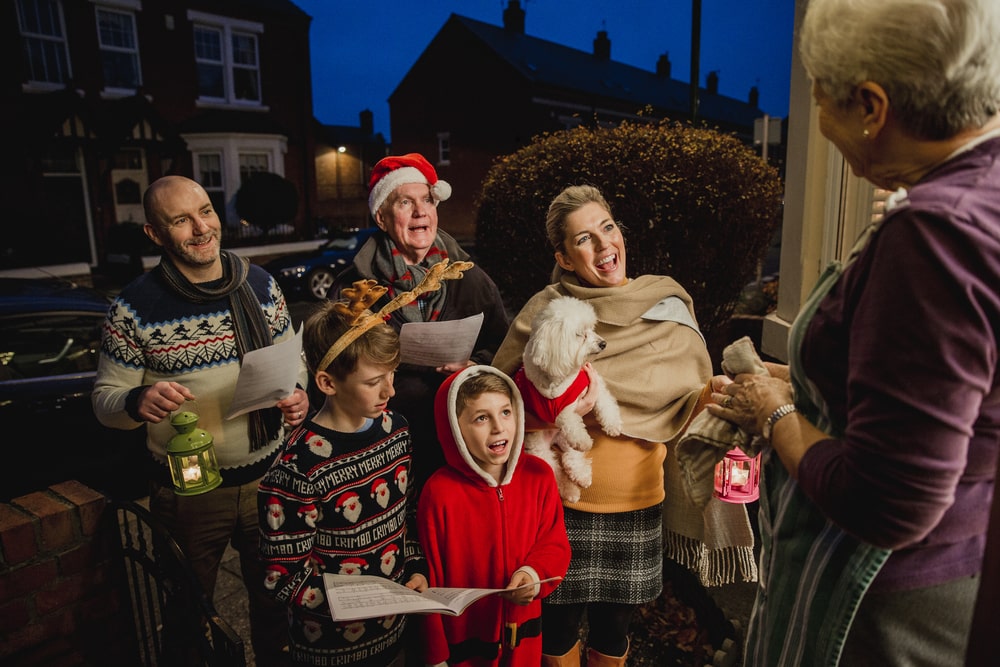
Whether you go to a nearby housing facility or invite people to your home, singing traditional Christmas carols and other holiday songs lifts the spirit. Break out in Joy to the World, Rudolph the Red-Nosed Reindeer, or Jingle Bell Rock. Choose whatever suits your tastes or ask your guests for song requests. Another option is to gather a group together – adults, kids, or a mix – and go visit those who are homebound or in a nursing facility.

3. Bake Christmas Treats

We all have Christmas favorites. Hand-decorated sugar cookies. Mom’s famous mashed potatoes. That big bucket of fried chicken your family always gets. Or, the smoked turkey Uncle Al makes every year. For most of us, certain foods are associated with Christmas, and for those who are lonely or grieving, it can be renewing to cook (or bake) your Christmas favorites with others. Who knows – you may find a new Christmas favorite.

4. Decorate Together

Part of what makes Christmas so Christmasy is all of the decorations we put up in our homes and workplaces. If you know a senior who is experiencing holiday grief, they may not have the energy to decorate their home, so offer to come over to help them put things up. (Don’t forget to help take them down later.) Or, invite them over to help you decorate your own home for the holidays. Both options will make them feel loved and wanted.

5. Create Christmas Crafts

A fun activity for the holiday is crafting. You can choose whatever kind of craft you want – making a wreath or ornaments, knitting hats and scarves, or creating your own garland with popcorn, paper, or even burlap. There are so many options to choose from that you and the seniors in your life will stay busy all throughout the holidays.

6. Watch Christmas Movies

It’s a Wonderful Life. White Christmas. Home Alone. A Christmas Carol. Around this time of year, families pull out all the old Christmas movies. They sit down together and enjoy the timeless tales again. This year, consider inviting a senior loved one to take part in the movie marathon. Pull out the popcorn, cozy blankets, and Christmas goodies to complete the evening of cinematic fun.

7. Attend a Local Christmas Play

Many schools and local theater groups throughout the country put on theatrical events at Christmas time. Check out what is offered in your area and see if a senior friend would like to attend. Not only would it be an opportunity to get out of the house, the play will likely take their attention away from any loneliness or grief they may feel and fill them up with joy.

8. Take a Drive to Look at Christmas Lights

For some families, taking a drive around town to look at Christmas lights is a yearly tradition. It’s fun, and sometimes entertaining, to see how everyone decorates their homes for Christmas. Load up your family and a few senior friends to go out for an evening drive. Fill the car with Christmas music and take a few holiday snacks. Everyone is sure to end the evening filled with cheer.

9. Host a Christmas Party

If you have the space, you might consider putting on a Christmas party for some seniors you know. Or, you can put together an event for a parent and his or her friends. You can offer delicious dishes to eat, organize a gift exchange, or put together some fun games or competitions. The goal is to have fun and give everyone a holiday event to look forward to attending.

10. Go Out for a Shopping Day

Some seniors are no longer able to drive themselves or go places alone. Offering to go out for a shopping day might be just the thing to lift their spirits. Whether they want to actually buy or just window shop, the opportunity to get out, to see the Christmas decorations for themselves, and to spend time with a new friend is priceless.

11. Ask about Christmases Past

For many older seniors, their mothers, fathers, siblings, and even spouses or children, have already passed on, so there’s no one to create new memories with or recount the old ones. That’s why it’s so sweet to ask a senior about the Christmases they remember. To hear about their family growing up, the antics of siblings and cousins and children, the best and worst years. Asking to hear memories shows love and appreciation for that person as an individual and a friend.

12. Give Back to the Community

Another opportunity to help seniors who are alone or experiencing holiday grief is to invite them to focus on others. Communities all over provide opportunities to give during the Christmas season. Talk to the seniors in your life and ask if they want to take part in Toys for Tots, a canned food drive, Operation Christmas Child, or some other service project in your community. By bringing joy to others, we bring joy to ourselves.

All of these activities will help you engage with seniors who may be struggling this holiday season. Consider which ones you like best and go spread some Christmas cheer!

7 Pet Memorial Options

By Grief/Loss, Memorial, Pets

Losing a pet can be like losing a person. While that may sound strange to some, grief isn’t about a who or a what, it’s about a relationship. And if you have a loving relationship with a pet, the grief can be very similar to what you might experience when a person dies, especially when the emotional connection to your pet is deep. And that’s okay. In fact, you may experience a variety of emotions, including sadness, anger, depression, or anxiety. All of these reactions to the pain of loss are completely normal, no matter who or what you may be grieving. One way that you can begin to process your loss is with a pet memorial.

For those who have lost a pet recently, one of the best things you can do throughout the grief process is to cherish your memories. Dr. Alan Wolfelt, a nationally respected grief expert, has walked with families through all kinds of grief. He says, “Memories are one of the best legacies after the death of a pet. Talk about and embrace these memories. Your pet entertained, comforted, frustrated but always loved you. Remember those times. If your memories bring laughter, smile. If they bring sadness, cry. Remember, though, memories made in love can never be taken away.”

Now, let’s discuss 7 pet memorial options you might consider as you look for ways to cherish the memory of your pet and find comfort as you grieve.

1. Share your memories with others

After losing a pet, your first instinct may be to turn to social media to post a picture and share your memories of your beloved pet. Alternatively, some pet owners choose to host a celebration of life for a very special pet. You could invite your closest friends over to help you honor your pet’s memory. You can share your memories and give family, especially children, the opportunity to say a few words. Make the event as lighthearted or as reflective as you want. You can hold an actual burial, placing your pet in a special spot, or you can simply celebrate the good times. You might even ask your guests to bring their own pets to the gathering. To bring in a little lightheartedness, you can make a special treat for any pets who attend or send the pets home with a little bag of treats.

2. Select an urn

For many people, choosing an urn for a pet’s cremated remains and placing it in a special place is enough. If you want to keep the urn in your home, you might choose one that is decorative and place a photo of your pet nearby. If you prefer to bury the cremated remains, you could use a biodegradable urn and bury it with your pet’s favorite toy or keepsakes made by the kids.

3. Create a custom work of art

If you like art pieces or are an artist yourself, creating (or commissioning) a custom piece of art is a great way to memorialize your pet. If you choose to create your own work of art, you will actually contribute to your own healing. Sometimes words just aren’t enough after a loss, and creative expression allows you to put whatever you’re feeling into a piece of art. The medium of art is entirely up to you – drawing, painting, sculpting, etc. The end goal is to create something that is special to you and helps you cherish the memory of your pet.

4. Place a memorial in a special location

If you have a garden, plant a memorial tree or add a memorial stone to the landscaping. You could even make a clay paw print to include. Alternatively, you can place a photo, painting, or collage of your pet in a place of honor in your home or in a different special place. If you had a favorite park to walk at together, you may be able to add a memorial bench. Determining what’s best is entirely up to you and the unique life you lived with your pet.

5. Make a keepsake

Depending on your own personal likes and dislikes, you can create a memorial keepsake in remembrance of your pet. You might buy or make a piece of jewelry and engrave your pet’s name on it, purchase an ornament and put your pet’s photo in it, create a shadow box, or put together a photo book or scrapbook of memories. The possibilities are endless. It just depends on what you like best and what will be most meaningful.

6. Order an engraved item

Another option for memorializing your beloved pet is to have an item engraved. The item entirely depends on you. You might want to have a piece of jewelry engraved or a shadow box or a memorial grave marker. You can even have your pet’s photograph engraved on an item if that will help you cope with your grief and remember the impact your pet had on your life.

7. Put together a memorial video

For some, a visual reminder is incredibly helpful. You can put together a tribute video of your pet, using photos, audio, or video elements. You can include footage of your pet and even interviews with family or friends. After it’s complete, you can watch the video any time you feel nostalgic or simply want to feel close to your pet again. Also, if you have children, the video will be a treasure trove of memories once they are older and want to reminisce about your beloved pet.

Grief is a very personal journey. Some people will take part in all of these pet memorial ideas while others may find other ways to honor and remember their pet. We all grieve differently, and those emotions can be expressed in many different ways. That’s why we must always be sure not to compare grief. We feel what we feel, and we process it the way we process it. We must all do what’s best of us individually and allow others to do the same. That goes for any kind of grief, whether you’ve lost a pet, a person, or anything in between.

3 Reasons to Have a Visitation

By Explore Options, Meaningful Funerals, Planning Tools

Have you ever wondered about the purpose of a visitation when a loved one dies? Why don’t we just skip to the funeral? This article will share three key reasons why visitations are a crucial part of a healing and meaningful funeral experience.

Dr. Alan Wolfelt, nationally recognized grief counselor, author, and educator, says that in order to create a healing and meaningful funeral, you should intentionally incorporate seven elements: music, readings, visitation, eulogy, symbols, a gathering, and actions. He says, “People who take the time and make the effort to create meaningful funeral arrangements when someone loved dies often end up making new arrangements in their own lives. They remember and reconnect with what is most meaningful to them in life…strengthen bonds with family members and friends. They emerge changed, more authentic and purposeful. The best funerals remind us how we should live.”

Why Have a Visitation?

According to Dr. Wolfelt, one of the purposes of the funeral and visitation is to offer support for those who are grieving. We aren’t meant to walk through life alone, which is why the visitation is included in the seven elements of a funeral. The visitation is a time specifically set aside for friends, relatives, neighbors, and coworkers to come pay their respects to the person who has died and to offer condolences and support to the grieving family.

While it is common for the body to be present at a visitation, it doesn’t have to be. If the body is not present, it’s best to have some kind of representation of the one who has died, such as a prominently placed portrait, urn, or some other personalized display.

1. A Visitation Activates Your Support Network

As mentioned earlier, a visitation is one way to activate a community of support. Dr. Wolfelt puts it this way: “Funerals make a social statement that says, ‘Come support me.’ Whether they realize it or not, those who choose not to have a funeral are saying, ‘Don’t come support me.’” By including a visitation in your funeral plans, you give others the opportunity to show their love for you, support you, and offer words of kindness and sincerity. Who knows…someone may say exactly what you need to hear to find solace and comfort following the loss of a loved one.

2. A Visitation Provides Opportunities for More People to Participate

Often, friends, coworkers, and acquaintances want to offer their support but may not be able to make it to a funeral in the middle of the day because of work obligations, especially on short notice. Because a visitation typically takes place in the evening, it offers your extended network of friends an opportunity to show their support, even if they can’t make it to the funeral.

3. A Visitation Can be the Most Meaningful Part of the Service

The visitation is often the first time extended family, friends, and immediate family members will be able to gather in one place after a loss. For many mourners, this time is special because they are able to see many people they haven’t seen in years. It is often like a family reunion that becomes the most meaningful part of the service for some mourners. The visitation allows time and space to talk about the loss, express emotions, and generally feel the outpouring of love from friends and family alike.

What Are My Visitation Options?

If you do decide to include a visitation in a service you are planning, there are typically two main options to choose from. However, keep in mind that they are not either/or options. You could choose both!

Visitation the Day Before the Funeral Service

Your first option is to have the visitation the day or evening before the funeral service. By having the visitation the day before the service, you break up the length of the event, which may be helpful for the grieving family. Grief is exhausting, so splitting up the events of the funeral into more manageable chunks is often helpful. Also, people who may not be able to attend the funeral service still have the opportunity to show their support and pay their respects.

Visitation Just Prior to the Funeral Service

Your second option is to have the visitation just prior to the funeral service (usually the hour before). For some families, this option may work well because everything takes place on just one day. However, keep in mind, the day will be long for the grieving family. Because there is only one event to attend, everyone who would like to attend may not be able to come. Also, for those who can only stay for the visitation, it may feel awkward to leave before the funeral service.

Ultimately, you need to do what’s best for you and your family. Both of these options will help activate the support system you will need for your journey toward healing and reconciliation. Weigh the pros and cons of each option. Talk to your family. Ask a funeral professional about what works well and what doesn’t. Then, with the knowledge you’ve gained, make the decision that’s best for you and your family.

Hands together in a circle in solidarity

Suicide Loss Survivors: Your Grief Matters

By Grief/Loss, Loss from Suicide

No matter the type of loss, grief is hard. But in many ways, losing a loved one to suicide has its own added difficulties. You aren’t sure if you should talk about it. In fact, a family member may have asked you not to talk about it. You don’t know what to say when others ask about it or it comes up in conversation. In many ways, you just want the situation to go away, as if it never happened. But then, you feel bad because wishing it never happened is like wishing your loved one away. Why does it have to be so complicated? Does your grief even matter?

Yes, it absolutely does. Your grief matters. No matter the manner of death, take the time you need to mourn and remember your loved one.

Noted grief educator and counselor Dr. Alan Wolfelt attests to the reality of the deep pain that accompanies suicide loss. He says, “The death of someone from suicide feels unlike any other loss you may have experienced. The traumatic nature of the death may leave you feeling turned inside out and upside down. When suicide impacts our lives, we all need to grieve and to mourn. But our grief journeys are never exactly the same. Despite what you may hear, you will do the work of mourning in your own unique way.

Sadly, the society we live in is not always as compassionate and understanding, particularly in relation to suicide. There are certain types of losses that go largely unacknowledged by society or are not given public expression. These losses are mourned in secret and are often not spoken of. We even have a name for this type of grief – disenfranchised grief. Dr. Ken Doka, who coined the phrase, describes it as, “Grief that persons experience when they incur a loss that is not or cannot be openly acknowledged, socially sanctioned or publicly mourned.”

To the many mothers, fathers, brothers, sisters, aunts, uncles, grandparents, cousins, friends, and colleagues who have lost someone to suicide, society may not acknowledge the gravity of your loss, but your loss is significant and worth grieving. Your grief is not something that should be swept under the rug or spoken of in whispers. It is real, and it is important.

So, as you move forward in your grief journey, as you mourn the loss of someone you loved, remember these things:

You have the right to grieve your loss

Despite what society may say, you have the right to grieve. You have lost someone special to you in a traumatic way. Any hopes and dreams you may have had for them are gone. You are left with a hollowness in your heart and a burning question – “why?” Even though you may never have the answers you seek, remember this – your loved one was one-of-a-kind, and you have a right to mourn them.

You have the right to talk about what you’ve been through

Particularly when we lose someone in a traumatic way, our feelings are all over the place. Maybe that’s you today. Find people you trust or others who have experienced a similar loss and talk with them. Share the weight of your grief. You don’t have to walk through this journey alone – you can invite others in. By talking about your loss, you help us all move toward being a society that acknowledges the depth of pain associated with suicide.

You have the right to feel whatever it is you feel

Grief expresses itself in many different ways. You may feel shock, denial, confusion, anger, guilt, sadness, or shame, to name a few. None of these are wrong. They are all normal. In fact, there’s no “right” way to grieve. For every one of us, the experience is different. So, embrace whatever it is that you feel – don’t push it away. We must go through the pain to move toward healing and reconciliation.


You have the right to be physically and emotionally weary

Grief is hard work. All of the emotions swirling inside, often not finding expression, sap your energy. You may find it hard to sleep, and as a result, feel tired and overwhelmed. In some cases, people may even experience physical symptoms like headaches, nausea, and weight loss or gain. Please know – this is a natural reaction. The body is in distress, the same as the mind and heart. Be kind to yourself as you grieve so that you have the energy needed to move toward healing.

You have the right to find freedom from negative emotions

Particularly with suicide loss, certain negative emotions rise to the surface. You may feel guilty that you didn’t see something sooner. Anger at your loved one may grip you. Shame and its terrible baggage may try to tell you that you shouldn’t talk about your loss. Or, blame may be turning your family against each other. All of these negative emotions swirl around, but you have the right to be free from them. If you do the work of grief, you can find peace.

You have the right to be unashamed of your loss

Despite what society or insensitive people around you may say, your loss is not shameful. You have every right to feel deep emotions. Your loved one fought a fierce internal battle and that struggle is real and should not be demeaned. Don’t feel like you need to hide. Openly express what your loved one’s loss has meant to you. If others don’t understand, that doesn’t mean you should try to conceal your grief. By no means do you need their permission to grieve.

You have the right to have your loss acknowledged

You do have the right to have your loss acknowledged, though you shouldn’t go around demanding that people do so. Forcing people into something is never truly successful. Instead, find comfort in the knowledge that your loss is worth acknowledgment, and because it is, awareness groups all over the country are working to bring it out of the shadows and into the light.

You have the right to experience grief bursts

In times of grief, you may experience grief bursts. When this happens, something innocuous or unexpected triggers a surge of grief. The trigger could be anything – a photo, an anniversary, a quote, a movie, an article of clothing. These bursts are a normal and natural part of the grieving process. Don’t be surprised or frightened when you experience them. Instead, find someone who knows your struggle to talk with when they occur.

You have the right to cherish your memories

Even though you lost your loved one prematurely and in a devastating way, you have the right to cherish their memory. You can do this in a variety of ways. Collect keepsakes – photos, your loved one’s favorite things, clothing, etc. – and create a memory box or scrapbook. Write your thoughts and feelings down in a grief journal or write letters to your loved one. Have a piece of jewelry made with your loved one’s initials or start a tradition that brings you comfort.

You have the right to move toward your grief and heal

Like any grief – recognized or not – you have the right to grieve and to heal. You may not feel like you have the right to move forward. You may feel a crushing sense of guilt or shame at the moment. That’s okay. That’s where you are right now, and it’s not bad. But learn to embrace the truth – you have the right to move toward your grief and heal. You can find new meaning.

Dr. Wolfelt tells us that we never get over a death; instead, we learn to reconcile ourselves to the loss. He states, “Your feelings of loss will not completely disappear, yet they will soften, and the intense pangs of grief will become less frequent. Hope for a continued life will emerge as you are able to make commitments to the future…. The unfolding of this journey is not intended to create a return to an ‘old normal’ but the discovery of a ‘new normal.’”

If you take nothing else away, know that your loss is significant, and it is heartbreaking. You have the right to mourn the loss of your loved one – gone much too soon. Grieve in whatever way you need so that you can find healing, peace, and reconciliation.

The Core Elements of a Military Honors Funeral

By Plan Ahead, Planning Tools, Veterans

Our veterans represent courage, honor, and sacrifice. Throughout our history as a nation, our military men and women have stepped up to face the opposition, protect our way of life, and preserve our freedom. Because we owe them a tremendous debt of gratitude, it’s appropriate that we honor them in special and symbolic ways upon their death. They served us in life; let us honor them in death.

The Department of Defense, through a program called “Honoring Those Who Served,” is responsible for providing military funeral honors. In most cases, the military personnel who participate do so on a volunteer basis. Keep in mind, military honors must be requested, so if you are in the process of planning a funeral for a veteran, work with a funeral director to make an official request.

Military funeral honors vary. A few factors that affect military honors are whether the armed forces member was active duty, retired, or a veteran; their rank; and the place of burial. For veterans buried in national cemeteries, the honors will have an added element of formality and include additional elements, such as a horse-drawn caisson for commissioned officers buried at Arlington Cemetery. Veterans buried in private cemeteries will be less formal and include fewer elements.

For now, let’s review the most common ceremonial elements and why they are significant to our veterans.

The Main Elements

Honor Guard

If a family requests military honors, at least two honor guards will attend the funeral, one of which is currently serving in the same branch that the deceased veteran did. Depending on availability and the rank of the veteran, the honor guard may consist of more members. The honor guard will carry out the requested honors with precision and respect.

Flag-Draped Casket/Urn

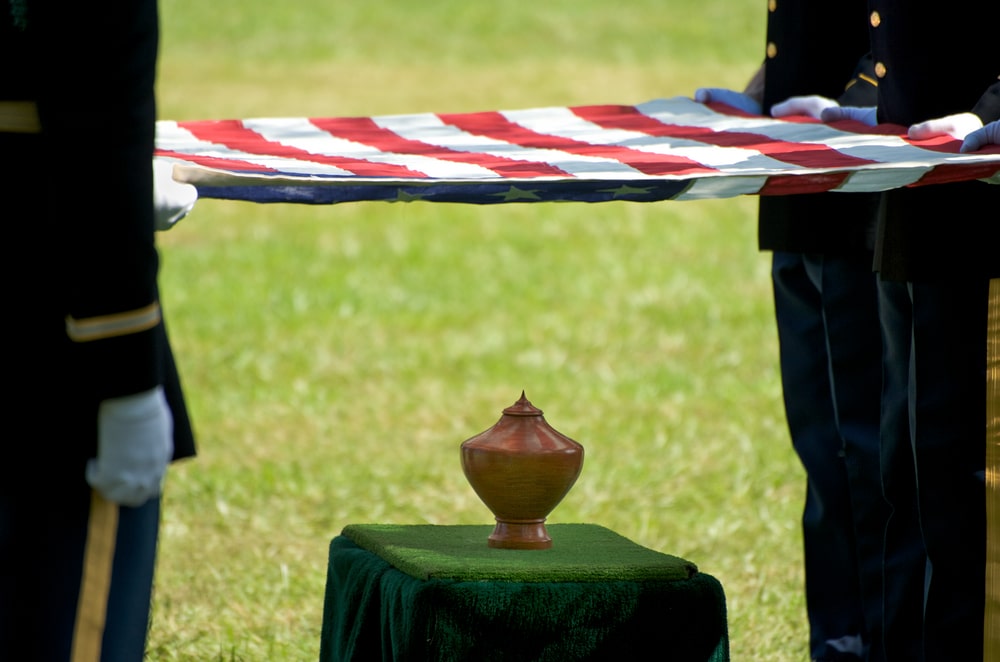
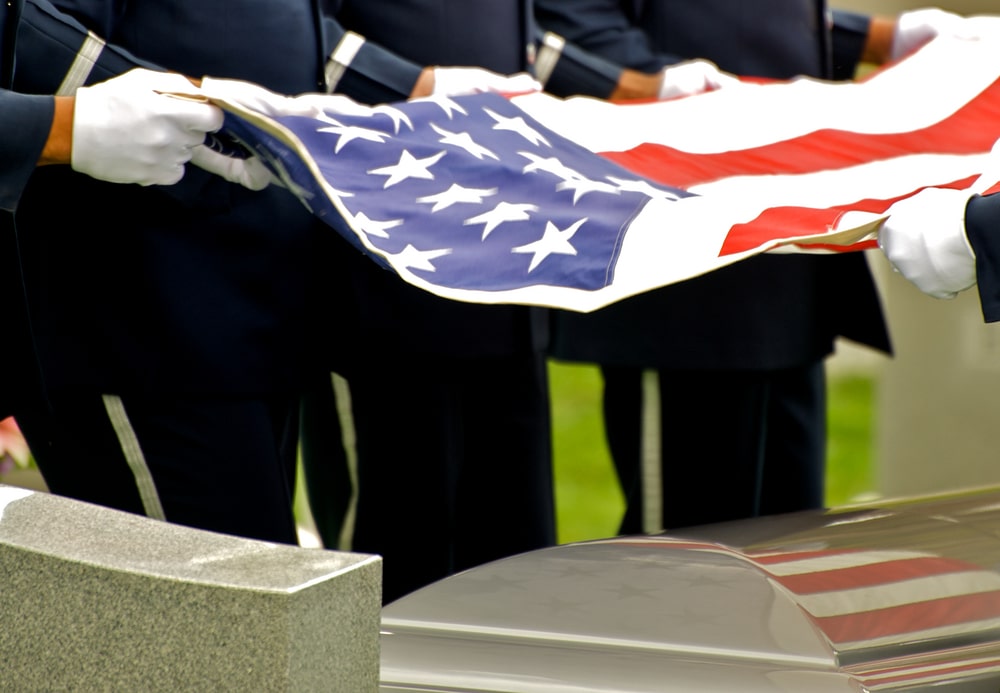
The flag-draped casket or urn is a prominent feature of a military funeral that dates back to the Napoleonic Wars in the late 18th and early 19th centuries. At that time, it was tradition to cover the dead with a flag before removal from the battlefield. Today, the tradition continues to remind the living of that person’s service and sacrifice. With the American flag, the blue field spreads at the head, over the left shoulder of the casket. After services conclude, the honor guard folds the flag and presents it to the next of kin.

Folding of the Flag

The honor guard at the funeral will also fold and present the flag. It takes 13 individual folding movements to create the ceremonial triangle, which is intended to represent the tricorn hats worn by George Washington and his men at the foundation of our country. After the flag is folded, the service member representing the veteran’s branch of service presents the flag to the next of kin and says:

On behalf of the President of the United States, the United States (Army, Marine Corps, Navy, Air Force or Coast Guard), and a grateful nation, please accept this flag as a symbol of our appreciation for your loved one’s honorable and faithful service.”

Playing of Taps

In 1862, during the Civil War, General Daniel Butterfield, with the help of bugler Oliver Norton, revised an earlier bugle call into what is now known as “Taps.” Previously, the song signaled to troops that it was time to put out the lights and go to sleep. However, shortly after Butterfield’s revisions, captain-in-charge John Tidnall presided over a funeral. He asked his men to play Taps rather than firing the customary three volleys. At the time, three volleys conveyed to the enemy an intention to begin fighting again. To avoid sending this message, the bugler simply played Taps. Since that time, the song has been associated with military funerals.

At funerals today, if a bugler is available, Taps will be played live. However, if no bugler is available, a recording of the song will always be played.

Additional Elements

To review, the honor guard, draping of the casket, folding and presentation of the flag, and the playing of taps are the core elements of a military funeral. Depending on availability, families can incorporate other symbolic actions.

These elements include:

  • Three-volley salute
  • Color guard
  • Pallbearers
  • Horse-drawn caisson
  • Military flyover

Know Your Veterans’ Benefits

In addition to the performance of these time-honored, symbolic actions, eligible veterans also receive other burial benefits. The VA offers burial benefits for eligible veterans, their spouses, and their dependent children. For instance, eligible veterans receive a burial space in a national cemetery where there is space available. This is at no cost to the family. Additionally, certain state cemeteries offer burial spaces to veterans, at no cost to the family. A veteran buried in a national cemetery is also eligible to receive opening and closing of the grave, perpetual care, a government headstone or marker, one burial flag, a Presidential Memorial Certificate, and a grave liner, at no cost to the family.

To learn more about your veterans’ benefits, visit www.benefits.va.gov.

Why Does Funeral Personalization Matter?

By Explore Options, Grief/Loss, Meaningful Funerals, Personalization, Plan Ahead, Planning Tools

I encourage you to slow down, take a deep breath and focus on what is really important—what is essential—about the funeral you are planning. What is essential is the life that was lived and the impact that life had on family and friends. To honor that unique life, the funeral must also be unique. Over and over families tell me that the best funerals are those that are personalized.”  – Dr. Alan Wolfelt

As people, we are unique individuals. We may sometimes resemble each other or like similar things, but no other person on earth is exactly like anyone else. Because we are so different, because we have our own nuances and intricacies, it makes sense to personalize a funeral. Just as we personalize our weddings, our birthdays, or our anniversaries, the final celebration of our life should reflect who we are, what we value, and what we leave behind as a legacy to others.

Dr. Alan Wolfelt, a nationally-respected grief counselor and educator, tells us that “people who take the time and make the effort to create meaningful funeral arrangements when someone loved dies often end up making new arrangements in their own lives. They remember and reconnect with what is most meaningful to them in life…strengthen bonds with family members and friends. They emerge changed, more authentic and purposeful. The best funerals remind us how we should live.”

Whether you are planning ahead for your own funeral wishes or are planning a final tribute for a recently lost loved one, personalization is the key to creating a healing and meaningful experience that will meet the emotional needs of family and offer comfort throughout the grief journey.

What Parts of the Funeral Can I Personalize?

Dr. Alan Wolfelt tells us that to create a healing and meaningful funeral, you should include seven elements: music, readings, visitation, eulogy, symbols, a gathering, and actions. You can personalize any one of these elements to fit your personality, beliefs, and core values. For example, the music can include favorite songs, no matter the genre. You could incorporate a release ceremony or share readings from a favorite book, song, or poet. If it’s something that will honor the life lived, and it will be meaningful, then that’s a way to personalize.

How Do I Go About Personalizing a Funeral?

The first step is taking time to brainstorm the person’s likes and dislikes, their values and beliefs, their passions, hobbies, and pastimes. You can do that through asking yourself a series of questions and then deciding which ones capture the essence of the person who has died and reflect who they were.

  • What was my loved one passionate about?
  • What attributes were they known for?
  • Do you have any cherished memories of your loved one?
  • Did your loved one have any special achievements you’d like to recognize?
  • Was your loved one exceptionally talented at something?
  • When you think of your loved one, what do you think of?
  • What were your loved one’s hobbies or special interests?
  • What was your loved one’s faith or spiritual belief?

Once you’ve pinpointed the answer to these questions, decide how to use them to personalize each of the seven elements of the funeral. You can weave a theme throughout the event or you can simply focus on a few aspects of your or a loved one’s life. As long as you are taking the time to truly honor a life, then choose whatever seems best for you and your family.

A Few Ideas to Get You Started

Even after a brainstorming session, it can be tough to get started. Here are a few personalization ideas to get your creative mind up and running. Feel free to use these or come up with your own ideas!

  • Include a memorial DVD
  • Add in a candlelight ceremony
  • Choose a special location for the service
  • Pick a color or clothing theme
  • Bring in special music
  • Share a meal that includes favorite foods
  • Incorporate cherished items
  • Establish a memorial together
  • Make a collage or timeline of life events
  • Give guests a token/item to take home as a remembrance
  • Consider a release ceremony (butterflies, balloons, lanterns, doves, etc.)

All of these are potential ideas, but they are just the tip of the iceberg. The options are as unique as you are. Whether your loved one was a quilter, a collector, an artist, an animal lover, a teacher, a cowboy, a fisherman, a golfer, you can do something special to honor that person’s memory in a very unique and personal way.

No two funerals should be the same. Each one should be unique and personal. And with a funeral that is personalized, family and friends leave feeling that the service was healing, comforting, and meaningful. And above all, that the life lived was truly celebrated.

How to Personalize a Funeral When an Infant Dies

By Explore Options, Grief/Loss, Meaningful Funerals, Personalization

Sometimes the smallest things take up the most room in your heart.” – A.A. Milne

Losing an infant or a small child is one of the most difficult situations to face as a parent. It feels wrong. Out of order. Unnatural. And yet, it has happened, and now it is time to grieve the loss of a life that could have been. But how do you go about creating a healing, meaningful, and personalized service for an infant?

If you are feeling at a loss for how you can celebrate a little life that has barely begun, your funeral director can help you find unique and personalized ways to create a service you will never forget that you can look back on for comfort in the years to come.

For example, let’s read about SuperGirl and her loving parents, as told by a caring funeral director.

Remembering SuperGirl

This week, I found myself sitting across the table from a young couple, who – until the day before – had been anxiously awaiting the arrival of a new baby. Sadly, the little girl had arrived far too early… bypassing a life in our broken world for a direct return to the arms of God.

The young couple was clearly in love but devastated and enduring tremendous heartache. The pair held hands and wept as we discussed how to create a meaningful funeral service to soothe their own pain, but also celebrate a little girl they would never have the chance to raise.

By asking a series of questions, I found out that they were planning to decorate their daughter’s room in pink and silver, and they often called her SuperGirl because “she kicked so hard when I was carrying her.”

In that moment, it became my desire to lay SuperGirl to rest in such a way that everyone would realize just how much this little girl meant to her family. I asked the family’s permission to borrow their SuperGirl idea for the service, telling them that I had a few ideas on how to make things extra special.

After they left, I quickly called up an artist friend of mine, who created custom vinyl graphics to adorn the tiny casket and a handful of small stickers to hand out to friends and family who attended SuperGirl’s service the following day. Our secretary also made memorial folders to match the theme, and once the family saw what had been done, they were overwhelmed with emotion.

In the end, we were able to transcend the “typical” funeral and create an experience worthy of a SuperGirl.

So, What’s Next?

As you can see, the personalized and meaningful touches included at their precious girl’s remembrance deeply touched SuperGirl’s family. For the rest of their lives, they can hold onto the knowledge that they took the time to grieve, to remember, to mourn, and to celebrate what she meant to them, even though she was gone too soon. But how do you get started?

Familiarize Yourself with the Seven Elements of a Funeral

First, familiarize yourself with the seven elements of a funeral: music, readings, visitation/reception, eulogy, symbols, a gathering, and actions. According to Dr. Alan Wolfelt, a nationally respected grief counselor and educator, when used together, these seven elements create a personalized, meaningful, and touching ceremony that will help bring healing to hurting hearts. When an infant dies, because their personality was still developing, these elements may be a bit more personalized to the parents and their desires, prayers, and dreams for their baby.

In SuperGirl’s case, because she was lost before birth, it was the parents’ wishes and plans that were used to personalize the service. This made the service meaningful to them and to their cherished memories of their little girl.

Brainstorm Together How to Make the Service Special and Unique

After you’re familiar with the elements of a funeral, you can begin looking for ways to personalize these seven aspects of the service to create a meaningful and healing experience. To help you as you get your thoughts together, you can ask yourself these questions:

  • What special memories do you have of your child?
  • What were your hopes and dreams for your child?
  • When you think of your baby, what do you think of?
  • Were there any special mementos that you might want to include?
  • Did you give your baby a special nickname?
  • Depending on the age of your child, did they have favorite toys or activities?
  • Do your loved ones have special memories of your child that you might want to include?

Identify Ways to Personalize the Service

Here are a few ideas for ways that you can make the service personal to you and to the memory of your infant. These are just to jumpstart your own thoughts. Try to make the service truly unique to you, your child, and your needs.

  • Consider incorporating a release ceremony. For example, you can do a balloon release ceremony with appropriate-colored balloons and invite mourners to write messages on them. When released, the balloons disappear into the sky, almost like sending a message to heaven.
  • Consider using a theme. You might include special items, like a blanket made specifically for the baby, shoes, or other items. If you had a color theme for a nursery, you could incorporate those colors into the service.
  • Consider inviting others to give of their time or resources to a charity in honor of your child’s legacy. If you have miscarried, invite mourners to give to a foundation that supports mothers going through miscarriage. If your child died because of a certain illness, provide details of how to give toward a cure. Choose whatever organization you feel is appropriate to honor your child’s memory.

  • Use music that was special to you as a parent and reminds you of your infant in the ceremony. Whether that’s music you listened to throughout the pregnancy or something your child went to sleep to, you can select what is most meaningful to you and your family.
  • Write a letter to your baby, expressing all your hopes and dreams and wishes for what should have been. This will help you as you grieve but may also be a beautiful tribute to share at the funeral service.
  • Consider establishing a memorial in honor of your little one, whether it is a physical memorial, charitable donation fund to a special cause, or memorial website or blog chronicling your journey.

Take Time to Grieve

After the ceremony, it may be a little more difficult to feel supported for as long as you need. Because support for infant loss is usually not as present as it is for other types of loss, seek out caring counselors, mentors, support groups, and friends when you need help processing through your emotions. You can also start a grief journal that expresses all your feelings about the loss–good, bad, and everything in between. So often, grieving the loss of an infant can feel like a very lonely road. When you are able, you can also bring significance to the life of your little one by helping others who have gone through a similar loss.

Whatever you choose to do, your child was beautiful and is worth remembering in a sweet, meaningful, and personalized way. Don’t worry about “making too much of a fuss.” That is the last thing you should worry. Every life deserves honor, remembrance, and celebration, no matter how briefly they graced our world.

What Are My Interment Options?

By Cemeteries, Explore Options

For many of us, the ins and outs of funeral planning are unfamiliar and confusing. We don’t know where to start or even what all of our options are. Should you go with cremation or burial? As you do your research, you may come across unfamiliar terms, like interment, columbariums, mausoleums, crypts, vaults, niches, and more. This article will explain what these terms mean and how you can make decisions ahead of time that give peace of mind to your loved ones at a time of loss, knowing that they are following your wishes for your place of final rest.

Definition

First of all, let’s define interment. Usually, the term refers to burial, typically with funeral rites. However, with the increase in cremation, interment now means “final resting place.” In other words, it’s the place where a person is laid to rest permanently, whether they are buried or cremated.

Interment Options for Burial of the Body

If you choose burial of the body as your preference, you have many options available for both in-ground or above-ground burial. Not all options are available everywhere, so check with your funeral professional to determine which ones are available in your area.

Traditional Burial

With traditional burial, the body remains intact and is usually embalmed to allow for a viewing or visitation prior to the funeral and committal services. Prior to burial, the grave is excavated at the cemetery and either a grave liner or burial vault is placed in the grave (the family decides which one). Later, after the committal service, the cemetery grounds crew will lower the casket and fill the grave with soil. Eventually, a grave marker with epitaph is added to the location as a memorial.

Lawn Crypt

Essentially, a lawn crypt is a type of underground mausoleum. It’s built deeper into the ground and can house multiple caskets. Often made of concrete, a lawn crypt possesses a drainage system, which protects the grave’s contents from the elements. In some cases, families are all buried together, but it’s not a requirement. Make sure to ask a cemetery representative if they use individual grave markers or just one for everyone buried in the lawn crypt.

Mausoleum

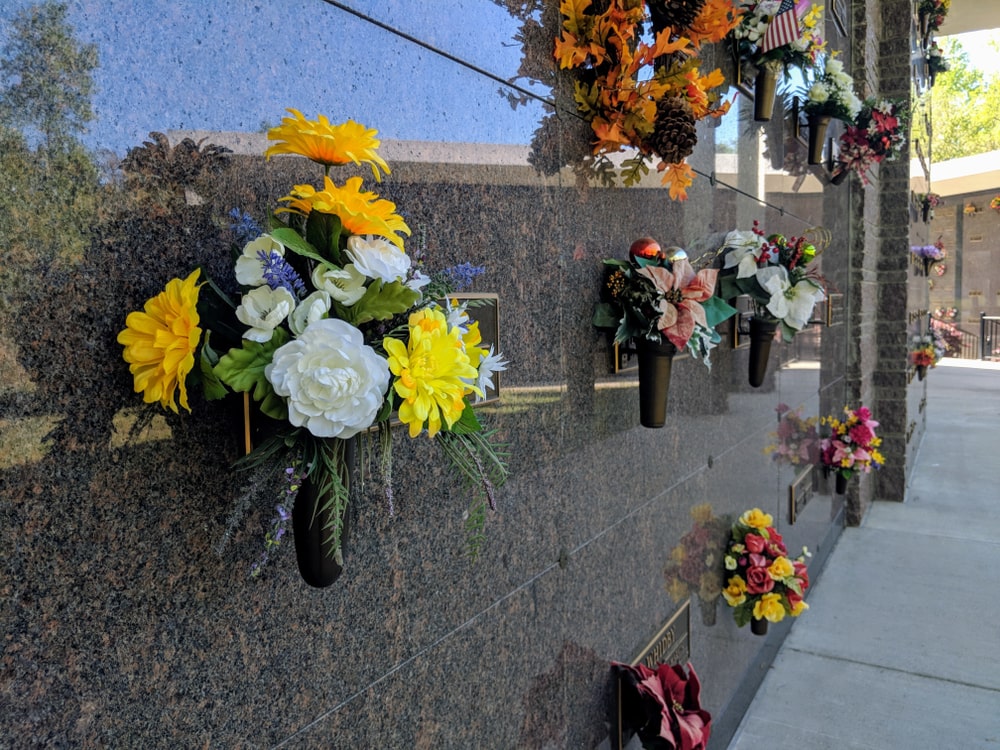
A mausoleum is an above-ground memorial building for housing casketed remains. They offer personal ways to commemorate your loved one, including name carvings, plaques, and vases for flowers. A mausoleum typically offers single or companion crypts and protects the remains from the elements. Both community and private mausoleums exist. In most cases, a private mausoleum is much more expensive. A mausoleum is a great option for families who want to be interred together.

Natural (or Green) Burial

Another option for full-body interment is natural or green burial. The main idea behind green and natural burials is to allow the decomposition process to occur naturally. The main differences are two-fold: 1) Green burial excludes any type of embalming, and the cemetery grounds are specifically sanctioned for green burial; 2) While green burials must occur on very specific plots of land, a natural burial can take place on private land (subject to regulations) or in any cemetery that allows it.

Interment Options for the Cremated Body

Columbarium

Moving into interment options for the cremated body, a columbarium is a popular option. Columbaria consist of many small compartments, called niches, that each hold an individual urn. Each niche typically includes a memorial plaque that acts as a grave marker, identifying the names, dates of life, and an epitaph (if the family wishes). All columbaria are communal, though a family can purchase a family-sized niche to allow multiple urns to be placed together.

Urn Burial

It is also possible to bury an urn rather than to place it in a columbarium niche. Some cemeteries have landscaped urn gardens while others offer burial plots similar to those for traditional burial. A traditional plot can hold the cremated bodies of multiple people or may even hold a casket and an urn, depending on the cemetery regulations. As with traditional burial, urn burial requires an outer burial container. A third option for urn burial is green burial. You can place a biodegradable urn in a green burial ground without an outer burial container.

Scattering

You can take your loved one’s cremated body to a special place (remember to check the laws and regulations for that place) or you can go to a scattering garden, a designated, beautiful space often attached to a cemetery. With a scattering garden, the cemetery often provides a means of adding a permanent physical marker so that family and friends feel more connected to their lost loved one. If you decide to scatter all of a loved one’s ashes, take time to prepare yourself emotionally. For some, it can come as a shock that all that was left of a loved one’s body is suddenly gone.

Other Interment Options

A few lesser-used interment options are:

As you can see, there are several interment options available to you. You can choose the one that best fits your wishes and your family’s needs. No matter which option you choose, remember that it’s important to designate a final resting place so that friends, family, and future generations have a place to visit, remember, and honor the life that has been lived.

Skip to content