All Posts By

christy.kessler

What is a Funeral Honorarium?

By Educational, Planning Tools

Every funeral comes expenses, such as the professional services of the funeral home staff, casket or urn, cremation permit, cemetery plot, and so on. One expense you may not have considered is the honorarium. But what is an honorarium and who should receive one? Let’s look at a few key questions that will help you understand honorariums and their role at the funeral.

Green envelope and white sheet of paper to use for an honorarium; items are sitting on a table with purple hydrangeas

What is an honorarium?

Traditionally, an honorarium is a monetary token of appreciation for someone who has performed a service for free. For example, at both weddings and funerals, it’s customary to offer an honorarium to the officiant/clergy who presided over the ceremony.

Some churches will accept a monetary token of appreciation, while others will not. It all depends on the practices of that particular church or clergy person. But either way, it’s always good etiquette to determine whether offering one is appropriate or not.

Who might receive an honorarium?

This type of monetary gift is typically offered to the officiant/clergy person who officiated the funeral service. Additionally, it’s also customary to give an honorarium to any soloists or musicians who performed.

If another professional (not clergy) officiated the service, then you might give the honorarium to them instead. However, if a family member or close friend officiates, there’s no need to offer an honorarium unless you want to do so.

Note: It is not necessary to give the funeral director an honorarium. Their services are included in any fees you pay to the funeral home for coordination of the funeral service.

Focus on the hands as a woman plays an organ

How much is customary to pay?

Ultimately, it depends on your preferences and budget. For an officiant, the average range is somewhere between $100 to $300. When determining the amount, consider how much time they spent 1) getting details and preferences from the family, 2) planning their remarks, 3) traveling and 4) attending any services. And of course, did they do a good job? That matters, too.

For a soloist or musician, the average range is somewhere between $50 to $100 per person. However, consider whether they are a volunteer or a paid performer. If the church’s organist volunteers to play at the service, offer an honorarium. On the other hand, if you want to personalize the service by bringing in your loved one’s favorite local band, they will receive payment for their services, not an honorarium.

Please note, some churches or clergy have stated fees for officiating a funeral service, but they should be upfront about these fees when you meet to discuss the service.

One person giving a closed honorarium envelope to a second person

What’s the difference between a payment and an honorarium?

The biggest difference between the two is that the amount of an honorarium is up to you. With payments, the pricing is set by an outside entity, such as the musician or the florist. But with an honorarium, you determine what you are able and/or willing to offer as a token of your appreciation.

How do I pay an honorarium?

Most of the time, you pay with cash (or check). You can place the money in an envelope and give it to the person when you thank them. It’s also good etiquette to either include a thank you note with the honorarium or follow-up with a handwritten note a few days after the service. If it’s easier, the funeral director can deliver the envelope on your behalf.

Funeral director shaking hands with a funeral guest or funeral officiant

What if I have more questions?

Your best resource for information is the funeral director. They have worked closely with countless churches and people in your area and will know what’s expected. If you have questions or concerns about how to proceed, just give your funeral director a call. They are there to help you in whatever way you need!

Woman in black dress holding black urn and white lily

FAQ: Your Guide to Scattering Ashes

By Cremation, Explore Options

When you choose cremation, there are more questions to answer than you might think. A key question is, “What should happen to the ashes after cremation is complete?” There are so many options to choose from. They range from urn burial, placement in a columbarium, keeping at home, scattering, and other more unusual choices, like launching into space. But for today, let’s discuss scattering and several frequently asked questions about the practice.

Man and woman holding a silver urn between them

Is scattering ashes legal?

The short answer is yes, scattering ashes is legal. However, you’ll want to pay attention to where you are scattering. Scattering in certain locations (like private property) may result in fines or minor criminal charges. There are no federal laws relating to scattering ashes on land, but some states do have specific guidelines. If you are interested in scattering, talk it over with a trusted funeral director. They can give you guidance on your state’s specific laws (if any) about the practice.

Is scattering ashes safe for the environment?

It all depends on where and how you choose to scatter. Scattering at sea, launching into space, or placement in a columbarium are amongst the least environmentally impactful options for cremated remains. However, if you choose to scatter on land, scatter the remains over a large distance and not all in one place. In their natural form, ashes may include chemicals and pollutants that could affect soil composition, impacting plant growth and the larger ecosystem. However, by scattering over a distance, you minimize this possibility.

Red rose sitting on sandy rock at beach

Where can I scatter ashes?

Now that we know scattering is legal, let’s talk about where you can scatter a loved one’s ashes. The biggest no-no is scattering ashes on private land that does not belong to you. In other words, don’t trespass on private property just because you like the view. This applies to private land, but also to places like stadiums, amusement parks, and the like.

Generally speaking, the best practice is to select a location and then determine what the rules and regulations are for that place. A few examples:

  • Ask permission from the land owner before scattering on private property
  • Get a permit or check regulations before scattering at a U.S National Park
  • Talk to the cemetery administrator before scattering in a cemetery or urn garden
  • Contact the authority in charge of a beach before scattering there

Many locations are available to you, as long as you request permission and complete any necessary paperwork. For example, you could scatter at your loved one’s favorite golf course or from an airplane, but there will be a little extra effort to do so.

Woman in black dress holding black urn and white lily

Can you scatter ashes at sea?

While the federal government does not have laws regarding scattering on land (that’s left up to the states), they do have laws regarding burial at sea. There are typically two ways you can scatter ashes at sea: through the U.S. Navy or through a civilian charter company (or cruise line). To learn more about the requirements for scattering at sea, go to What You Need to Know About Burial at Sea.

“How” do I scatter ashes?

Always be aware of the wind direction. You will want to disperse the ashes with the wind, not against the wind. This way, the breeze carries the ashes away from you, and they don’t blow back into your face.

You can either scatter the ashes by hand (bring something to clean your hands with), or more commonly, you can hold the ashes at waist height and scatter them by gently “tossing” them out of the urn. Alternatively, you can purchase a scattering tube, which makes it much easier to scatter the ashes.

Wooden Christian cross necklace laying on book

How do the major religions feel about scattering ashes?

In the United States, the major religions are based in Christianity, according to Pew Research. For today’s purposes, we will look at the cremation viewpoints of Catholics, Protestants, and Mormons. Additionally, we will briefly touch on Jewish funeral customs around cremation.

  • Catholic Church: Cremation is accepted by the Catholic Church, but scattering is not. The entire cremated body must be kept together and either buried or placed in a columbarium.
  • Protestant Church: There are many denominations within the Protestant faith, but generally speaking, cremation and scattering the ashes are acceptable practices. Some denominations may place a stronger emphasis on burial.
  • Latter Day Saints: Cremation is not prohibited, but full-body burial is strongly preferred and encouraged.
  • Judaism: Reform Judaism allows cremation as long as the cremated remains are buried as one unit in an urn or burial container. Orthodox Judaism remains strongly opposed to cremation.

Can I have a ceremony when scattering ashes?

In most cases, yes, you can have some sort of ceremony to accompany the scattering. Again, it all depends on where you choose to scatter the ashes.

If you choose a scattering garden, work with the funeral home or cemetery to put together a program, like you would experience at a graveside ceremony. For scattering at a U.S. National Park, you can find a remote place to say a few words (though the gathering will likely be small and private).

Whether you choose to do something simple or more detailed, it’s important to express what’s on your heart and mind as you say that final goodbye.

Urn surrounded by red roses at a funeral service

What are some tips for planning a scattering ceremony?

  • First, always take the weather into account. You may not want to plan the ceremony for cold or rainy days, so keep an eye on the forecast.
  • Second, if you are transporting cremated remains, make sure that you have a sturdy container that opens and closes well and easily. You want to be able to release the ashes easily, but you don’t want the container to spill open during your travel time. If you need to fly with the ashes, check out What You Need to Know About Flying with Cremated Remains for more tips.
  • Third, plan the ceremony ahead of time because you may need to coordinate details with your chosen location. Without preparation, a scattering ceremony could turn into a minor scuffle with the law. So, do a little legwork to ensure everything goes smoothly.

If you have additional questions about scattering ashes, the funeral home is an excellent resource. Give them a quick call to set up an informal chat to discuss your options for scattering ashes. They will help you iron out all the details so you can honor a loved one’s life in a meaningful and personalized way.

Woman under an umbrella, standing near a lake

5 Strategies to Cope with Anticipatory Grief

By Grief/Loss

You are likely familiar with feelings of grief, but did you know that there are different variations of grief? Of course, the experience of grief is different from person to person, but sometimes grief can take a turn and become something a little different. The four most common variations of grief are disenfranchised grief, complicated grief, compounded grief, and anticipatory grief. Of the four, anticipatory grief is the most common and least concerning.

With that in mind, let’s unpack anticipatory grief so that you have a better understanding of what it is and how to cope with it.

Mother comforting sad daughter

What is Anticipatory Grief?

Anticipatory grief, also known as preparatory grief, is a type of grief that occurs before the actual loss or death of a loved one. This form of grief is a common experience among family members and friends of a terminally ill person. Anticipatory grief can be complex and challenging, as individuals may experience various emotions, including stress, sadness, anger, guilt, and anxiety.

Anticipatory grief can be a positive or a negative experience. On the one hand, having time to process the emotions of grief before the loss can spur you to make meaningful choices. For example, you could spend more time with your loved one, or take the opportunity to have meaningful conversations and say things you’ve always wanted to.

On the other hand, the stress of watching someone you love slip away a little at a time, such as with Alzheimer’s disease or cancer, can bring about feelings of helplessness, anxiety, and stress.

Husband and wife hugging, offering each other comfort during a time of loss

5 Strategies for Coping with Anticipatory Grief

If you are dealing with anticipatory grief, these five coping strategies can help you process your complex emotions and gain peace even in a difficult situation.

1. Practice Mindfulness

Anticipatory grief can be overwhelming and all-consuming. Practicing mindfulness can help you stay present and grounded. Take a few moments each day to focus on your breath and observe your thoughts and feelings without judgment.

You may reflect on the things you are grateful for learning from the person you love. What valuable lessons have they taught you? What values have they passed on that you will carry with you after they are gone? Feel free to share these thoughts with the person you love, if you can. It will mean more to them than you know!

Two people sitting across from each other, each cupping a coffee mug in their hands; aerial view

2. Connect with Others

Anticipatory grief can feel isolating because the loss has not yet occurred. That is why reaching out to friends, family members, and mental health professionals who understand what you’re going through is so important. Understanding and acknowledging anticipatory grief can help you cope with the impending loss and find meaning and peace during a difficult time. Join a support group or seek out a therapist who can provide guidance and support throughout this journey and beyond.

Self-care; man sleeping on couch

3. Take Care of Yourself

Grief of any kind can be physically and emotionally exhausting. Take care of yourself by getting enough sleep, eating well, and engaging in activities that bring you joy.

If you are a primary caregiver for a terminally ill loved one, practicing self-care is crucial to your well-being. Feelings of frustration and burnout can make anticipatory grief even more challenging because you might feel guilty for getting angry or losing patience.

Ensure that you are not neglecting your needs as you care for another individual. You might take a walk to clear your mind, take a nap if you are exhausted, and follow routines that keep you grounded and centered.

Woman sitting at home, writing in a journal, expressing her thoughts

4. Express Your Feelings

It’s essential to allow yourself to feel your emotions and express them in healthy ways. Write in a journal, create art, or talk to a trusted friend about your thoughts and feelings.

Emotions can hold power over us if they go unacknowledged and unexpressed. But when you name an emotion, it loses some of its power. Even if your emotions are not what you want them to be, take the time to understand them and find a way to express them.

Mature man and woman talking with professional about estate planning or funeral planning

5. Focus on What You Can Control

Anticipatory grief can feel overwhelming because it involves so many unknowns. Focusing on what you can control rather than what you can’t control is helpful.

Preparing for a loss in practical ways may help bring a sense of control. You may want to focus on estate planning, funeral planning, and even writing the obituary in advance.

Gather a team of experts around you to help you. Your team might include an estate planning attorney, a funeral planning specialist from the funeral home, hospice nurses, caregivers, and an accountant who can assist with tax issues and questions.

The more prepared you are for a loss, the more you will be able to be in the moment with your loved one in their last days and weeks.

Woman under an umbrella, standing near a lake

Anticipatory grief can be a challenging and emotional experience. However, these five strategies can help you cope and navigate this difficult time with grace and strength. Remember that grief is a natural part of the human experience, and it’s okay to seek help and support when you need it. With time and patience, you will find a way to honor the memory of your loved one and move forward with peace and healing.

Open wooden casket with ivory lining

Rental Caskets: What You Need to Know

By Cremation, Educational, Explore Options, Planning Tools

Cremation may be on the rise, but that doesn’t mean you can’t plan a full service to celebrate a loved one’s life with viewing and visitation. Many families assume that choosing cremation means sacrificing a viewing or having the body present at the funeral service. But that’s where rental caskets (also called ceremonial caskets) come in!

Today, most funeral homes offer rental caskets, which allows you to select cremation and still have a full service with a loved one’s body present. There’s just one major difference. After the funeral service is complete, the casket will not be escorted to the cemetery. Instead, mourners will attend a gathering or reception, and the body will be prepared for cremation.

In this way, families can pair the healing power of saying goodbye in person with the cost-effectiveness of cremation. Thankfully, you don’t have to give up the traditional elements when you prefer cremation over burial.

Open wooden casket with ivory lining

What else do you need to know about rental caskets? Let’s review some important details to consider.

How is a rental casket different from a standard casket?

When looking at the rental casket, most people won’t be able to tell that it’s not a standard casket. However, the construction is a bit different. The foot panel swings out like a door, allowing an insert to be placed into or removed from the casket exterior. So, the deceased person is placed in a removable container (often made of wood or cardboard) and that box is gently slid into the rental casket. The removable insert comes with its own fabric liner, which is for one-time use, and it is hidden from view once inside the casket exterior.

So, the casket is re-used?

Yes and no; the exterior frame of the casket is re-used, but the removable insert is not. As mentioned above, at no point does the deceased person’s body come in contact with the rental casket itself. The removable insert fully supports the body and the fabric liner within the insert is one-time use only. In this way, the rental casket is protected and preserved.

Additionally, the rental casket is professionally cleaned and sanitized after each use. While the deceased body never touches the rental casket, this extra level of cleanliness is taken to ensure the best possible experience for everyone.

Couple standing next to a casket covered in flowers, paying their respects

What happens to the removable insert?

By law, when a body is cremated, it must be placed in a container of some sort (often made of wood or cardboard). The removable insert can perform both functions – both as the interior of the rental casket and the alternative container at the crematory.

Where can I get a rental casket?

If you’re looking for ease and convenience, the funeral home is your best option. They will have rental caskets available, and there may even be options to choose from. It’s possible to rent from a third-party business, but please note, you will be responsible for making sure the funeral home has access to it before the funeral.

What is the average cost of a rental casket?

It all depends on your area and the funeral home. To get a sense of costs, request a General Price List (GPL) from reputable funeral homes in your area. The GPL should list the cost of a rental casket and what that fee includes. Remember, you will pay for the removable insert/alternative container in addition to the rental casket.

White rose on closed wooden casket

Can I use a rental casket if I choose burial instead of cremation?

While rental caskets are most commonly used for funeral services before cremation, they can be used when burial is chosen. For example, you might want a ceremonial casket for the viewing, but then bury the deceased person in a much simpler casket. Speak with a funeral director about your options. Then, weigh the pros and cons of whether renting a casket is best for your needs.

What’s next?

To learn more about rental caskets or the full service options available with cremation, contact a funeral home you trust.

Also, if you’d like more information what a General Price List is and what your rights are as a consumer, check out Know Your Rights: The FTC Funeral Rule. With this information, you can confidently interact with the funeral home and get your questions answered!

Man in white shirt holding Catholic rosary beads

Understanding the Catholic Funeral Rite

By Meaningful Funerals

The Catholic funeral rite is a time-honored tradition that allows the Catholic community to gather in support of the bereaved and to commend dear departed loved ones into God’s loving and merciful hands. A Catholic funeral rite is divided into three parts, each with its own purpose: vigil, funeral liturgy, and rite of committal. By following the complete structure, the bereaved family is strengthened in faith, hope, and love through the funeral ritual.

Wooden Catholic rosary laying on top of open Bible with lit candles in background

Love: Vigil Service (Wake or Rosary)

The vigil is a prayer service usually held the evening before the funeral and may include a rosary. The Order of Christian Funerals (no. 56) states, “At the vigil, the Christian community keeps watch with the family in prayer to the God of mercy and finds strength in Christ’s presence.” This is a special time for the bereaved family to receive love and support from their Christian brothers and sisters and to share stories as they honor and remember a unique life.

At the vigil, much like a viewing or a wake, family and friends gather in the home of the deceased, in the funeral home, or in the Church to pray and remember the deceased and commend them to God. In prayer, they ask God to console them in their grief and give them strength to support one another. The vigil is the most appropriate time for family and friends to share stories, eulogies, and memories.

Woman sitting in pew, praying with hands clasped

Faith: Funeral Liturgy

The funeral liturgy is the central expression of faith for the Catholic community after the loss of a loved one. It may be celebrated at a Requiem Mass, or when Mass cannot be celebrated, a funeral liturgy outside Mass can be celebrated at the Church or in the funeral home. The funeral liturgy is an act of worship in which the family and friends of the deceased gather with the Church to give praise and thanks to God. Through prayer and petition, the focus is placed on Christ’s victory over sin and death as a loved one is commended into God’s tender mercy and compassion.

Woman standing at casket, giving final respects; line of people behind her waiting to give their own final respects

Hope: Rite of Committal (Burial or Interment)

The Rite of Committal is the conclusion of the funeral rite. The Church prefers that burial take place on consecrated ground. In committing the body to its resting place, the community expresses hope that the deceased awaits the glory of the resurrection. The Rite of Committal is an expression of the communion that exists between the Church on earth and the Church in heaven: the deceased passes with the farewell prayers of the community of believers into the welcoming company of those who need faith no longer, but see God face to face.

These three actions come together to create the Catholic Funeral Rite, which has brought comfort to Catholics for centuries. But if you are unfamiliar with the Catholic Rite, you may have additional questions. Let’s talk through a few of the most common ones.

Interior of a Catholic church with pews and altar

Frequently Asked Questions

What is the Church’s stance on cremation?

While burial remains the more typical and preferred practice, it is no longer uncommon for Catholics to choose cremation. The Church teaches that the body should be cared for with great respect and dignity, both as God’s creation and as former temples of the Holy Spirit and as an expression of our hope in the risen life to come.

The Order of Christian Funerals offers three options with the cremated body:

  1. Have the cremation follow the funeral service, with a disposition of the cremated body through burial in a cemetery
  2. Gather for the committal of the cremated remains at the cemetery first, followed by a funeral liturgy at the church
  3. With direct or immediate cremation, a funeral liturgy at the church may follow with burial of the remains at an appropriate time

The practice of scattering the cremated body is not encouraged, nor is dividing the cremated body or keeping the urn at the home of a relative or friend, although burial at sea in an urn is acceptable.

Man in white shirt holding Catholic rosary beads

What happens at the vigil service?

The vigil often takes place at the Church, in the funeral home, or at the home of the family. Generally, a priest or deacon will preside, but a layperson may also preside. The primary purpose of the vigil is to provide mourners with an opportunity to pray, offer support and condolences to the family, and to hear or give tributes and eulogies.

What should I expect at a Requiem Mass?

A few things differentiate a Requiem Mass (Funeral Mass) from a regular Catholic Mass. These differences include:

  • The casket of the deceased will be received by the priest at the front door. He will sprinkle the casket with holy water and cover it with a pall. Then, he will lead the procession to place the casket on the catafalque (funerary platform).
  • The liturgy often includes passages from the Old Testament, read by the priest, family, or friends.
  • The priest often reads a psalm, a passage from the Gospels, and delivers a homily/eulogy.
  • Some, but not all, Catholic funerals include a Final Commendation, which is an additional eulogy after Holy Communion has been offered.
  • At the conclusion of the Requiem Mass, the casket is sprinkled with holy water once again before it is carried from the Church.

Priest spreading incense at a Catholic funeral

How long does a Requiem Mass last?

Anywhere from 40 minutes to an hour, depending on whether it is a full Mass or not.

What is the dress code and funeral etiquette for a Catholic funeral?

At a Catholic funeral, the mood will be formal and somber. It is appropriate to wear dark-colored clothing, such as black, charcoal, or gray. Wear something modest, though not casual. Jeans, hoodies, t-shirts, sportswear, and casual footwear are not recommended.

While prayers are being recited, you can stay seated with your head bowed. There will be parts of the Mass that require you to alternate between standing and kneeling. If you are unable to kneel, that’s fine, but try to at least stand.

If you are not Catholic, do not to take part in Holy Communion. You can follow the procession to receive a blessing from the priest, if you wish, but it is not required. For more funeral etiquette suggestions, click here.

Catholic Bible sitting on desk with rosary laid on top

Can I personalize a Catholic funeral?

Absolutely! In fact, personalization is encouraged as long it does not interfere with the Church rites that must be completed. You can speak with both a funeral director and the priest to determine if your personalization plans are appropriate.

Hopefully, you have a better understanding of the beauty and rich tradition behind the Catholic Funeral Rite. However, if you have more questions, speak to a trusted local funeral director. They can answer any additional questions that may be on your mind.

Man and wife sitting at table together, looking at book and making choices for funeral

5 Emotional Benefits to Funeral Preplanning

By Educational, Plan Ahead, Planning Tools

There are many practical benefits to funeral preplanning – like saving money, qualifying for Medicaid, and having funeral funds set aside to pay for everything – but did you know there are also emotional benefits? And let’s be honest – the emotional part of death is the hardest part. So, if you’re on the fence about planning ahead for your funeral wishes, take a look at these 5 emotional benefits that preplanning can give your family during a time of grief and loss.

1. Preplanning reduces stress

Woman sitting at home with a cup of tea, feet resting on coffee table, no stress

After the death of a loved one, it falls to the surviving family members to plan the funeral with the help of a local funeral home. If there’s no advance preparation, that means the family will have to answer 130+ questions in a short period of time. On top of that, they will have to come up with the funds to pay for the funeral, and most families aren’t prepared to take on that kind of unexpected financial responsibility. But with funeral preplanning, you can reduce the stress your family will feel by answering all the questions ahead of time. And if you want, you can set aside funds to cover all the costs.

2. Preplanning removes doubt and uncertainty

Looking down at a pair of black dress shoes; three arrows indicating different directions to choose; which to choose

Have you ever had to make an important decision without first speaking to your spouse? It’s hard, and there’s a lot of uncertainty. That’s what happens when a loved one doesn’t leave instructions about their funeral wishes. When faced with planning a loved one’s final tribute, surviving family members often feel deeply uncertain and doubt the decisions they made.

Was cremation the right choice? Should we have had a viewing to say our last goodbyes? Could we have done more to personalize the service? By putting your funeral wishes in writing, you remove these feelings of indecision. Instead, your family can honor your life the way you want and feel good about it.

3. Preplanning prevents hurt feelings

Son and three sons hugging; family close-knit

What happens when everyone is feeling stressed and no one knows what to do? Stress increases, opinions come out, and arguments begin to simmer. When it’s unclear how to proceed with the funeral plans, surviving family members may begin to disagree on how to proceed.

For example, your son may prefer burial while your daughter thinks cremation is best. Or your spouse is worried about expenses while your children want a big extravagant event. With 130+ questions to answer, there’s a lot of room for argument and hurt feelings. However, when your preferences are clearly outlined with funeral preplanning, your family knows what you want. They can then use that roadmap to honor your life and legacy.

4. Preplanning provides a sense of stability

Young couple talking to funeral director about a loved one's advance funeral plan

It may sound weird, but funeral preplanning can actually give your family a sense of stability and control. When a loved one dies, routines are disrupted, and everything feels out of sync, upended, out of control. But when there’s a plan in place, a feeling of stability returns. They don’t have to wade through a sea of uncertainty without a compass. Instead, your advance funeral plan becomes an anchor amidst the whirlwind of planning. The first days following a loss are the hardest, and that sense of stability can soothe emotions and calm fears.

5. Preplanning brings peace of mind

Young family playing a game during a grandparent visit; everyone happy and at peace

Lastly, funeral preplanning can bring peace of mind to you and your family. For your family, they can rest easy, knowing that you’ve taken care of everything. The selections have been made. The music and venue chosen. The vital statistics are already on file at the funeral home. All your family has to do when the time comes is to choose a date and time. And you can rest in the knowledge that you’ve done everything you can to care for your family and make a difficult experience a little bit easier. That’s a beautiful gift.

Before we go, one more thing.

Man and wife sitting at table together, looking at book and making choices for funeral

Quick Tip: Invite Others to Plan with You

One of the benefits of planning ahead for your funeral wishes is that it gives you time to consider all the options and choose what best fits your personality and preferences. As you plan, you’ll definitely want to work with a reputable local funeral home. The funeral director can help you understand your options and act as a resource throughout the advance planning process.

However, also consider inviting your family into the planning process. Yes, you are putting a plan in place to help them, but they can also help you. You may think that a simple burial with no service would be easiest, but your family may want to have a funeral service and invite friends and extended family to pay their respects. The funeral is about your life, but it’s also about your family’s emotional needs. Consider listening to what they think and incorporating some of those ideas into your funeral wishes.

Woman wearing an orange shirt as she frosts a cake

Remembering Loved Ones Through Baking

By Grief/Loss

Some things are universal, across every culture and background. Having an emotional connection between memory and food is one of those things. As human beings, we connect with others through food. Shared meals, holiday traditions, beloved family recipes, and special treats all strengthen bonds and bring families together over the years. That’s one reason why baking can be a meaningful (and tasty) way to remember a loved one. Let’s look at a few other reasons why baking can help you grieve and honor a loved one’s memory.

A man and a woman baking together, with ingredients laid out on counter

Baking unlocks memories

According to scientific research, of the six senses, the one most connected to memory is the sense of smell. So, when you bake Grandma’s famous Christmas cookies or Dad’s favorite casserole, the smells are going to unlock cherished memories and bring you comfort.

Baking is therapeutic

After the loss of a loved one, you may feel like your life is spinning and you’ve lost control. For some people, loss of control can increase feelings of anxiety. Because baking is predictable – certain ingredients mixed together create a delectable treat – it can bring a sense of peace and calm. You can’t control every factor of your life right now, but you can control the outcome of Aunt Susan’s tried-and-true banana-nut bread.

Woman pulling a baking sheet out of the oven in a bright kitchen, natural light

Baking reduces stress

Similarly, baking can reduce your stress levels, too. The repetition of steps can calm you down. And the smells bring comfort and relaxation. Plus, knowing that your efforts will result in something delightful to eat (or share with others) brings a sense of accomplishment. And if you are feeling particularly stressed, you can take it out on the bread dough you’re kneading!

Baking provides creative opportunities to honor loved ones

While you may follow a specific recipe, baking also gives you room to express a certain amount of creativity. If you want to honor a loved one’s memory, you could make cupcakes in their favorite color or flavor. Or, you could decorate them with a special theme, like butterflies, sports team colors, or fishing. Alternatively, you can mix-and-match. Perhaps you prefer buttercream frosting, but your grandmother just loved chocolate ganache. Make your favorite cake and ice it with chocolate ganache in her memory.

Woman wearing an orange shirt as she frosts a cake

Baking minimizes the fear of forgetting a loved one

Have you ever feared that you might forget a loved one’s face, their voice, their smell? By actively engaging with the things they loved – like their favorite baked goods – you can keep that memory alive. Not only will the sweet smells activate your memory, so will the look, taste, and feel of whatever you make. Together, your senses will help you travel back in time and keep your loved one’s memory alive.

Baking brings a sense of closeness to your loved one

There will be times when you desperately miss your lost loved one. In those times, you can remember them through baking their favorite things. If it’s the holidays, bring out Mom’s family-famous reindeer cookies. If it’s her birthday, bake her favorite cake. As you enjoy each fragrant bite, take time to reflect on your memories and cherish the time you had together.

Father and young daughter baking together, smiling and having a good time

Baking brings people together

Most of the time, baked goods are meant to be shared. Because of this, baked goods are an excellent birthday or holiday gift, especially when they have special meaning. So, you might choose to bake your loved one’s favorite pumpkin bread to share with family or friends, and when you do, you might say, “This was my son’s favorite.” As you invite others into your grief journey, you allow them to come alongside you to offer support and love. We need both when we’re grieving the death of someone dearly loved.

However, Don’t Stress About It

Maybe baking sounds like a good idea, but you aren’t so sure about putting it into practice.

Just remember:

Keep It Simple

If you want to bake something special in memory of your loved one, keep it simple. If it’s the holidays and you decide you want to bake ALL of the family Christmas cookies, that can get overwhelming fast. Instead, choose one or two that mean the most. The more complicated you make it, the less likely you are to actually do it.

Woman pulling cupcakes out of the oven, focus on cupcakes

If Baking Isn’t Your Thing, That’s Just Fine

And let’s be honest, not everyone enjoys baking. If that’s you, don’t worry. There are other ways to use food to honor and remember a loved one. Pick up their favorite store-bought pastries. Get a meal at their favorite restaurant. Order their signature drink at the coffee shop. You can still benefit from the smell, taste, and feel of meaningful foods if you didn’t make them yourself.

No matter what works best for you and your family, food is closely tied to our memories of the people we love. As you mourn the loss of someone you love, rest on your precious memories and allow them to help you grieve.

Black urn sitting on side table with flower vase nearby

What Should I Know When Considering Cremation?

By Cremation, Explore Options No Comments

When considering final disposition, you have two main choices: burial or cremation. But what should you know when considering cremation? With this quick overview, you can get your questions answered and identify the options that most appeal to you.

Dark colored urn surrounded by a ring of red roses with mourners in the background

 What is Cremation?

Cremation is a form of “final disposition,” which simply refers to your preferences regarding what happens to the body after death. At present, people often choose between full-body burial or cremation, though there are other options (click here to learn more).

The cremation process exposes the body to extreme heat and flame, resulting in the reduction of the body to bone fragments. The fragments are then ground down into what is commonly referred to as “ashes.”

Afterward, the cremated remains, which usually weigh somewhere between 3-7 pounds, are placed in a chosen urn or temporary container and returned to the family. From there, families have many options for memorialization, including scattering, urn burial, and placement in a columbarium.

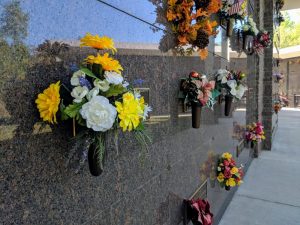
Columbarium wall covered in flowers

Is Cremation Really Eco-Friendly?

Although cremation does reduce land use as compared to burial, the practice is not considered green by either the National Funeral Directors Association or the Green Burial Council. Flame-based cremation releases pollutants into the air, including mercury, particulate matter, and nitrogen oxide. Additionally, flame-based cremation also requires a significant amount of fuel, which results in carbon monoxide emissions every year.

On the other hand, water-based cremation (alkaline hydrolysis) is thought to be more environmentally friendly. Instead of using fire, this form of cremation uses water, agitation, and either potassium hydroxide or sodium hydroxide to reduce the body to bone fragments. Water-based cremation has a smaller carbon footprint, uses less fuel, and doesn’t release emissions from the body. However, water cremation is not widely accessible yet, so it may not be available in your area.

Urn sitting on memorial table surrounded by yellow and light purple flowers

Can I Have a Service with Cremation?

Absolutely! In fact, there are quite a few service options available when you select cremation. The final disposition you choose does not dictate whether or not your family has the opportunity to celebrate your loved one’s life and say goodbye in a meaningful way.

To learn more about your service options, go to “Cremation and the Importance of Ceremony,” where you will find a breakdown of your cremation service options. And if you’d like to do something entirely different, simply speak with your trusted funeral professional. Most funeral homes are willing to work with you to create the type of service your family wants.

Blue metallic urn surrounded by yellow flowers

What are My Permanent Placement Options with Cremation?

After cremation takes place, you will need to decide what to do with the ashes of a loved one. Again, you have quite a few options when you select cremation.

Burial/Inurnment of the Cremated Body

First, you can choose to place a loved one’s cremated remains in a cemetery. You could place the urn in:

  • A columbarium niche
  • An existing adult burial space (next to a spouse)
  • A smaller plot designed for cremated remains
  • An urn garden
  • A mausoleum

Some families also choose to place a small portion of the cremated remains in cremation jewelry or other memorial items, such as cremation glass, cremation benches, or memorial rocks.

White urn with orange stripe, sitting on nightstand at home

Retain the Urn at Home

Second, you could choose to place the ashes in a decorative urn and keep them in your home. Some families choose to split the cremated remains into portions that can be divided among family members and multiple keepsake urns, while others choose to contain the remains in one ceremonial urn.

One word of caution: Make sure that you indicate in your will what should be done with the cremated body when you die. After your own death, whoever handles your estate may not know about your loved one’s urn and may dispose of it unknowingly. So, if you do keep a loved one’s cremated body in your home, make sure that you communicate a plan for their care after you are gone.

Family on boat setting our memorial flowers and scattering a loved one's ashes

Scattering

Third, you could choose scattering. Most often, ashes are scattered on private property, on public lands (like national parks), in a cemetery, or at sea. Make sure you check all laws and ordinances before you scatter. For example, many national parks require a permit, and scattering at sea must take place at least three nautical miles away from land. Your funeral director can help you figure out what laws are in place and help you apply for any necessary permits and registrations.

A Quick Note on Scattering

Scattering all the physical remains of a loved one in one unmarked location can be difficult. For some family members, it’s important to have a place to go to feel close to a loved one. Before scattering, talk to your loved ones and see if it would be healing and appropriate to also create a permanent memorial.

You could set a plaque at the scattering site, place a memorial bench in a special location, or even reserve a portion of your loved one’s ashes in a columbarium while you scatter the rest. There are a lot of options, so speak with your family to get their thoughts.

Two men exchanging cardboard boxes

Can You Ship Cremated Remains?

Yes, you can mail cremated remains via the USPS, but there are certain regulations in place. Check out “5 Tips When Shipping Cremated Remains” to get an inside look at best practices when shipping a loved one’s ashes.

Additionally, you can fly with cremated remains (domestically and internationally), but there are a few extra hoops to jump through. Make sure you speak with your specific airline about their requirements, but also give “What You Need to Know About Flying with Cremated Remains” a quick read. It will give you an understanding of how the process works.

Attentive funeral director sitting on couch as he listens to older couple talk

With Cremation, Do I Receive the Same Support Services from Funeral Directors?

Yes, you certainly do. Funeral directors perform the same professional functions with cremation as with burial. They will help you create a personalized final tribute, coordinate all the behind-the-scenes details, communicate with the cemetery (if necessary), assist with legal documentation, and provide grief resources.

No matter what final disposition you choose, the funeral home staff will give you their best efforts and provide service that meets your needs. To learn more about how funeral directors can assist your family, take a moment to read “What Do Funeral Directors Do?”

Woman using a calculator to calculate the cost

What Does Cremation Cost?

Cremation does tend to cost less than burial, but the cost of either is ultimately in your hands. You can choose the services and merchandise you want and ensure that the total cost stays within your budget. If you prefer burial but feel like cremation better fits your budget, speak with the funeral director. They can review the options and discuss whether there might be a burial option that could work for your family.

For more detailed information about the cost of a funeral, including statistics from the National Funeral Directors Association, go to “What is the Average Cost of a Funeral?”

Black urn sitting on side table with flower vase nearby

One Final Note

As you consider your options, keep the emotional needs of your family in mind. Choosing between burial and cremation isn’t the only decision before you. If you are tempted to forego a funeral service to save money, first make sure that’s what your family wants. It may seem like a fuss to put together a service. But more than likely, the family needs time to honor life, share memories, and remember the person who has died. Only when we face the pain of loss can we begin to heal from it, and the funeral service is the start of the journey.

If you’ve decided you prefer burial or would just like to understand all your options, check out “Burial FAQs: What Are Your Burial Options?”

Skip to content