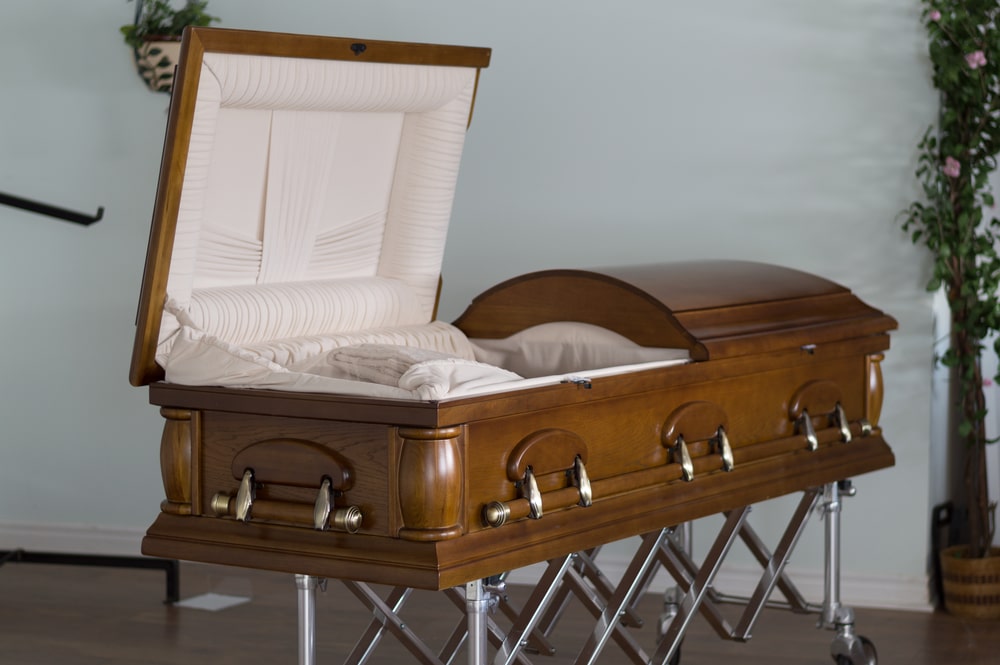
If you are wondering how to plan a final celebration that is meaningful and that expresses the individuality of the person who died, then here are a few ideas to create an especially healing funeral tribute.
The Catholic funeral rite is a time-honored tradition that allows the Catholic community to gather in support of the bereaved and to commend dear departed loved ones into God’s loving and merciful hands. A Catholic funeral rite is divided into three parts, each with its own purpose: vigil, funeral liturgy, and rite of committal. By following the complete structure, the bereaved family is strengthened in faith, hope, and love through the funeral ritual.

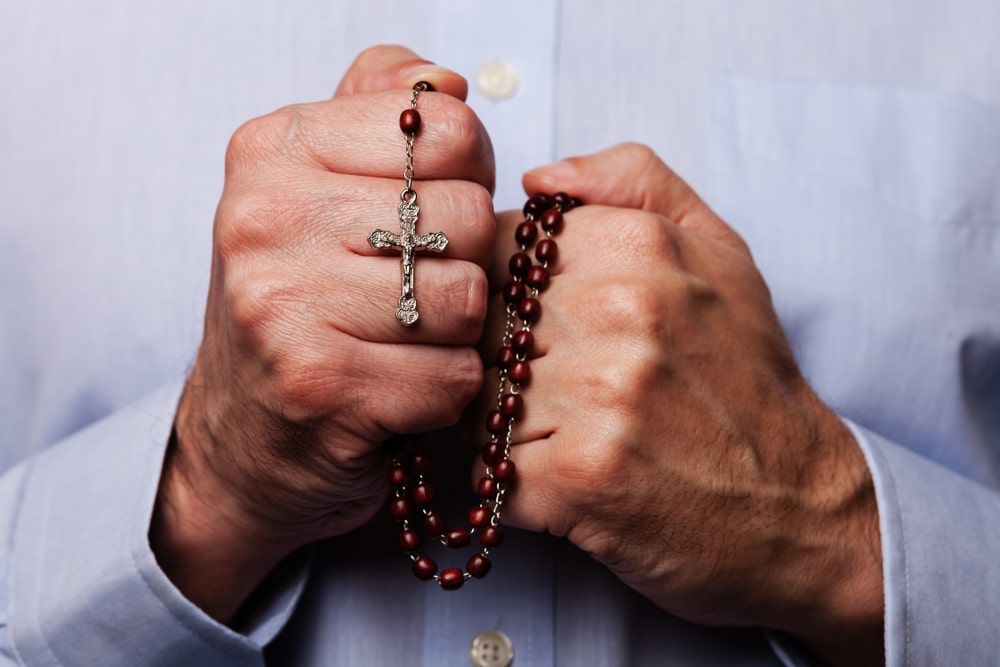
The vigil is a prayer service usually held the evening before the funeral and may include a rosary. The Order of Christian Funerals (no. 56) states, “At the vigil, the Christian community keeps watch with the family in prayer to the God of mercy and finds strength in Christ’s presence.” This is a special time for the bereaved family to receive love and support from their Christian brothers and sisters and to share stories as they honor and remember a unique life.
At the vigil, much like a viewing or a wake, family and friends gather in the home of the deceased, in the funeral home, or in the Church to pray and remember the deceased and commend them to God. In prayer, they ask God to console them in their grief and give them strength to support one another. The vigil is the most appropriate time for family and friends to share stories, eulogies, and memories.

The funeral liturgy is the central expression of faith for the Catholic community after the loss of a loved one. It may be celebrated at a Requiem Mass, or when Mass cannot be celebrated, a funeral liturgy outside Mass can be celebrated at the Church or in the funeral home. The funeral liturgy is an act of worship in which the family and friends of the deceased gather with the Church to give praise and thanks to God. Through prayer and petition, the focus is placed on Christ’s victory over sin and death as a loved one is commended into God’s tender mercy and compassion.

The Rite of Committal is the conclusion of the funeral rite. The Church prefers that burial take place on consecrated ground. In committing the body to its resting place, the community expresses hope that the deceased awaits the glory of the resurrection. The Rite of Committal is an expression of the communion that exists between the Church on earth and the Church in heaven: the deceased passes with the farewell prayers of the community of believers into the welcoming company of those who need faith no longer, but see God face to face.
These three actions come together to create the Catholic Funeral Rite, which has brought comfort to Catholics for centuries. But if you are unfamiliar with the Catholic Rite, you may have additional questions. Let’s talk through a few of the most common ones.

While burial remains the more typical and preferred practice, it is no longer uncommon for Catholics to choose cremation. The Church teaches that the body should be cared for with great respect and dignity, both as God’s creation and as former temples of the Holy Spirit and as an expression of our hope in the risen life to come.
The Order of Christian Funerals offers three options with the cremated body:
The practice of scattering the cremated body is not encouraged, nor is dividing the cremated body or keeping the urn at the home of a relative or friend, although burial at sea in an urn is acceptable.

The vigil often takes place at the Church, in the funeral home, or at the home of the family. Generally, a priest or deacon will preside, but a layperson may also preside. The primary purpose of the vigil is to provide mourners with an opportunity to pray, offer support and condolences to the family, and to hear or give tributes and eulogies.
A few things differentiate a Requiem Mass (Funeral Mass) from a regular Catholic Mass. These differences include:

Anywhere from 40 minutes to an hour, depending on whether it is a full Mass or not.
At a Catholic funeral, the mood will be formal and somber. It is appropriate to wear dark-colored clothing, such as black, charcoal, or gray. Wear something modest, though not casual. Jeans, hoodies, t-shirts, sportswear, and casual footwear are not recommended.
While prayers are being recited, you can stay seated with your head bowed. There will be parts of the Mass that require you to alternate between standing and kneeling. If you are unable to kneel, that’s fine, but try to at least stand.
If you are not Catholic, do not to take part in Holy Communion. You can follow the procession to receive a blessing from the priest, if you wish, but it is not required. For more funeral etiquette suggestions, click here.

Absolutely! In fact, personalization is encouraged as long it does not interfere with the Church rites that must be completed. You can speak with both a funeral director and the priest to determine if your personalization plans are appropriate.
Hopefully, you have a better understanding of the beauty and rich tradition behind the Catholic Funeral Rite. However, if you have more questions, speak to a trusted local funeral director. They can answer any additional questions that may be on your mind.
There are many practical benefits to funeral preplanning – like saving money, qualifying for Medicaid, and having funeral funds set aside to pay for everything – but did you know there are also emotional benefits? And let’s be honest – the emotional part of death is the hardest part. So, if you’re on the fence about planning ahead for your funeral wishes, take a look at these 5 emotional benefits that preplanning can give your family during a time of grief and loss.

After the death of a loved one, it falls to the surviving family members to plan the funeral with the help of a local funeral home. If there’s no advance preparation, that means the family will have to answer 130+ questions in a short period of time. On top of that, they will have to come up with the funds to pay for the funeral, and most families aren’t prepared to take on that kind of unexpected financial responsibility. But with funeral preplanning, you can reduce the stress your family will feel by answering all the questions ahead of time. And if you want, you can set aside funds to cover all the costs.

Have you ever had to make an important decision without first speaking to your spouse? It’s hard, and there’s a lot of uncertainty. That’s what happens when a loved one doesn’t leave instructions about their funeral wishes. When faced with planning a loved one’s final tribute, surviving family members often feel deeply uncertain and doubt the decisions they made.
Was cremation the right choice? Should we have had a viewing to say our last goodbyes? Could we have done more to personalize the service? By putting your funeral wishes in writing, you remove these feelings of indecision. Instead, your family can honor your life the way you want and feel good about it.

What happens when everyone is feeling stressed and no one knows what to do? Stress increases, opinions come out, and arguments begin to simmer. When it’s unclear how to proceed with the funeral plans, surviving family members may begin to disagree on how to proceed.
For example, your son may prefer burial while your daughter thinks cremation is best. Or your spouse is worried about expenses while your children want a big extravagant event. With 130+ questions to answer, there’s a lot of room for argument and hurt feelings. However, when your preferences are clearly outlined with funeral preplanning, your family knows what you want. They can then use that roadmap to honor your life and legacy.

It may sound weird, but funeral preplanning can actually give your family a sense of stability and control. When a loved one dies, routines are disrupted, and everything feels out of sync, upended, out of control. But when there’s a plan in place, a feeling of stability returns. They don’t have to wade through a sea of uncertainty without a compass. Instead, your advance funeral plan becomes an anchor amidst the whirlwind of planning. The first days following a loss are the hardest, and that sense of stability can soothe emotions and calm fears.

Lastly, funeral preplanning can bring peace of mind to you and your family. For your family, they can rest easy, knowing that you’ve taken care of everything. The selections have been made. The music and venue chosen. The vital statistics are already on file at the funeral home. All your family has to do when the time comes is to choose a date and time. And you can rest in the knowledge that you’ve done everything you can to care for your family and make a difficult experience a little bit easier. That’s a beautiful gift.
Before we go, one more thing.

One of the benefits of planning ahead for your funeral wishes is that it gives you time to consider all the options and choose what best fits your personality and preferences. As you plan, you’ll definitely want to work with a reputable local funeral home. The funeral director can help you understand your options and act as a resource throughout the advance planning process.
However, also consider inviting your family into the planning process. Yes, you are putting a plan in place to help them, but they can also help you. You may think that a simple burial with no service would be easiest, but your family may want to have a funeral service and invite friends and extended family to pay their respects. The funeral is about your life, but it’s also about your family’s emotional needs. Consider listening to what they think and incorporating some of those ideas into your funeral wishes.
Some things are universal, across every culture and background. Having an emotional connection between memory and food is one of those things. As human beings, we connect with others through food. Shared meals, holiday traditions, beloved family recipes, and special treats all strengthen bonds and bring families together over the years. That’s one reason why baking can be a meaningful (and tasty) way to remember a loved one. Let’s look at a few other reasons why baking can help you grieve and honor a loved one’s memory.

According to scientific research, of the six senses, the one most connected to memory is the sense of smell. So, when you bake Grandma’s famous Christmas cookies or Dad’s favorite casserole, the smells are going to unlock cherished memories and bring you comfort.
After the loss of a loved one, you may feel like your life is spinning and you’ve lost control. For some people, loss of control can increase feelings of anxiety. Because baking is predictable – certain ingredients mixed together create a delectable treat – it can bring a sense of peace and calm. You can’t control every factor of your life right now, but you can control the outcome of Aunt Susan’s tried-and-true banana-nut bread.

Similarly, baking can reduce your stress levels, too. The repetition of steps can calm you down. And the smells bring comfort and relaxation. Plus, knowing that your efforts will result in something delightful to eat (or share with others) brings a sense of accomplishment. And if you are feeling particularly stressed, you can take it out on the bread dough you’re kneading!
While you may follow a specific recipe, baking also gives you room to express a certain amount of creativity. If you want to honor a loved one’s memory, you could make cupcakes in their favorite color or flavor. Or, you could decorate them with a special theme, like butterflies, sports team colors, or fishing. Alternatively, you can mix-and-match. Perhaps you prefer buttercream frosting, but your grandmother just loved chocolate ganache. Make your favorite cake and ice it with chocolate ganache in her memory.

Have you ever feared that you might forget a loved one’s face, their voice, their smell? By actively engaging with the things they loved – like their favorite baked goods – you can keep that memory alive. Not only will the sweet smells activate your memory, so will the look, taste, and feel of whatever you make. Together, your senses will help you travel back in time and keep your loved one’s memory alive.
There will be times when you desperately miss your lost loved one. In those times, you can remember them through baking their favorite things. If it’s the holidays, bring out Mom’s family-famous reindeer cookies. If it’s her birthday, bake her favorite cake. As you enjoy each fragrant bite, take time to reflect on your memories and cherish the time you had together.

Most of the time, baked goods are meant to be shared. Because of this, baked goods are an excellent birthday or holiday gift, especially when they have special meaning. So, you might choose to bake your loved one’s favorite pumpkin bread to share with family or friends, and when you do, you might say, “This was my son’s favorite.” As you invite others into your grief journey, you allow them to come alongside you to offer support and love. We need both when we’re grieving the death of someone dearly loved.
Maybe baking sounds like a good idea, but you aren’t so sure about putting it into practice.
Just remember:
If you want to bake something special in memory of your loved one, keep it simple. If it’s the holidays and you decide you want to bake ALL of the family Christmas cookies, that can get overwhelming fast. Instead, choose one or two that mean the most. The more complicated you make it, the less likely you are to actually do it.

And let’s be honest, not everyone enjoys baking. If that’s you, don’t worry. There are other ways to use food to honor and remember a loved one. Pick up their favorite store-bought pastries. Get a meal at their favorite restaurant. Order their signature drink at the coffee shop. You can still benefit from the smell, taste, and feel of meaningful foods if you didn’t make them yourself.
No matter what works best for you and your family, food is closely tied to our memories of the people we love. As you mourn the loss of someone you love, rest on your precious memories and allow them to help you grieve.
When considering final disposition, you have two main choices: burial or cremation. But what should you know when considering cremation? With this quick overview, you can get your questions answered and identify the options that most appeal to you.

Cremation is a form of “final disposition,” which simply refers to your preferences regarding what happens to the body after death. At present, people often choose between full-body burial or cremation, though there are other options (click here to learn more).
The cremation process exposes the body to extreme heat and flame, resulting in the reduction of the body to bone fragments. The fragments are then ground down into what is commonly referred to as “ashes.”
Afterward, the cremated remains, which usually weigh somewhere between 3-7 pounds, are placed in a chosen urn or temporary container and returned to the family. From there, families have many options for memorialization, including scattering, urn burial, and placement in a columbarium.

Although cremation does reduce land use as compared to burial, the practice is not considered green by either the National Funeral Directors Association or the Green Burial Council. Flame-based cremation releases pollutants into the air, including mercury, particulate matter, and nitrogen oxide. Additionally, flame-based cremation also requires a significant amount of fuel, which results in carbon monoxide emissions every year.
On the other hand, water-based cremation (alkaline hydrolysis) is thought to be more environmentally friendly. Instead of using fire, this form of cremation uses water, agitation, and either potassium hydroxide or sodium hydroxide to reduce the body to bone fragments. Water-based cremation has a smaller carbon footprint, uses less fuel, and doesn’t release emissions from the body. However, water cremation is not widely accessible yet, so it may not be available in your area.

Absolutely! In fact, there are quite a few service options available when you select cremation. The final disposition you choose does not dictate whether or not your family has the opportunity to celebrate your loved one’s life and say goodbye in a meaningful way.
To learn more about your service options, go to “Cremation and the Importance of Ceremony,” where you will find a breakdown of your cremation service options. And if you’d like to do something entirely different, simply speak with your trusted funeral professional. Most funeral homes are willing to work with you to create the type of service your family wants.

After cremation takes place, you will need to decide what to do with the ashes of a loved one. Again, you have quite a few options when you select cremation.
First, you can choose to place a loved one’s cremated remains in a cemetery. You could place the urn in:
Some families also choose to place a small portion of the cremated remains in cremation jewelry or other memorial items, such as cremation glass, cremation benches, or memorial rocks.

Second, you could choose to place the ashes in a decorative urn and keep them in your home. Some families choose to split the cremated remains into portions that can be divided among family members and multiple keepsake urns, while others choose to contain the remains in one ceremonial urn.
One word of caution: Make sure that you indicate in your will what should be done with the cremated body when you die. After your own death, whoever handles your estate may not know about your loved one’s urn and may dispose of it unknowingly. So, if you do keep a loved one’s cremated body in your home, make sure that you communicate a plan for their care after you are gone.

Third, you could choose scattering. Most often, ashes are scattered on private property, on public lands (like national parks), in a cemetery, or at sea. Make sure you check all laws and ordinances before you scatter. For example, many national parks require a permit, and scattering at sea must take place at least three nautical miles away from land. Your funeral director can help you figure out what laws are in place and help you apply for any necessary permits and registrations.
Scattering all the physical remains of a loved one in one unmarked location can be difficult. For some family members, it’s important to have a place to go to feel close to a loved one. Before scattering, talk to your loved ones and see if it would be healing and appropriate to also create a permanent memorial.
You could set a plaque at the scattering site, place a memorial bench in a special location, or even reserve a portion of your loved one’s ashes in a columbarium while you scatter the rest. There are a lot of options, so speak with your family to get their thoughts.

Yes, you can mail cremated remains via the USPS, but there are certain regulations in place. Check out “5 Tips When Shipping Cremated Remains” to get an inside look at best practices when shipping a loved one’s ashes.
Additionally, you can fly with cremated remains (domestically and internationally), but there are a few extra hoops to jump through. Make sure you speak with your specific airline about their requirements, but also give “What You Need to Know About Flying with Cremated Remains” a quick read. It will give you an understanding of how the process works.

Yes, you certainly do. Funeral directors perform the same professional functions with cremation as with burial. They will help you create a personalized final tribute, coordinate all the behind-the-scenes details, communicate with the cemetery (if necessary), assist with legal documentation, and provide grief resources.
No matter what final disposition you choose, the funeral home staff will give you their best efforts and provide service that meets your needs. To learn more about how funeral directors can assist your family, take a moment to read “What Do Funeral Directors Do?”

Cremation does tend to cost less than burial, but the cost of either is ultimately in your hands. You can choose the services and merchandise you want and ensure that the total cost stays within your budget. If you prefer burial but feel like cremation better fits your budget, speak with the funeral director. They can review the options and discuss whether there might be a burial option that could work for your family.
For more detailed information about the cost of a funeral, including statistics from the National Funeral Directors Association, go to “What is the Average Cost of a Funeral?”

As you consider your options, keep the emotional needs of your family in mind. Choosing between burial and cremation isn’t the only decision before you. If you are tempted to forego a funeral service to save money, first make sure that’s what your family wants. It may seem like a fuss to put together a service. But more than likely, the family needs time to honor life, share memories, and remember the person who has died. Only when we face the pain of loss can we begin to heal from it, and the funeral service is the start of the journey.
If you’ve decided you prefer burial or would just like to understand all your options, check out “Burial FAQs: What Are Your Burial Options?”

After the death of a loved one, you’re going to experience a variety of emotions. Every person is different, but the emotions will range from sadness and confusion, to anger, fear, and disbelief. So much of the grief journey occurs in the mind, but grief also takes a toll on the body. To help yourself grieve and stay on top of the things you “must do,” here are 9 helpful tips to keeping your body healthy while you’re healing emotionally.

Grief will throw your life and routine off balance, so you will need to re-establish a sense of normalcy after a loss. Routines provide a sense of peace and calm amidst the emotional upheaval. You know what’s coming and can enjoy the comfort of regularity. So, determine the best routine for you. This will support your emotional healing as you adjust to what life looks like after the loss of someone loved.

You may be tempted to indulge in sweets and junk food when your emotions are in turmoil but try to maintain a healthy diet. Nourishing food will give you strength to face the difficult days and weeks ahead. When you feel good physically, you will also feel much better emotionally! Unless cooking helps you relax, you might consider meal prepping, so that you have less stress throughout the week.

As mentioned above, a healthy diet is important to caring for your body. But let’s take a moment to talk about sugar specifically. Sugar in moderation is completely fine, but research shows that too much sugar leads to mood imbalances, fluctuating hormone levels, and increased blood pressure and inflammation. In some people (higher risk in men), it can lead to depression. So, even if you can’t be completely healthy with your diet due to money, time, or energy levels, consider at least cutting back on the sugar.

Much like food, water is essential to a healthy body. It’s actually even more important. The body can go 3-6 weeks without food but only around 3 days without water. So, as you’re grieving, make sure you stay hydrated. Plenty of water will help regulate your body temperature, assist with digestion, help you absorb nutrients, fight off illness, and improve mood. If you have a tough time remembering to hydrate, set timers or carry a water bottle around with you.

Good sleep is essential for overall health and wellness. After a loss, you may lose sleep due to intrusive thoughts, stress, bad dreams, or anxiety. To promote sleep, try to create a comfortable, cool, and calm atmosphere at night. Over-the-counter sleep aids may also help. If nothing else works, consider talking to your doctor or therapist. For more suggestions, give “Sleeping Tips for the Grieving” a quick read.

Exercise reduces stress and improves mood, which is important while grieving. If you participated in a regular exercise routine before the death of your loved one, try to continue. If you did not practice a lifestyle of exercise, start small. Take a walk, ride a bike, or pick up small hand weights. Even moderate daily exercise can help improve your mood and relieve stress. To learn more about the benefits of some form of exercise during a time of loss, go to “Can Exercise Help You Grieve?”

Unfortunately, for some, grief can trigger or exacerbate unhealthy coping habits. When these habits are unaddressed or go on too long, they can seriously affect your ability to live a healthy life. If you notice that you are using activities like overeating, drinking, addictive substances, or mindless TV/news watching to avoid confronting painful emotions, it may be necessary to seek assistance. Not only will these habits inhibit your ability to emotionally heal, but they may also affect your long-term physical health.

Instead of numbing activities, engage in activities that feed your spirit and soul. Look for opportunities to do things that bring you joy or give you a sense of fulfillment. Spend time outdoors. Listen to uplifting music (skip the moody stuff for now). Take walks. Get a massage. Volunteer for a cause you believe in. Write in a grief journal. Express your emotions through creativity. Spend time in quiet reflection or meditation. All of these activities will soothe your mind, and in turn, keep your body healthy.

If you are struggling with difficult emotions, such as depression, or need a listening ear, don’t hesitate to ask others for help. Trusted friends, family members, therapists, counselors, or grief support groups are all excellent resources to help you on your journey through grief. Grief is something we all go through, but we all experience it differently. You must find the methods that work best for you on your individual journey. Don’t compare your needs to someone else’s – simply find the healthy options that work best for you.
Hopefully these 9 tips will help you on the journey toward healing. It will take time, so be patient with yourself. As you do the work of grief by actively engaging with your emotions, you will begin to see that each day becomes a little brighter. You will never “get over” the death of your loved one; that’s not the point of healing. The goal is to come to terms with it, to make peace with it, and find renewed purpose and meaning in the remainder of your days.

There are countless ways to honor a loved one’s life and memory. It’s just a matter of finding the options that are 1) meaningful to the family and 2) beautifully reflect the deceased’s life and interests. For outdoor enthusiasts, honoring a loved one’s life at a U.S. National Park may be just the right decision. But can you scatter ashes at National Parks? You can! But there are certain rules and regulations to follow. Let’s review some key information you will need as you plan a scattering ceremony at a National Park!
(Photo: Joshua Tree National Park, California)
At present, there are 63 sites that are commonly referred to as “National Parks.” They include places like Yosemite National Park, Yellowstone National Park, Glacier National Park, and so on. These are types of parks we will focus on today.
However, the National Park System encompasses more than 425 sites, spanning over 84 million acres. In addition to the 63 National Parks, they also manage national battlefields, national military parks, national historic sites, national monuments, national forests, and national reserves, to name a few.
In most cases, yes, you can! There are no federal laws that govern burial and cremation – it’s left up to the individual states. That means that there are no “set” rules for scattering ashes at National Parks. Instead, each park has their own policy, based on the laws of their state.
(Photo: Zion National Park, Utah)
However, there are some general guidelines to be aware of:
Many National Parks require that you state your intentions to scatter cremated remains. You do this by submitting an application for a “special use” permit. This permit gives you permission to scatter a loved one’s remains at the park.
Each park will have their own paperwork to complete, so you must visit the website of your preferred park and fill out their permit request form. Allow at least 30 days for processing. You will receive the authorization permit in the mail once it has been approved.
Note: A few parks do not require a permit to scatter ashes. It will be clearly outlined on the park’s website, if they do require a permit.
Some National Parks put a limit on the number of people allowed to participate in the scattering ceremony. Make sure you’ve checked into the regulations for your preferred park. However, if you would like to have a larger gathering, some parks require an additional permit granting permission. Again, the park’s website will outline all the requirements.
(Photo: Shenandoah National Park, Virginia)
When you choose the location for the scattering ceremony, most National Parks prefer that you find a quiet, secluded space to do so. This way, you have more privacy, but also, your gathering doesn’t disrupt the natural flow of the park. Avoiding public use areas means that you should stay away from roads, walkways, trails, buildings, and parking areas.
Also, don’t scatter in just one spot; spread the scattering out over a larger area. And stay at least 100 yards away from any waterways or creeks. Additionally, some parks will have extra requirements regarding the location. For example, Yellowstone does not allow scattering near thermal areas.
As any avid outdoorsperson knows, it’s important to the natural habitat that you “leave no trace” of your presence. The same holds true at National Parks. What does this mean for scattering? You cannot leave a marker of any kind to commemorate the event. However, you can pin the location on your phone using GPS, so that you always know your loved one’s final resting place. Also, many National Parks keep a “Book of Memories,” where you can record your loved one’s name as an act of memorialization.
Burial is not allowed at National Parks, so do not bury the cremated remains of a loved one.
(Photo: Yosemite National Park, California)
Before settling on a date for a scattering ceremony, take weather conditions into account. Some parks may be closed for snow, flood, or other seasonal climate changes. If you need to make changes to your dates, contact the park directly.
Every park has their own application form, so the questions may vary from park to park. However, they will generally ask for:
Also, some National Parks may require an application fee. If they do, it will be clearly outlined on their website. If you wish to do anything other than scatter ashes, you may need to apply for additional permits. For example, if you want to camp off the beaten path, you may need a wilderness camping permit. If you have larger plans than a scattering ceremony, you may need an additional permit. A park ranger can help you iron out the details.
(Photo: Redwood National Park, California)
Yes, make sure you keep your permit with you. If a park ranger happens by and sees your scattering ceremony taking place, they may ask to see your permit. If you don’t have it with you, you may have to pay a fine.
Absolutely, you can put together a short ceremony in honor of your loved one. While you cannot set up a large-scale event, you can invite each person to say a few words. Or you can sing songs, pray, drink a special beverage, and so on. Just keep in mind that it should be simple, intimate, and leave no trace when the ceremony is complete.
(Photo: Badlands National Park, South Dakota)
To make planning a little easier for you, here’s a list of all National Parks that allow scattering.
From A to Z:
(Photo: Haleakala National Park, Hawaii)
Today, there are so many ways to honor a loved one’s life in a meaningful and unique way. And a scattering ceremony at a U.S. National Park may feel like just the right thing to do. Hopefully, this complete guide gives you all the information you need to get started. However, if you have additional questions, you can either reach out to the park directly or speak to a trusted funeral professional. They can help you get all the answers you need!
Perhaps you’ve heard the term “green burial,” but it doesn’t really mean anything to you. Today, we’re going to dive into what it is, how it differs from standard burial, what makes a burial “green,” and more. By the end, you’ll have a better understanding of green burial and whether it’s right for your personal wishes.

Founded on the belief that death care practices shouldn’t be harmful to the environment, green burials aim to leave minimal environmental impact. The goal is to conserve resources, protect workers from potentially harmful chemicals, and reduce carbon emissions with the aim to restore and preserve natural habitats.
It’s always best to discuss green options with a local, trusted funeral home, but green burials focus on a few key factors:

While not the most common choice, interest in the practice is rising. According to a 2017 National Funeral Directors Association survey, more than 53% of respondents expressed an interest in exploring green options.
In response, many funeral homes are looking into what certifications are needed and what changes should be made to accommodate this interest. At present, there are a limited number of cemeteries approved by the Green Burial Council (GBC), but that number is increasing every year.
To become green-certified, a cemetery must meet the Green Burial Council’s Cemetery Certification Standards. The GBC recognizes three different types of green burial grounds.
To learn more about GBC’s certification requirements, click here to visit their website.

Generally, people use the terms interchangeably. However, there is a small difference. With a green burial, the burial portion must take place in a green-certified cemetery. However, a natural burial can take place in any cemetery where burial without a grave liner is allowed.
In case that was confusing, let’s recap. Both green and natural burials focus on minimal environmental impact, biodegradable caskets, and the use of non-toxic chemicals. However, the type of cemetery determines whether a burial is “green” or “natural.” A burial is only considered “green” if the body is buried in a green-certified cemetery. Otherwise, it is considered a natural burial.
As for home burials, they could fall into either category, depending on where the burial takes place.
Yes, the practice is legal in all 50 states. However, there may be some state-specific requirements, especially if you want to transport a body across state lines. To get more detailed information, stop by a funeral home you trust, and they will get the answers you need.

While cremation does reduce land use, it’s not considered “green” by either the National Funeral Directors Association or the Green Burial Council. Cremation by fire emits potentially harmful substances into the atmosphere and burns fossil fuels. Because of this, the practice is not considered as environmentally friendly as green burial.
However, water cremation (or alkaline hydrolysis) is thought to be more environmentally friendly. It has a smaller carbon footprint, uses less fuel, and doesn’t release as many emissions. If you are interested in water cremation, talk with a funeral director. This form of cremation is not widely accessible yet, so it may not be readily available in your area.
No matter what type of burial or final disposition you choose, it’s always recommended that you plan some sort of service. As human beings, we need to know that our lives matter. The funeral service is where we do that by coming together to remember and honor a loved one’s life and legacy.
Plus, the service is an opportunity to process the pain we feel and give and receive support from friends and family members. We aren’t meant to do life alone; we need each other in both the good times and the difficult times.
While green burial may be on an expedited timeline, that doesn’t mean you have to give up having a service. Instead, speak to your funeral director and review the options.

If having an environmentally friendly funeral is important to you, there are many things you can do to ensure your end-of-life choices are as green as possible.
First, speak with a trusted funeral professional about the options available in your area or if a service would need to be entrusted to a third party (such as water cremation). Second, decide whether you want a fully green service or if you want only certain elements to be green. These days, funerals are very personalized, so you can mix green elements with traditional elements.
But as you consider the options, remember that the Green Burial Council looks at the following items when determining whether a funeral is green or not:
Body preservation, such as for a viewing or visitation, should not include any harmful or toxic embalming chemicals. Instead, refrigeration, dry ice, or eco-friendly embalming fluid should be considered.
Use a coffin, casket, or shroud made of biodegradable substances like bamboo, wicker, silk, or hemp. Sustainably harvested wood is also a good option.

Many cemeteries require grave liners or burial vaults to prevent the ground from sinking over time, but their manufacture and transport causes carbon emissions and uses great amounts of energy. For this reason, a green burial will not include a liner or vault.
Green cemeteries suggest the use of natural objects for grave markers (such as trees, shrubs, perennial flowers, or rocks). Many cemeteries provide a GPS location so that a loved one’s grave can be easily found.
For more information regarding green burial (or natural burial), speak with a local funeral professional or visit the Green Burial Council website. Remember, green burials are not available everywhere, but your local funeral home will work with you to come up with a plan that best fits your needs and wishes to protect the environment.

As a veteran, you know there are a lot of great benefits out there for you, like discounts, educational grants and scholarships, pension, and healthcare. But are you familiar with the 5 key burial benefits available to you and your family? Let’s briefly break down each benefit, so you know exactly what to request and how to save your family money by taking advantage of all the services open to you.
Before we look at each benefit, a couple of quick notes for you.

What is a burial allowance? In a nutshell, burial allowances are a designated dollar amount that the VA will reimburse to your family to assist with the cost of a veteran’s funeral. Burial allowances are often split into two categories:
Burial allowances are available to help offset the funeral costs of an eligible veteran, spouse, or dependent child. (They do not pay for the funeral in full.) To apply, your family must fill out VA Form 21P-530, “Application for Burial Allowance.” Include proof of military service (DD 214 or equivalent), a death certificate, and receipts to claim reimbursement. Your funeral director will be familiar with this process and can help you do it correctly.

Choosing a final resting place is a very personal decision, and it’s always good to know your options. In the VA’s eyes, there are three types of cemeteries: national, state veterans, and private. Let’s review each one and the benefits available for each.
In addition to burial allowances, the VA also offers burial (cremated or full body) in a national cemetery through the National Cemetery Administration. This benefit includes a plot, opening and closing of the grave, perpetual care, and a government-issued headstone. While placement is based on availability, you, your spouse, and any dependent children can be buried in a national cemetery. Of course, as with anything, there are certain rules and guidelines.
There is no charge for a burial plot in a national cemetery. Because of this, the plot allowance is not available to the families of veterans who are buried in a national cemetery. In some cases, the VA may even pay for the cost of transporting a deceased veteran to the national cemetery. Speak to a local funeral director or your regional VA office to get more details.

A second option for burial is a state veterans cemetery. These cemeteries are facilitated by individual states, not by the National Cemetery Administration, so the regulations will vary. Because of this, you or a funeral professional will need to contact your nearby state veterans cemetery to see if there are any fees associated with burial there and if they allow dependents to be buried on the grounds.
If you choose burial or inurnment in a private cemetery, then you and your family are responsible for the cost. However, you can apply for burial allowances to help with the overall cost. Make sure to keep all receipts, so you can receive a reimbursement. Spouses and dependents buried in a private cemetery receive no VA benefits.

Regardless of the type of cemetery you choose, veterans are always eligible to receive a government-issued headstone or medallion. But what’s the difference between the two?
As you’ve likely seen at national cemeteries or in the movies, the government issues uniform headstones or plaques to mark the graves of military members. The VA will provide a government-issued headstone to mark the grave of an eligible veteran buried in a national, military post/base, state veterans, or private cemetery. If you want, you can even request a government headstone for an eligible spouse or dependent buried in a national or state veterans cemetery.

Alternatively, if you prefer burial in a private cemetery, you can request to receive a medallion rather than a government-issued headstone. Medallions are durable and can be easily affixed to any headstone. They offer you a way to identify as a veteran while also choosing a personalized grave marker. There are different varieties of headstones and medallions available. Click here to view the options available through the National Cemetery Administration. Spouses and dependents are not eligible to receive a medallion.

Because the American flag is a symbol of your service and sacrifice, its presence is a tribute to your life and a sign of the nation’s gratitude. Due to its importance, the VA provides an American flag to drape the casket or urn of every veteran. After the funeral or memorial service is complete, the flag is given to the next of kin. Only one flag is issued per veteran.
In addition to a burial flag, eligible veterans may receive military honors at a funeral service, which includes folding and presenting the United States burial flag and the playing of Taps. For more information, take a moment to read “The Core Elements of a Military Honors Funeral.”
Note: Spouses and dependents are not eligible to receive a burial flag or military honors.

Lastly, the VA offers a Presidential Memorial Certificate (PMC), which is an engraved certificate, signed by the current President, that is given to honor your memory and your service. Your family can then display it in the home or hold onto it as a keepsake of your life and commitment to serve. Perhaps it goes without saying, but spouses and dependents are not eligible to receive a certificate.
And that’s it! Together, these five elements make up the basic lineup of burial benefits that are available to an eligible veteran: burial allowances, burial in a national cemetery, government-issued headstone or medallion, burial flag, military honors, and Presidential Memorial Certificate. Now that you have this information, what should you do next?

Given your experience as a service member, you know how complicated things can get, whether it’s updating your Page 2, keeping an eye on your LES, or just getting an updated government ID. By preplanning for your funeral wishes, you can jump through all the hoops now, ensuring your family doesn’t have to do it in the future.
To learn more about the benefits of planning ahead as a veteran, read “Why Should Veterans Plan Ahead?” or schedule a visit with a local funeral director or Veterans Service Officer (or both!). With a knowledgeable professional by your side, you can get all your questions answered and put together a plan that honors your life and meets your family’s needs.
You may have noticed that grief puts a lot of stress on your mind and body. To combat that stress, your body’s natural response is to release a hormone called cortisol. Cortisol helps regulate your blood pressure, blood sugar, inflammation levels, and stress response. So, it’s a good thing, but cortisol also makes you tired. That’s why it’s important to practice good self-care during times of grief, and one important key to self-care is exercise. The best news – according to the experts, as little as 30 minutes a day of moderate exercise can make a difference.

It might seem counterintuitive to exercise when you’re already feeling tired and emotionally spent, but let’s discuss 5 ways that exercise can make you feel better when you’re feeling down.
When you exercise, your body releases endorphins, a hormone that acts as a natural pain and stress reliever. You can decrease your stress and anxiety by exercising just a little bit every day. That might mean a brisk walk outside for 30 minutes or a calming Pilates routine. As you work movement into your day, you will see your aches and pains ease and your mood boost. Numerous research studies have shown that inactivity and staying in bed increase anxiety and sad feelings, so get up and get moving.
Every person responds to grief differently, and for some, that includes experiencing sleeplessness. Your thoughts may be racing. You may be struggling to mentally accept what has happened. By including exercise in your daily routine, you can reduce your stress levels and make it more likely that you will relax when bedtime comes around. For more sleeping tips, make sure to read Sleeping Tips for the Grieving.

When a death occurs, it can quickly take center stage in your life. While you shouldn’t ignore your grief feelings, you can’t work through everything at once. Instead, give yourself mental and emotional breaks. Though it may only be for 20 or 30 minutes, participating in exercise allows your emotions to rest and gives your mind a much-needed reprieve.
Grief and loss interrupt the normal flow of life. In many ways, grief can make you feel helpless and like you are no longer the captain of your own life. But by committing to regular exercise, you can begin to take back some of that control and normalcy. Whether it’s going for a run, attending a Zumba class, or playing golf, exercise can boost your self-esteem as you grow stronger and give you confidence to overcome any challenges and obstacles ahead.

The grief journey can feel long and lonely, but with exercise, you can increase your opportunities to give and receive support from others. Some days, it’s going to be easier to exercise at home or take a quick stroll around the block. However, when you can, try to attend a group class or invite a friend to walk with you. You will feel less lonely and will even have the chance to share what’s on your heart and mind.
Now that you understand the benefits of exercise during times of grief, let’s talk through a few quick recommendations if you choose to add exercise to your grief journey.

Exercise isn’t going to magically cure your problems. And while exercise is a useful tool to boost your mood and create a better overall outlook, you also need to listen to your body. For a time, you may need to re-define what exercise looks like for you. You may be used to 45-minute HIIT sessions every day, but while you’re grieving, that may need to scale back to HIIT two days a week and long walks on the other days. The bottom line is, take it easy. Listen to your body. Don’t overdo it.
After a death, many people experience a change in eating habits. Some may experience a loss of appetite, while others may overindulge in takeout, sweets, and comfort food. A few days of this is totally normal, but don’t let it go on too long. Instead, make an effort to give your body nutritious foods that will fuel you rather than drag you down. Also, drink plenty of water. Whether you are losing water through sweat (from exercise) or crying (from your feelings of grief), your body needs water to replenish itself. And to be on the safe side, limit your caffeine and alcohol as these two drink choices may dehydrate your body.

Depending on your personality and preferred workout routine, 30 minutes may seem like forever or no time at all. But regardless of where you fall on the exercise spectrum, you will experience the benefits of exercise in as little as 30 minutes 5 days a week. So, if you aren’t ready to jump back into a full routine, that’s okay. Commit to 30 minutes of moderate exercise and see how you feel. Also, choose an activity that matches your mood. If you need peace and relaxation, do yoga or Pilates. If you’re dealing with anger, a boxing class might be best. No matter what you choose, even a little bit of exercise can help.
If you find that you just don’t have the desire to exercise but you’d like to, consider exercising to honor your loved one’s memory. You could sign up for a 5K or do a walking challenge. If your loved one enjoyed baseball, surfing, or some other sport, join a league and learn for yourself. You can also recruit friends or family to join you in your exercise goals. You’re more likely to do something if other people are counting on you to be there.

It’s a natural part of human nature to avoid painful or difficult things. But, if you’re going to heal and learn how to move forward after a loss, it’s essential that you engage with your feelings and come to a place of reconciliation and peace. People all over the world use exercise to provide relief, a sense of purpose, and an outlet for positive or negative emotions. Carefully analyze your own motivations and make sure you aren’t using exercise as an excuse to escape your grief.
While including an exercise routine in your grief journey isn’t required to come to a place of healing, it is a useful tool in your belt. Exercise can boost your mood, help you sleep, provide a reprieve from complex feelings, increase your self-esteem, and decrease your loneliness during times of grief. And if you feel stuck despite doing your best to work through your feelings of grief, consider talking with a grief therapist. They can listen to what’s going on in your heart and mind and give you suggestions that will help you find the healing you’re looking for.