All Posts By

christy.kessler

How to Live a Meaningful Life

By Living Well

We all want to make some sort of difference in the world. This desire seems built into the human spirit.

In his landmark book, 7 Habits of Highly Effective People, Stephen Covey asks readers to think through a powerful exercise: visualize your own funeral. Knowing you still have many years left to live and invest into the lives of others, consider for a few moments what you would want your closest loved ones to say about you at the funeral service. What do you want people to remember about you? Think about your friends, family, co-workers, and neighbors. What would you want them to say about the life that you lived?

What Makes Life Meaningful?

Living a meaningful life doesn’t mean living by one certain formula. A meaningful life can take many forms and vary from person to person. Think about the most influential people in your own life. While each person has probably impacted your life in a variety of ways, there are likely certain principles that each one lived by that led them to influence your life for the better.  Take a look at the 6 principles below to help you as you consider what you can do to live your best life from this day forward.

1. Value people and relationships more than things

A hospice nurse’s interviews with palliative care patients have recently revealed the top five things people regret at the end of life. Among the top 5 regrets, #2 was “I wish I hadn’t worked so hard,” the biggest regret that the men in the group expressed. The reason? They missed their children’s youth and the companionship of their spouse. Many of us spend a great deal of time pursuing things other than relationships: a successful career at work, a perfect image in the mirror, or even fame and fortune, but deep down, we know that those things are not what make life meaningful or worth living. All we have to do is look at the lives of celebrities to know that fame and fortune can’t bring true happiness or fulfillment. The drive to succeed can distract us for a time, but “success” cannot really fulfill our deepest need: the desire for meaning, significance, and connection. After all, life is not about what we accumulate; it’s about the relationships we’ve built and the people we love. To live meaningfully, make people and relationships your top priority, before work, before wealth, and before achieving success (however you define it), and you won’t live to regret a single day of your life.

2. Find where you belong

We all want to feel wanted and to belong somewhere. We are born into a place to belong – a family, a tribe. But sometimes, as much as we might like it to be the case, our families don’t or can’t meet our need to belong. And so, we feel out of place. If this is you, don’t lose hope. You can still find people who value you and whom you can value in return. For some, it will be a close-knit family. For others, it will be friends, members of a community, or a faith group. With most, it will be a mixture of both groups. But no matter who your tribe is, find them, love them, spend time with them, and do life with them.

3. Discover your passions and pursue them

The third principle is to find out what you’re passionate about and pursue it. Your unique gifts are part of the answer to the world’s problems. Think about it this way: if you don’t pursue your passion, the world will miss out on something amazing. Basically, you have two choices: you can live your life on purpose, or you can let life happen to you. If you choose to live with purpose, you ensure that the things you value most actually happen. You prioritize your passions and pursue your dreams. And dreams come in all shapes and sizes. Maybe you want to be a teacher, raise happy, healthy children, cook delectable meals for family and friends, start a blog, or write a book. No dream is too small – go for it! And the world will be a better place because of it.

4. Find a way to give of yourself

Our natural tendency is to focus inward, to look at our own issues and problems. But to live meaningfully, we need to step outside of ourselves and focus on others. Volunteering is an excellent way to give of yourself. Plus, there are so many different ways to volunteer – you can find one just right for you. By giving of your time and efforts, you make an impact on those around you, strengthen your connections and your community, learn new skills and teach your own skills to others, and you also improve your health. Volunteering is proven to reduce stress and increase overall well-being. It’s that powerful.

5. Live courageously

Living courageously means that you are living with purpose and intentionality while being true to yourself. You have to be willing to take some risks, even if you think you might fail or face rejection. Thomas Edison, when asked about his failure to make a working light bulb, said, “I have not failed. I’ve just found 10,000 ways that won’t work.” In other words, if we learn from what we would call our failings, they aren’t failings. They are opportunities for growth and will help us get closer to living the life we want.

Taking risks doesn’t mean you have to go skydiving or hike Mt. Everest, but it does mean that you need to push yourself out of your comfort zone at times. In the interviews with palliative care patients that revealed the the top five things people regret at the end of life, two of the top five regrets were: “I wish I’d had the courage to live a life true to myself, not the life others expected of me,” and “I wish I’d had the courage to express my feelings.”

Sometimes, it’s easier to “go with the flow” and ignore our own needs, feelings, and desires in favor of doing what others expect us to do. But to live a meaningful life with no regrets, we have to be willing to share our true selves with others. Stepping outside of that comfort zone can be scary. But the rewards of living a meaningful life are definitely worth it. The reality is that when we have the courage to live authentically, we inspire others to do the same.

6. Live with kindness and compassion

Finally, to live a meaningful life, we must practice kindness and compassion. In today’s world, it is becoming increasingly rare to find people who sincerely care about the lives and circumstances of others. To live meaningful lives, we need to be those people, intentionally looking for ways to help others. Even the smallest acts of kindness and compassion can have an impact. Also, according to recent research, compassion helps us connect with others in a meaningful way, which in turn, improves our mental and physical health, speeds up recovery time from illness, and may even lengthen our lifespans. Kindness is good for us and good for others, too.

So, now that you’ve learned about some principles to living a meaningful life, what do you want people to say about you at your funeral? Take a few moments to really think about what changes you can make today to live a more meaningful life. Take it one day at a time. Finding meaning and living intentionally won’t happen in a day. A meaningful life is made up of thousands of small, deliberate choices that, in the end, tell a beautiful tale of a life well-lived.

Honoring Our Fallen Heroes: Vietnam Veterans Memorial

By Memorial, Veterans

Our nation honors the courage, sacrifice and devotion to duty and country of its Vietnam veterans.”

– Inscription on the Memorial Wall at the Vietnam Veterans Memorial

Memorial Day is a day set aside every year to honor and remember the many men and women who have died while serving the United States of America and its people. As we seek to honor them, let us remember them and the great sacrifices they made to preserve life, liberty, and the pursuit of happiness.

Vietnam Veterans Memorial

Dedicated on November 13, 1982 (Veterans Day), the Vietnam Veterans Memorial exists to honor the courage, sacrifice, and devotion of our American men and women who served in the Vietnam War (Nov 1955 – Apr 1975). Of the 3 million people who died during the conflict, more than 58,000 were Americans. The memorial not only honors the memory of those who died in hostile encounters but all those who served. This includes those still considered missing and the women who served as nurses.

There are three main parts to the memorial: The Memorial Wall (November 13, 1982), the Three Soldiers (November 11, 1984), and the Vietnam Women’s Memorial (November 11, 1993).

How it Came to Be

In April 1979, the Vietnam Veterans Memorial Fund was established with the intent to fund a memorial for Vietnam veterans. Jan C. Scruggs, a wounded Vietnam veteran himself, began the call for a memorial, saying that it would help bring healing to the roughly 3 million Americans who served in the war. Within three years, private donations raised $8.4 million, which included contributions from more than 275,000 Americans.

In July 1980, Congress chose and authorized a site for the memorial. In order to determine the memorial’s design, several federal agencies arranged a competition. By March 30, 1981, they received more than 1,400 submissions. For the sake of fairness and anonymity, no names accompanied the entries. Each entry had an assigned number. In the end, it was entry number 1,026 that won – a woman named Maya Lin.

Due to some controversy surrounding Lin’s design (some thought it too greatly resembled a large tombstone), it was decided to commission Frederick Hart (another design competition entrant) to create a more traditional sculpture. This is how The Three Soldiers came to be. The dedication for The Three Soldiers took place on November 11, 1984, two years after the Memorial Wall.

On November 11, 1993, the Women’s Vietnam Memorial dedication took place. It was designed by Glenna Goodacre to honor the women of the United States who served in the Vietnam War.

Significant Features of the Memorial

Memorial Wall

The Memorial Wall consists of two long, granite walls (246 feet long, 9 inches deep), each polished to a high sheen to create a mirror effect. Each wall possesses 72 panels (144 panels total), each etched with the names of servicemen. When you look at the wall, you can see your own reflection as well as the etched names. This was Maya Lin’s way of symbolically bringing the past and the present together.

At its dedication, the wall listed 57,939 names, but as of May 2018, there are 58,320 names, including eight women. The number of names on the wall differs from the official numbers because some families requested the omission of a veteran’s name. The etched names include all service members declared dead (not necessarily killed in action) as well as those whose status is unknown (missing in action).

Listed in chronological order, the listed names are based on the date of their casualty. Oftentimes, visitors create a rubbing as a memento of their loved one. They place a piece of paper over a name, and using a crayon or pencil, transfer the inscription to paper.

The Three Soldiers

Located a short distance from the Memorial Wall, the more traditional bronze statue of three soldiers stands. At the time of its selection, some people disapproved of the memorial wall’s design. Due to dissenting opinions, The Three Soldiers was commissioned to add a more traditional element. Frederick Hart created the statue that now stands.

The Three Soldiers depicts men who represent the ethnic groups most heavily involved in the war’s combat forces – a Hispanic man, an African American man, and a Caucasian man. From their final placement, it appears as if the three men are looking at the Memorial Wall, as if giving silent tribute to their fallen comrades.

The Women’s Vietnam Memorial

Added at a later date, the Vietnam Women’s Memorial honors the thousands of women who served during the Vietnam War, mostly as nurses. Designed by gifted sculptor Glenna Goodacre, the statue depicts three uniformed women with a wounded soldier.

Diane Carlson, a former Army nurse, first advocated for a memorial to recognize the women’s contribution to the war effort. After ten years, Presidents Reagan and Bush approved the memorial. The dedication took place on November 11, 1993. The addition of the Women’s Vietnam Memorial marked the first establishment of a memorial in the nation’s capital to recognize the patriotic service of women.

“In Memory” Plaque

Established on November 10, 2004, the “In Memory” plaque is a final notable feature of the memorial. Placed near The Three Soldiers, the plaque honors veterans who died after the war as a direct result of injuries suffered in Vietnam but who are not eligible for placement on the Memorial Wall (per Department of Defense guidelines). This includes those who died from PTSD-related illnesses, Hodgkin’s and Parkinson’s, exposure to chemicals like Agent Orange, and cancer.

Made of black granite (2 feet tall, 3 feet wide), the inscription reads: “In memory of the men and women who served in the Vietnam War and later died as a result of their service. We honor and remember their sacrifice.”

Why Do We Have Memorials?

Permanent memorials ensure a lasting tribute for those who have been loved and lost. They also allow us, as people, to honor those we wish to always remember. Just as we create memorials for our heroes, we also create them for our loved ones. Permanent memorials are important for five key reasons.

  1. A permanent memorial provides a place for people to mourn.
  2. It gives all mourners (not just family) access to pay their respects and connect with those who have died.
  3. It provides a permanent place that will exist for generations to come.
  4. A permanent memorial allows people the opportunity to remember and reflect on the lives lived.
  5. It demonstrates our honor and respect for those who have died.

For many of our veterans, a large-scale memorial honors the group as a whole, like the Vietnam Veterans Memorial. However, headstones, grave markers, or inscriptions set in place by their families honor them as individuals. Both types of memorialization are important and honoring to our veterans and our loved ones.

Foreground: American flag backlit by the sun. Background: a grouping of American flags.

Helping Veterans

In 2017, as part of the 35th anniversary commemoration of the memorial, all 58,282 names were read aloud in the days just prior to Veterans Day. Volunteers, Vietnam veterans, family members of fallen Vietnam veterans, and employees of the Vietnam Veterans Memorial Fund began reading the names early in the week and only took a break between midnight and 5 a.m. Every five years, a group of volunteers read aloud each person’s name. This tradition remembers each person individually and honors them specifically.

If you would like to support our Vietnam veterans, consider partnering with Vietnam Veterans of America, an organization that offers veterans services and outreach programs for Vietnam veterans.

Honoring Our Fallen Heroes: The Tomb of the Unknown Soldier

By Memorial, Veterans

Here rests in honored glory an American soldier known but to God.” – Inscription on the Tomb of the Unknown Soldier

Memorial Day is a day set aside every year to honor and remember the many men and women who have died while serving our nation. As we seek to honor them, let us remember them and the great sacrifices they made to preserve life, liberty, and the pursuit of happiness.

Tomb of the Unknown Soldier

Lasting from July 1914 to November 1918, more than 4 million Americans served in World War I. In the end, more than 8 million soldiers across the world died in the conflict, with over 116,000 of them being American. Thousands of soldiers remained unidentified at the end of the war, and in 1920, the United Kingdom dedicated its own Tomb of the Unknown Soldier. In the following year, the United States, France, and Italy all dedicated their own memorials to the unidentified dead of the war. To this day, the Tomb of the Unknown Soldier is the most hallowed grave at Arlington Cemetery.

How It Came to Be

On March 4, 1921, Congress approved the burial of an unidentified American soldier to honor the unidentified dead of the war. In November, four unknown soldiers were exhumed from the four World War I American cemeteries in France. U.S. Army Sergeant Edward Younger, a decorated veteran, selected one of the caskets at random to be taken to Washington, D.C., for burial at the memorial. Once in the United States, the unknown soldier lay in state at the Capital from his arrival on November 9 until Veterans Day (then called Armistice Day). An estimated 90,000 people came to pay their respects during his time at the Capitol. On November 11, 1921, President Warren G. Harding officiated the interment ceremonies at the memorial.

Eventually, the remains of unidentified soldiers from World War II, the Korean War, and the Vietnam War would join their World War I compatriot in nearby interment locations marked with white marble slabs. However, in 1998, DNA testing identified the unknown Vietnam soldier. After his identification, the family received his remains. The Vietnam crypt remains vacant to this day, though an inscription was added, which says, “Honoring and Keeping Faith with America’s Missing Servicemen.”

Significant Features of the Memorial

When it was first constructed, the memorial did not include the rectangular, white marble sarcophagus that we now associate with the memorial. Instead, a simple marble slab covered the tomb’s opening. It was always intended that a structure sit atop the crypt, but it wasn’t until July 1926 that the funds were authorized. Then, in 1929, Lorimer Rich and Thomas Hudson Jones’ design was approved, and construction officially began.

The Tomb

Using Yule marble quarried from Marble, Colorado, the tomb consists of seven large pieces. It is flat-faced with neoclassic columns. Sculpted onto the east panel are three Greek figures, symbolizing peace, victory, and valor, commemorating the spirit of the Allies. And on the north and south panels, six inverted wreaths are sculpted, symbolizing mourning and representing the six major campaigns in World War I fought by Americans: Battel of Ardennes, Battle of Belleau Wood, Battle of Chateau-Thierry, Meusse-Argonne, Aisne-Marne, and the Battle of the Somme.

Perhaps most remembered is the inscription on the western panel, which reads:

Here rests in honored glory an American soldier known but to God

Tomb Guards

Perhaps as well known as the tomb itself are the Sentinels, or the tomb guards. It is considered one of the highest honors to serve as a Sentinel at the Tomb of the Unknown Soldier. Additionally, the Tomb of the Unknown Soldier Guard Identification Badge is the second least-awarded qualification badge in the U.S. military (the first least-awarded is the astronaut badge).

Since 1948, all of the Sentinels have come out of the 3rd Infantry Regiment, or “The Old Guard.” While they are guarding the tomb, the Sentinels do not wear rank insignia. By doing this, they will never outrank the Unknowns. The Sentinels command silence and respect at the tomb and will confront visitors who cross the barriers of the tomb or display loud or disrespectful behavior.

While they are actively guarding the tomb, the Sentinels “walk the mat” and follow a meticulous routine:

  1. March 21 steps south down the 63′ long, black mat laid before the tomb
  2. Turn and face east, toward the tomb, for 21 seconds
  3. Turn and face north, change weapon to outside shoulder, and wait 21 seconds
  4. March 21 steps down the mat
  5. Turn and face east for 21 seconds
  6. Turn and face south, change weapon to outside shoulder, and wait 21 seconds
  7. The routine repeats until the changing of the guard

The number 21 is significant because it symbolizes the highest military honor that can be bestowed – the 21-gun salute.

Since 1937, guards have watched over the Tomb of the Unknown Soldier, 24 hours a day, 7 days a week. The Sentinels must meet the highest standards of behavior for their entire lifetime. If they do anything throughout their lifetime to disrespect the tomb, they risk their badge. While the Sentinels are usually male, three women have held the honored post.

Why Do We Have Memorials?

Permanent memorials ensure a lasting tribute for those who have been loved and lost. They also allow us, as people, to honor those we wish to always remember. Just as we create memorials for our heroes, we also create them for our loved ones. There are five key reasons why permanent memorials are important.

  1. A permanent memorial provides a place for people to mourn.
  2. It gives all mourners (not just family) access to pay their respects and connect with those who have died.
  3. It provides a permanent place that will exist for generations to come.
  4. A permanent memorial allows people the opportunity to remember and reflect on the lives lived.
  5. It remembers and respects the dead.

For many of our veterans, a large-scale memorial honors the group as a whole, as is the case with the Tomb of the Unknown Soldier. However, headstones, grave markers, or inscriptions set in place by their families honor them as individuals. Both types of memorialization are important and honoring to our veterans and our loved ones.

How You Can Help

While all of our World War I veterans have died, we can still remember them and honor their sacrifice. Wreaths Across America takes donations throughout the year, and every December, they lay a wreath of remembrance on the grave of as many veterans as possible. You can sponsor a wreath or volunteer to distribute them at cemeteries across the United States and beyond. Whatever you choose, sponsoring a wreath is a touching way to remember those who gave so much to our nation.

Survival Guide to Grieving Special Days

By Grief/Loss

We all have “special” days in our lives, and after the loss of someone we love, they are often particularly difficult. Birthdays. Holidays. Anniversaries. The first day you met. The first time you knew you loved them. Their favorite day of the year. No matter who you’ve lost – parent, grandparent, spouse, sibling, child, or friend – any day of the year could be special to you and the one you love.

Dr. Alan Wolfelt, a noted grief counselor, author, and educator, affirms that our grief journeys are as unique as we are. “In life, everyone grieves. But their grief journeys are never the same. Despite what you may hear, you will do the work of mourning in your own special way. Be careful about comparing your experience with that of other people. Also, do not adopt assumptions about how long your grief should last. Just consider taking a ‘one-day-at-a-time’ approach. Doing so allows you to mourn at your own pace.”

When those special and significant days come, here are a few ideas for navigating through them:

1. Plan ahead

As a special day or milestone approaches, consider what you will need to get through the day. Think ahead and decide if you need to take the day off to rest and reflect. You may also wish to do something special or meaningful to honor your loved one’s memory. Or, you may want to go to a special place or gather with certain people on that day. A little planning ahead of time can make for a more peaceful and contemplative day.

2. Take time to remember

The hardest part about a day that is special to you is if no one else seems to remember. No matter what the particular day may be, if it’s significant to you and your lost loved one, do something to remember, to celebrate, to commemorate, and to honor it. Take flowers to the gravesite, look through old photos and videos, light a candle, or write a letter. All of these are simple ways to express your grief outwardly. The outward expression of grief will help bring peace and healing on a difficult day.

3. Give to meaningful causes

Giving back is one way you can pay it forward to others and carry on your loved one’s legacy.  Though your loved one is gone, their legacy lives on through you. For example, if they greatly valued children, find a way to give back to local or international programs that help children. You may even sign up for a race or a walk that raises funds for a special cause. Focusing on the needs of others will also help you look outside your own pain and take a break from grief.

4. Reinvent the day

Another option is to reinvent the days that bring you pain. For example, on the anniversary of your loved one’s death, do something that would have delighted them. If they loved to fish, go spend a day at the lake and take time to remember and cherish. This same principle can be applied to any special day. Changing routines and focusing on what brings you joy and peace, even temporarily, can help you get through a hard day.

5. Enjoy quiet time

For many of us, we need time alone to process through our emotions, so quietness may be what you need on the “special” days. Take deep breaths and allow yourself to feel whatever it is that you need to feel. If painful emotions come to the surface, find a healthy way to express those emotions. Remember, it’s okay if you need to cry. Grief journaling, creative expression, and spending time outdoors are all very effective ways to express your feelings.

6. Talk about your feelings

Your friends and family care. Don’t be afraid that you’re going to “bring them down” if you talk honestly about the sadness that you’re experiencing. If you need to get something off your chest, do it. Too often, our culture encourages us to stifle sad emotions and put on a happy face. But it’s healthy to express what we feel and confide in others. Let those who love you support you. If your friends and family are unable to give what you need at this time, join a support group or find a counselor.

7. Spend time with friends and family

While it is good to spend some time in solitude and reflection, it is also important to socialize with people who support you and care about you. Go out to dinner or prepare a meal together. Turn on a favorite film or tv show. Numerous studies have shown that laughter plays an important role in lowering stress, improving mood, strengthening our relationships, and contributing to our overall health. By taking time to laugh with people you love, you take a healing step forward.

Don’t Forget – It’s a Journey

Some of these suggestions may appeal to you while others don’t. That’s okay. Remember what Dr. Wolfelt said earlier? Our grief journeys are never the same. They look different for each of us, so some of these options will be right for you and others won’t. Simply choose what’s best for you and follow through.

The “special” days will always be special to you, but eventually, the pain they awaken won’t be so overwhelming. The grief will lessen in intensity, but we never truly get over our grief. We become reconciled to it. In other words, we find a new way to live because the old way is gone forever. It’s hard work, and it will take time, but eventually, you will find your “new normal.”

But for now, grieve. Cry. Remember. And look for ways to celebrate your lost loved one on those days that are special to you. Or find a way to turn painful days into positive, uplifting moments that help you honor and remember the one who died. May you find the peace and reconciliation you need.

Honoring Our Fallen Heroes: World War II Memorial

By Memorial, Veterans

It is altogether fitting and proper that we gather this weekend [Memorial Day weekend] and in this place to memorialize the people, places, and events that forever changed the course of history and turned back a rising tide of tyranny – when the fate of the free world hung in the balance.”

– President George W. Bush at the World War II Memorial’s Dedication Ceremony on May 29, 2004

Memorial Day is a day set aside every year to honor and remember the many men and women who have died while serving the United States of America and its people. As we seek to honor them, let us remember them and the great sacrifices they made to preserve life, liberty, and the pursuit of happiness.

World War II Memorial

The World War II Memorial was dedicated on May 29, 2004, and was constructed to honor and memorialize those brave Americans who served in the Armed Forces and as civilians during World War II. More than 16 million people served in the United States Armed Forces during World War II, including more than 400,000 who gave their lives to the cause. While the conflict began in Europe in 1939, the United States did not enter the war until 1941, after the attack on Pearl Harbor. In the ensuing years, many Americans applied themselves diligently to the war effort, and ultimately, with many allies across multiple countries, emerged victorious.

How It Came to Be

It took several years for the memorial to become a reality. In 1987, World War II veteran Roger Durbin first approached a U.S. Representative about the construction of a memorial for World War II veterans. It took a few years, but in 1993, the Senate approved the request. Soon after, President Bill Clinton signed the World War II Act into law. After the Act passed, it took several years to raise funds, finalize blueprints, and construct the memorial.

Significant Features of the Memorial

Located along the National Mall in Washington, D.C., directly between the Lincoln Memorial and the Washington Monument, the World War II Memorial stands in stately grace at the former site of the Rainbow Pool. Prominently displayed nearby, an announcement stone declares:

Here in the presence of Washington and Lincoln,
one the eighteenth century father and the other the
nineteenth century preserver of our nation, we honor
those twentieth century Americans who took up the struggle
during the Second World War and made the sacrifices to
perpetuate the gift our forefathers entrusted to us—
a nation conceived in liberty and justice.

Consisting of 56 pillars, two small triumphal arches, a square, and a fountain, the World War II Memorial was opened to the public on April 29, 2004, and officially dedicated on May 29, 2004.

Surrounding a large pool are granite columns representing each U.S. state and territory at the time of World War II. Additionally, two triumphal arches labeled “Atlantic” and “Pacific” represent the two war fronts.

Perhaps the most striking feature of the memorial is the Freedom Wall. The wall displays 4,048 gold stars, representing the ultimate sacrifice paid by more than 400,000 Americans. Each star represents 100 Americans who lost their lives during the conflict. In front of the wall, an inscribed stone fittingly states, “Here we mark the price of freedom.”

Why Do We Have Memorials?

Permanent memorials ensure a lasting tribute for those who have been loved and lost. They also allow us, as people, to honor those we wish to always remember. Just as we create memorials for our heroes, we also create them for our loved ones. There are five key reasons why permanent memorials are important, whether it is to commemorate an event, a group of people, or just one person, like a close loved one.

  1. A permanent memorial provides a place for people to mourn.
  2. It gives all mourners (not just family) access to pay their respects and connect with those who have died.
  3. It provides a permanent place that will exist for generations to come.
  4. A permanent memorial allows people the opportunity to remember and reflect on the lives lived.
  5. It ensures that the dead are remembered and respected.

For many of our veterans, a large-scale memorial honors the group as a whole. This is the case with World War II veterans and the World War II Memorial. However, for individuals, families set headstones, grave markers, or inscriptions in place. Both types of memorialization are important and honoring to our veterans and our loved ones.

Want to Get Involved?

If you would like to help veterans visit Washington, D.C. and the memorials dedicated to their service and sacrifice, consider joining Honor Flight Network in making their mission a continued reality. Since 2005, Honor Flight has flown 180,261 veterans to Washington, D.C., and their important work continues.

Also, the Friends of the National World War II Memorial, founded in 2007, is “dedicated to honoring and preserving the national memory of World War and to creating the next ‘Greatest Generation’ of tomorrow.” To learn more about their mission, visit www.wwiimemorialfriends.org.

5 Reasons Why People Don’t Plan Ahead for Funeral Wishes

By Explore Options, Plan Ahead, Planning Tools

Life is full of to-do lists, errands, activities, hobbies, and gatherings. While many of these things bring us great joy, some of them simply need doing. While we may not relish taking 10 minutes out of our day to fill up the gas tank, it must be done. For many, planning ahead for funeral wishes is one of those things we just keep putting off. Based on a recent survey by the FAMIC (Funeral and Memorial Information Council), 89% of Americans (40+ years old) feel that a discussion about their end-of-life wishes would be meaningful, but only 17% had actually made arrangements. So, what is it that keeps us from planning ahead for funeral wishes?

5 Reasons Why People Don’t Plan Ahead for Funeral Wishes

1. “I’m too young.”

While it is true that you may be in your prime and have many years left to enjoy and fill with lasting memories, this is not a good reason to put off planning. After all, none of us actually know the number of our days. Even if you don’t sit down with a funeral professional to go over all your options or set up a prepaid funeral plan, you can: 1) write down your wishes and let an emergency contact know where they are, and 2) start saving now for when the need arises. We have not yet found a way to live forever, and unless we do, one day your family will need to know your wishes.

2. “I don’t have the money.”

Did you know that it costs you nothing to preplan for funeral wishes? If you choose a funeral home partner, a knowledgeable staff member will sit down with you, free of charge, to review all of your options. As you review your options and determine what’s right for you and your family, you can get an accurate idea of what the funeral will actually cost. (However, keep in mind, costs will increase over time.) This information will help you when you determine how the funeral will one day be paid for. Even if you decide not to pre-pay for a funeral, ask a funeral professional about their offerings. You may find a better deal than you expected!

3. “I’m too busy.”

Life does have a tendency to pull us in many different directions. As with many things, we just have to make time for the things that matter. If we see the value in something, we make time for it. Take exercise or higher education or work. We see the value in them, so we make time for them. Planning ahead for funeral wishes is a valuable use of your time. It gives you a chance to figure out how you want to be remembered while also giving your loved ones a special gift of love – the knowledge that they have honored and remembered you as you desired. Knowing your wishes takes a lot of pressure off surviving family members during a time of pain and distress.

4. “I don’t want to think about my own death.”

This may be more of a subconscious reason. In our everyday lives, we don’t really want to think about death, and that is perfectly natural. However, we can’t avoid the inevitable. Someday, each of us will die. Isn’t it better to be prepared? We plan ahead for many life events – weddings, parties, vacations, family visits, and so on. Many of us even prepare for the possibility of unexpected things by purchasing auto, home, or fire insurance. Doesn’t it make sense to plan ahead for an event that you know will happen? Especially if, by recording your funeral wishes, you can give your family members peace of mind that everything is taken care of?

5. “Someone else will do it.”

This is true. Someone else could do it. You could leave everything to your surviving family members. But, ultimately, you’re the one who knows you best and can make the best decisions. Do you have a preference for burial or cremation? Will your loved ones highlight the stories that you would want highlighted? If you do prefer cremation, would you prefer urn burial or scattering or some other option? Making all of these decisions while also mourning a loss puts an emotional strain on surviving family members. On top of that, they will never know if they did the right thing. Yes, someone else could do it, but doing most of the decision-making for them is a much better option.

The Value of Planning Ahead

Dr. Alan Wolfelt, nationally-recognized grief counselor and educator, has walked alongside thousands of grieving families. Because of this experience, he knows the value of the funeral and the impact it has on those left behind to mourn. He has found that there are six needs of mourning, and the funeral is the key to beginning the grief journey on the right foot.

In his own words: “The reconciliation needs of mourning are the six needs that I believe to be the most central to healing in grief.  In other words, bereaved people who have these needs met, through their own grief work and through the love and compassion of those around them, are most often able to reconcile their grief and go on to find continued meaning in life and living.”

The reality is that by putting together a full plan – or just by putting your general wishes in writing – you increase the likelihood that your family will find peace of mind during a trying time. Not only that, but you create a personalized service that honors your life the way you want. After all, one of the key aspects of a healing and meaningful funeral is personalization. Your life is unique and worth remembering. Help your family do it well. It’s never too early to plan ahead, though it could be too late.

For more information on how to create a meaningful and healing funeral, take a few moments to read the following articles:

Why is the Funeral Ritual Important?

Why Do We Have Funerals? (video)

7 Elements of a Healing and Meaningful Funeral

Helping Your Family Personalize a Funeral

6 Ways to Personalize a Funeral

How Creativity Can Help You Deal With Loss

By AfterCare, Grief/Loss

Your way back will happen very slowly. Almost like a whisper. You will be OK. Not the same. But OK. Not you. But still you. – Christina Rasmussen

Sometimes talking about our grief isn’t enough. Maybe our words don’t fully say what we want them to say. Or they don’t capture the depth of what we feel. This is why creative expression is such an integral part of the human experience and an excellent way to process the painful feelings we encounter, especially during times of grief. For many, participating in creative self-expression can help bring deep-rooted, complex emotions to light.

As part of your grief journey, you might consider taking up an activity that allows you to express yourself creatively. For many of us, painting comes to mind first, but you don’t have to take up painting if you don’t want to. There are many ways to express yourself creatively and tap into what is hiding below the surface. For example, you could: draw (pencil, pastels, ink), paint, sculpt, scrapbook, keep a grief journal, take photographs, garden, write poetry or prose, cook, bake, take up calligraphy, compose music, restore a car, woodwork, or create a memory quilt or box.

In the end, the final product doesn’t matter. The healing value is in the doing. You don’t have to be good at something to take it up as a vehicle for healing. In other words, you don’t have to be a writer to keep a grief journal. You don’t have to be a painter to use watercolors or oils. You don’t have to be a photographer to take beautiful pictures. All you need is the motivation and the desire to see if creative expression will help you.


Here are a few reasons why delving into your creativity may help you deal with loss.

1. It helps you express things you might not be able to put into words.

We all know how it feels to be at a loss for words. Creative expression allows us to become more aware of how we actually feel. In the creative process, we slow down a little and think about our emotions, actions, moods, and behaviors. There may be something going on inside that we don’t realize is there until we take the time to explore it.

2. The creative options available to you are wide and varied.

As mentioned above, you aren’t limited in what medium you choose as your creative outlet. An Australian woman did choose to paint and is now exhibiting her work, while another woman created works of art made from the clothing left behind by the son she lost. Eric Clapton, a musician who lost his young son in a freak accident, used music to help him deal with his grief. No matter what form of expression you choose, the results can contribute to the healing and reconciliation you come to regarding the death of the person you loved.

3. It’s a safe way to express your emotions.

Grief can bring out a myriad of emotions. Some of your emotions may even make you nervous or afraid. Using your creativity to deal with loss is a way to safely express yourself. No other person needs to be around when you create, unless you want them to be. It’s a time when you can choose to be alone to constructively explore what’s in your heart and mind. Your work is as private as you want it to be, and even if the emotions that reveal themselves are ugly, it’s better to get them out than to have them bottled up inside, waiting for a moment to burst.

4. It’s something you can control in a world that may seem out of control.

When we lose someone we love, our world is rocked. Things that felt safe and secure before may now feel shaky and uncertain. Depending on the depth of the loss, it may feel like everything is spiraling out of control. By taking up a creative habit, you create an opportunity where you can exert a certain level of control over at least one aspect of your life. It’s your work, and you make the rules. Throughout the process, creativity may become a reliable friend – a means of self-support during a time of confusion and pain.

5. It provides you with an opportunity to engage with others who are grieving.
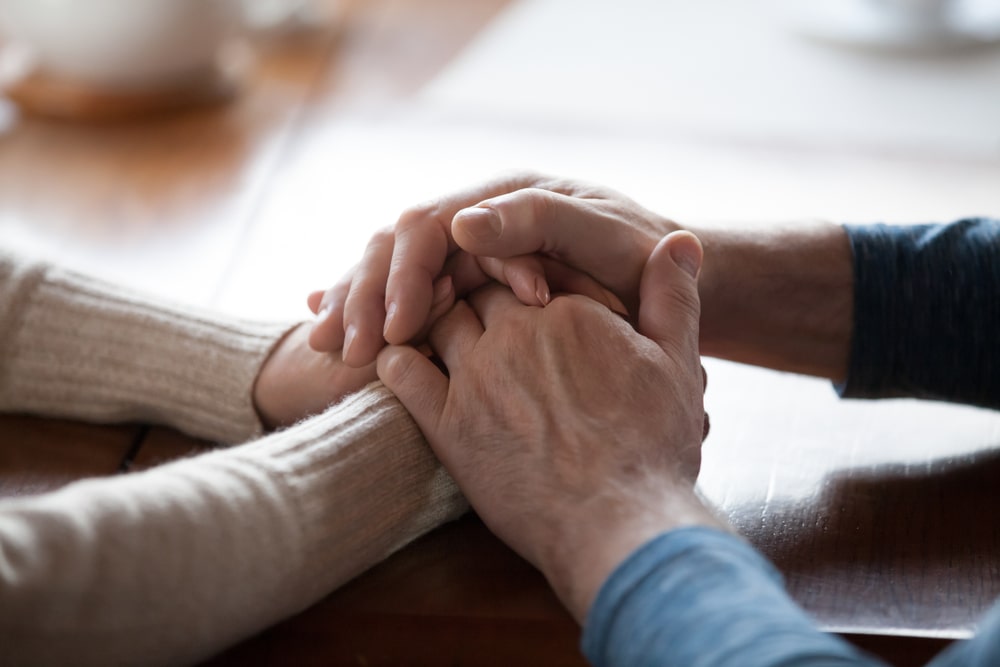
Some will choose to engage in solitary creative expression. Others will take the opportunity to participate in collective creative expression. If you decide to paint, you might join a group of other painters who are going through loss. If you decide to write poetry, you could join a writing group focused on grief. You are not alone in your journey – so many others are also dealing with grief in their own way. You may find a kindred spirit in a class who will come alongside you as you grieve.
6. It is beneficial to your health.

It has been discovered that self-expression, particularly the arts, can actually help relieve feelings of stress, fear, and depression. The body calms during the activity, which, in turn, contributes to reduced blood pressure and even releases chemicals in the brain to decrease some types of depression. By allowing the emotions building up on the inside to find outward expression, you are actually allowing your body to relax, resulting in less strain and better health.

7. It helps you remember that there is still beauty in the world.

No matter which medium you choose to interact with – photography, journaling, woodworking, painting, etc. – at some point you will make a realization: there is still beauty in the world. The flowers are still delicate, the mountains are still impressive, and people are still worth knowing and loving. Even in grief, you will have good moments – days when you remember that life can be good. When those days come, don’t reject them. Embrace them. Remember that life can be good again…not the same but still good.

A brief note regarding creative expression and children in grief: Creative expression activities (most often arts & crafts) are very helpful for children experiencing grief. Children have a difficult time identifying what they are feeling, much less putting it into words. Arts & crafts allow them to communicate without words and provide an opportunity to release their emotions and express their thoughts.

If you’d like to give creative expression a try, you first need to pick an activity that appeals to you – even if you don’t think you’re good at it! Then, for three or four consecutive days, spend at least 20 minutes a day doing your chosen activity. After a few days, evaluate how you feel and if you’d like to continue. Fully embrace the activity during the trial phase and express yourself fearlessly. Your emotions are important, and they need to be expressed so that you can move forward.

Writing Your Will: How to Avoid Common Pitfalls

By Planning Tools

This story is all too common. A parent dies without a legal will, and the adult children must face not only their grief, but the headache of moving the estate through probate court.

That is why creating a legal will is one of the most vital areas of estate planning. A legal will ensures that your property and possessions will be divided and distributed according to your wishes. When someone dies without a legal will, that person is said to have died “intestate,” and the person’s property and assets will be subject to distribution by the state of residence.

Intestacy

Intestacy can be the cause of unpleasant arguments among family members. If your final wishes for your property aren’t signed, witnessed, and documented while you are in a clear state of mind, then your loved ones will be left with the headache of trying to interpret your wishes in a way that doesn’t cause significant conflict.

Administrator of the Estate

When someone dies intestate, a member of the family is usually appointed as the administrator of the estate. But there is no way to determine the true wishes of the one who has passed. If the deceased did not appoint an executor of the will, a probate court will often appoint this administrator.

Developing a Plan

The issue of intestacy is further complicated by the fact that states have different laws for going about the process.  To avoid all the legal red tape, plan ahead by writing a will that clearly delineates your wishes and that is legally valid. Requirements for a will’s legality vary from state to state, so you may have to do some research on specific requirements in your state. However, here are some general guidelines that you can follow to write a will that is legally acceptable and that best conveys your wishes:

  • Don’t wait: To ensure its legality, your will must be signed when you are of sound mind. Many people think that they can wait until they are on their deathbed to write the will, but if your state of health calls into question your mental clarity, then your will could be declared invalid. To avoid this potential setback, construct a legally valid will ahead of time.
  • Select your witnesses: Your will should be written in the presence of witnesses. At least two witnesses will need to sign it, but some states will not accept less than three. Make sure that the witnesses are disinterested parties, people who are not beneficiaries and have no stake in the proceedings.
  • Choose an executor: Be sure to assign an executor of the will to fulfill the duty of settling the estate. This is the person who you will trust to represent your wishes after your death. Often, a spouse or close friend is appointed as an executor. Remember, in the absence of an executor, an administrator of the estate will have to be chosen, and there is no way to guarantee that the person selected will know how to follow your wishes.
  • Provide for dependents: If you are responsible for the care of minors, it is important that you outline your wishes for their continued care, and that you assign a guardian that you trust to take on this role.
  • Communicate clearly: Make sure that your thoughts are well-organized. Identify your heirs and give instructions that are free of ambiguity. Read back over the material and make sure that there is an unmistakable connection between person and property, gift and recipient.
  • Update: Return to your will every few years to make sure that your current wishes are represented. Things change. If a decade has passed and you haven’t looked at your will, there’s a good chance that it’s offering an inaccurate picture of your current wishes. Pull it out every few years, review it carefully, and make any necessary edits.

State Law Requirements

While these general principles will help you avoid some of the potential pitfalls of will-writing, it is essential that you also educate yourself on your specific state’s laws for creating a will. An attorney can help with this, or you can take advantage of an online will creation service to make sure that your will is written within the parameters of state law.

Be Proactive

It’s never too early to start thinking ahead. By creating a clearly worded and legally sound will, you can relieve your family of unnecessary stress and make sure that your wishes will be carried out. Ensuring that your estate and your belongings are distributed according to your preferences will bring peace of mind to you and your loved ones.

Cremation and the Importance of Ceremony

By Cremation, Explore Options, Meaningful Funerals, Plan Ahead

Cremation is a rapidly growing trend in the United States, with just over 50% of those who died in 2016 selecting cremation for their final disposition. However, many families who choose cremation don’t realize that they can still have a healing and meaningful funeral experience, even if they choose this form of disposition. According to respected grief experts, the funeral is a necessary part of the grieving process. And while cremation is a popular option for final disposition, it shouldn’t prevent individuals and families from the benefits of having a healing and meaningful funeral ritual.

According to the National Funeral Directors Association, less than half of Americans associate cremation with a memorial service; only 11.8 percent associate it with a funeral that includes a viewing or visitation; and more than 50 percent of Americans are not aware that you can have a funeral/visitation/viewing with the body before cremation takes place. So, what do these statistics tell us? That when families choose cremation, they are likely missing out on the opportunity to memorialize and commemorate the life of a loved one.

That said, let’s review the basic service options for honoring a loved one who has chosen cremation.

1. Traditional Service/Viewing/Visitation Prior to Cremation

First of all, choosing cremation does not prevent a family from having a traditional service with the body present. The family may choose to have a private family viewing or public visitation. They may even hold a full funeral service with the body present using a rented ceremonial casket. A rental casket looks like a regular casket on the outside. The difference is that a rental casket holds a cremation container insert on the inside. After the service, the funeral home staff removes the cremation container and transports it to the crematorium. For family members, the main benefit of holding a service or viewing with the body present is having an opportunity to emotionally process the reality of the death, which is very important to the grief journey. In fact, one of the best ways to acknowledge that someone is no longer with us is to physically see them and say our goodbyes. With that said, for some it may not be possible to view the body. In that case, you can still say your goodbyes and acknowledge the reality of the loss in your own way.

2. Memorial Service After Cremation

A second option is to plan a memorial service to take place after cremation has already occurred. Like a traditional service, you can create a personalized event complete with all the elements of a meaningful service, tailored to honor the life of your loved one. The main difference is that at a memorial service the body will not be present. However, you can place an urn in a place of honor during the service. By planning a memorial service, you still offer mourners an opportunity to come together. They can offer support to each other and remember the life of someone loved. It’s important to honor a loved one’s life and show them the proper respect. Without a ceremony or service, this need may go unaddressed. And even if your loved one didn’t want to “make a fuss,” gathering together, supporting one another, and honoring life is a necessary part of the grief journey. Before you skip the memorial service, consider the effect on those who mourn if they don’t have the opportunity to come together to grieve.

3. Direct Cremation

Finally, a third option is direct cremation. Often, families choose this option for one of three reasons. First, the one who has died didn’t want a “fuss” made over them after their death. Second, they were financially unable to select a different option. Or, third, they didn’t know they had other options. If your loved one chooses direct cremation and you agree with their choice, honor their wishes when the time comes. However, if your loved one sets their mind on direct cremation and you don’t agree with their choice, sit down with them. Talk about why you would like a meaningful service to accompany their cremation wishes.

As you make your end-of-life plans, carefully consider what is best for your loved ones and friends, what they will need as they mourn your loss. Each of these three options may be appropriate in different circumstances and situations. We all have different expectations for what a funeral service will entail and what we want it to look like. No matter which option you choose – cremation with traditional service, viewing, or visitation; cremation with memorial service; direct cremation; or a combination of options – find a way to balance your family’s needs with your own personal wishes.

Do Funerals Still Matter?

By Meaningful Funerals, Plan Ahead

We have had funerals since the beginning of time. No matter which culture you research, you will find evidence of funeral rites and traditions. Though the specific customs may have changed over time, the human need to acknowledge a life and process a death still remains. This innate human need is why we still need meaningful and healing funerals today.

Why Does It Matter?

But what is a meaningful and healing funeral? What do these terms really mean, and how do you create such an experience? Why does it matter? To begin, it’s important to realize that a funeral is not about closure. It’s not about “getting over” your grief; it’s about starting to grieve. According to nationally-respected grief expert and counselor Dr. Alan Wolfelt, we don’t get over our grief, but in time, we become reconciled to it. He says, “Your feeling[s] of loss will not completely disappear, yet they will soften, and the intense pangs of grief will become less frequent.  Hope for a continued life will emerge as you are able to make commitments to the future, realizing that the person who died will never be forgotten, yet knowing that your life can and will move forward.

The end goal of a healing and meaningful funeral is to give people the opportunity to confront their emotions and begin the grief journey on the right foot. A meaningful ceremony is personalized. The ceremony itself accurately reflects the life of the one who has died and touches the hearts of those who mourn. And because the ceremony is meaningful, because it is personal, mourners experience healing. Out of the funeral, they start their own individual grief journey, which may take weeks, months, or even years, depending on the degree of loss. But it all starts with a personalized ritual – a healing and meaningful funeral or memorial service.

Creating a Meaningful and Healing Funeral

The 6 Needs of Mourning

Based on his years of experience companioning families through grief, Dr. Alan Wolfelt has determined that mourners have 6 needs that should be met through the funeral service. If a funeral is personalized and meets these 6 needs, then mourners, “through their own grief work and through the love and compassion of those around them, are most often able to reconcile their grief and go on to find continued meaning in life and living.”

1. Acknowledge the reality of the death

When we lose someone we love, our mind naturally rebels against the knowledge. But in order to heal, we must confront the truth. In some way, the funeral must acknowledge the reality of the death. This can be done in many ways. Perhaps there is a visitation with the body present or the officiants purposefully use the past tense or the urn containing the cremated body is set in a prominent place.

2. Move toward the pain of the loss

Dr. Wolfelt says, “I have learned that if we are to heal we cannot skirt the outside edges of our grief.  Instead, we must journey all through it, sometimes meandering the side roads, sometimes plowing directly into its raw center.” A funeral service is an accepted venue to tap into and release our emotions. By its nature, the funeral service affords several inescapable opportunities for mourners to move toward the pain and begin to process it.

3. Remember the person who has died

In order to heal, we must shift our relationship with the one who has died from one of physical presence to one of memory. This is why it is so important to personalize the service. Many elements of the funeral allow people to come together and remember. The visitation, the eulogy, and the gathering are all opportunities to share our memories. And, according to Dr. Wolfelt, “the more we ‘tell the story’ the more likely we are to reconcile to the grief.” Create opportunities to share and to remember.

4. Develop a new self-identity

To some degree, our relationships give us an identity. Father, mother, sister, brother, friend, grandchild. You may have heard someone say, “I feel like a part of me died along with him.” This is because we gain some sense of identity from those around us. The funeral marks the beginning of a new identity. Perhaps we move from a wife to a widow or from a grandchild with living grandparents to a grandchild without living grandparents. No matter the change, the funeral marks a mental shift in identity.

5. Search for meaning

As part of the grief process, we naturally question the meaning of life and death. Why did this happen? Why now? What happens after death? It is these “why” questions that decide why we should go on living and contribute to our search for meaning. While the funeral itself does not facilitate this search, it does force us to confront a very real fact: we will die. And because one day we, too, will face death, it is appropriate to seek out the answers to these questions and find meaning.

6. Receive ongoing support from others

Lastly, the funeral provides a public place where others can offer their support to the grieving and the grieving can accept support. This is perhaps the most important aspect of a meaningful and healing funeral. We are not meant to walk through the trials of life alone. If we don’t have a service of some kind, we are communicating to others that we don’t need their support, and then, we’re on our own. Invite others in and find a group to support you throughout your grief journey.

How to Personalize a Funeral

The second part of a healing and meaningful funeral is personalization. A funeral should incorporate seven elements: music, readings, visitation/reception, eulogy, symbols, a gathering, and actions. Together, these seven elements create a meaningful service.

Each of these elements can be specifically personalized. The music reflects the tastes of the one who has died. The readings come from their most treasured quotes, songs, or books. The visitation may include a collage of photos or a memorial tribute video. The eulogy tells the tale of their life. The gathering allows friends and family to come together to share memories, to talk about how the one who has died impacted them, and to support each other. And actions invite mourners to put their grief into motion.

Each of these elements is important and can be arranged however you wish. The most important thing is to honor and remember the life lived in what seems the best way.

For more information on ways to personalize a funeral or memorial service and to see how others have personalized funerals, click on the links below:

6 Ways to Personalize a Funeral

How to Make a Funeral More Personal

5 Unique Venues for a Celebration of Life Service

Remembering Grandmother with Handmade Quilts

Honoring a Teacher’s Last Request

Harry Potter-themed Funeral for Cancer Victim

Skip to content