Category

Memorial

Woman reviewing notifications on social media

Tips for Writing a Memorial Post on Social Media

By Educational, Grief/Loss, Memorial

When you’re grieving, remembrance and expression are an essential part of the healing process. You need time to sit with your memories, turn them over in your mind, and process them. And as you review each memory, lean into how it makes you feel and express what’s going on in your mind and heart.

One way to meet both needs (remembrance and expression) is to create a memorial post for social media. As you craft a memorial post (either before or any time after the funeral), you can look back on your loved one’s life (remembrance) and put what you’re thinking and feeling into words (expression). In many ways, the process can be incredibly cathartic and help you get things that are whirling around in your heart and mind outside of yourself in a healthy way. But how do you write a memorial post for social media? Let’s talk about it.

Woman sitting at table with computer and smartphone, looking at social media notifications

Why Post on Social Media?

For most of us, social media has become a normal, everyday part of our lives. While social media comes with its positives and negatives, it is an excellent way to connect with others quickly and easily. By publishing a memorial post on social media, you:

  • Honor your loved one’s life and memory publicly
  • Express what’s on your heart and mind
  • Reflect on the meaningful moments you experienced with your loved one
  • Invite others to remember your loved one’s life alongside you
  • Receive love and support from others
  • Encourage others to reflect on their own grief in a healthy way

Grief is a universal experience. Every person on this planet knows what it is to experience grief and loss. By creating a memorial post, you acknowledge that collective experience and open the door to compassion, reflection, and eventually, healing.

5 Tips for Writing a Memorial Post on Social Media

So, how do you get started? Here are 5 simple tips for writing a memorial post, but remember, these are guidelines, not rules.

Woman taking a smartphone picture of a man holding colorful planters

1. Select a Meaningful Image, Video, Song, or Quote

Perhaps the easiest place to start is with choosing a meaningful image, video, song, or quote. You can then use this chosen media to inspire what you write in the post. Plus, a visual can enhance the post by adding a layer of connection and evoke emotions and memories.

You could choose a photo that means a lot to you or one that captures a milestone event in your life or your loved one’s life. By using a video, your loved one’s physical presence and vitality add a dynamic element to the post. Alternatively, you could include a meaningful quote or share a song that brings tears to your eyes and memories to your heart.

Man in orange shirt typing on laptop

2. Write from the Heart

When writing a memorial post, it’s okay to let your emotions guide you. Because the intention of a memorial post is to reflect on memories, use sincere and heartfelt language as you express your grief and share the story behind meaningful moments. Feel free to talk about how difficult it has been without that special person and how much you miss them.

However, a few tips on what not to include: it’s best to stay respectful, avoid controversial topics, and refrain from sharing traumatic details about the death. Also, if you are posting about a non-family member, be mindful of the family’s privacy and don’t reveal details that are meant to remain private.

Woman sitting on yellow couch and interacting with phone and social media

3. Add Personal Touches

As you write, consider adding personal touches to the post. You could share a specific memory, talk about a shared experience, or discuss your loved one’s unique quirks. Talk about their love of music or pop culture or 8-track tapes or the color yellow.

If you’ve included a video with the post, give some context and share why it means so much to you. You can also do this with photos, memes, GIFs, or songs. As you add personal details to your memorial post, you not only express your own sentiments and feelings, but you also transform a general tribute into a unique portrait of your loved one’s life.

Old theatre marquee

4. Include a Call to Action (Optional)

It’s possible that your post may serve two purposes: honoring your loved one’s life and promoting a cause or event. Perhaps your loved one was deeply involved in the local theatre scene, and there’s a new play opening this weekend. You could share a memory about going to plays with your loved one and encourage everyone to go enjoy the newest production!

In a case like this, you can include a call to action. For example, “I’m going out to support the theatre this weekend to honor Dad! I hope to see you there.” Alternatively, you can share a loved one’s final tribute details or highlight their favorite non-profit. No matter what the cause or event, you can create a sense of community and support by inviting others to join in.

Young man reading and editing a post on his phone

5. Think, Review, and Revise

No matter what you’re writing (academic paper, email, social media comment, etc.), always take time to think, review, and revise.

  • Stop to think about what you’ve written. Does it say what you want to say? Does it hit the tone and purpose you’re going for? Is what you’ve said going to hurt any family or friends who are grieving?
  • Review each word you’ve written. Are you clear and concise? Are there any grammatical errors or misspellings? Did you forget to add any necessary details?
  • And finally, if you see something you want to change, revise it right away.

Two easy proofreading hacks are reading it aloud and asking someone else to review it. When you read it aloud, anything that’s off will often rise to the surface. Did everything make sense to you? Did you trip over any wording or feel like the phrasing was awkward? And when you ask a friend to read your post, they may see something you didn’t. Once the post is fully reviewed, make edits as needed. Once you’re happy with it, it’s time to post!

Woman reviewing notifications on social media

What Happens After You Post?

Once your memorial post is live, people may post comments on it. These comments are likely to be supportive and kind, sharing in your grief. If you wish, you can react or reply to comments and talk more about the loss. But if you simply want to read the comments and not go any further, that’s okay, too. Also, some people are unkind or simply oblivious, so if you see a rude or inappropriate comment, you can either ignore it or delete it. This is your memorial post, and you can curate it however you want.

Also, it’s unlikely, but it’s possible that someone may post a rude or inappropriate comment. Decide now how you will respond if that happens. The simplest responses are to either ignore the comment or delete it. This is your memorial post, and you can do what you want with it. Just because someone makes a comment doesn’t mean you have to keep it.

Writing a memorial post is a beautiful way to celebrate a person’s life and the impact they had on others. Whether you’re crafting a tribute for a beloved family member, a cherished friend, or a respected colleague, the process requires sensitivity, thoughtfulness, and a touch of creativity. May these simple tips help you create a loving post that honors that special person and brings comfort to your heart and peace to your soul.

Two people holding a small chocolate birthday cake with white icing

10 Ways to Celebrate a Loved One’s Memory on their Birthday

By Grief/Loss, Memorial

After losing a loved one, the act of remembrance is essential to the healing process. Memories and cherished moments bring comfort and peace during the difficult process of grief. While you will always miss the person who has died, you can keep their memory alive in your heart and memory. One way you can honor and remember them is by celebrating their birthday every year. But what does that look like? Let’s review 10 ideas for celebrating a loved one’s memory on their birthday.

Two people holding a small chocolate birthday cake with white icing

1. Organize a gathering with family and friends

If you love hosting and having people around you, consider throwing a birthday party for your lost loved one. Instead of gifts, guests can bring their favorite memories to share over the dinner table. Display photos, bring out your loved one’s favorite dishes, and place your loved one’s photo in a place of honor at the table. Coming together with others may be just the right balm for your heart as you mark a lost loved one’s birthday.

2. Cook their favorite meal

If you don’t feel up to a full gathering, keep it simple by cooking your loved one’s favorite meal for your immediate family. As you prepare their signature dish, place a photo of your loved one nearby. Then, once everyone is settled at the table, swap stories about your lost loved one and laugh together as you celebrate their birthday and their life. In this way, you can combine the comfort of food with the comfort of your memories.

Woman in gray sweater sitting down and writing in a card

3. Write them a letter

Words are powerful, and writing down your thoughts can be a therapeutic and effective way to process what you’re feeling. As you write, you could express your feelings, share life updates, or simply tell your loved one how much you miss them. If you want an extra touch, choose a birthday card at the store and write your letter inside. Then, you can leave the letter at their graveside or place it in a memory box where you can come back to it in future years.

4. Start a birthday tradition

If you like the idea of creating a ritual you can revisit year after year, consider starting a birthday tradition on your loved one’s birthday. Did they love apple pie? Eat a slice on their birthday every year. Did they adore When Harry Met Sally or Die Hard? Watch the movie, even if it’s the wrong time of year. Did they love taking walks? Get outside and breathe in the crisp air. Simply choose a birthday tradition that’s doable and look forward to it every year.

5. Give a memorial donation

If your loved one was active in the community or did regular volunteer work, then giving a memorial donation may be an excellent way to honor their memory. Consider giving to an organization they were passionate about. Alternatively, if they suffered from a disease, you could give toward medical research seeking a cure and treatment options. By giving a memorial donation in your loved one’s name, you extend their positive impact on the world.

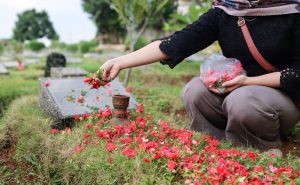
A woman sprinkles flower petals on a loved one's grave

6. Visit their final resting place

Another activity to consider is visiting your loved one’s final resting place. If the cemetery allows it, bring a birthday bouquet or a birthday balloon. Sit down and give your loved one an update on the past year of your life. If your person wasn’t laid to rest in a cemetery, visit a place that is particularly meaningful to the two of you. It doesn’t really matter where you go, as long as you feel a connection and kinship to the person who has died.

7. Share a post on social media

Social media is a big part of life today, and it can be a great place to publicly honor and remember a loved one. Take your time crafting a heartfelt message and selecting meaningful photos. If you wish, you could ask people to share a favorite memory or leave a message of remembrance in the comments. When you’re hurting, it can be comforting to know you aren’t alone and that other people miss your person, too.

8. Participate in their favorite hobby

Did your loved one have a favorite hobby or pastime? In honor of their birthday, you could jump in and participate. For the painters, sign up for a class at the local Paint & Sip. For the marathon runners, sign up for a 5k (you can walk, no running required). For the crafters, spend time learning how to embroider, quilt, or crochet. For the golfers, take the whole family to mini golf. No matter what your loved one’s interests were, you can use them to honor your loved one’s birthday.

Elderly woman wearing a memorial locket with a picture inside

9. Wear something meaningful for the day

What you wear is a form of expression. On your lost loved one’s birthday, you can express your love for them through your wardrobe. You could wear their favorite color or a piece of jewelry that once belonged to them. You could pull on fuzzy cat socks or paint your nails that signature blue. Whatever it is, wearing a physical reminder can brighten your day and hopefully bring a smile to your face amidst any sadness you’re feeling.

10. Perform random acts of kindness

Lastly, give kindness to others on behalf of your loved one. For one mother who lost her young daughter, this meant paying for another child’s birthday cake in her daughter’s memory. For you, this could mean so many things. Paying for the person’s order behind you in the drive-thru. Taking cookies to work. Smiling at people at the store. Giving a bigger tip. Big or small, a simple act of kindness can lift the heart – yours and the other person’s.

Remember, this is just a list of possible ideas. Get creative and identify the most meaningful way for you to honor your loved one’s memory on their birthday. And if it’s hard to think about “celebrating” anything right now, that’s okay. You can come back to this list of ideas at a future date when you’re ready. Each year may look different as your loved one’s birthday comes and goes, but your love for them will remain forever and always.

Colorful stack of printed photographs

Sharing Your Story with Legacy Projects

By Educational, Grief/Loss, Memorial

Acknowledging our own mortality can feel uncomfortable, but deep down, we all want to be remembered after we’re gone – not just for the things we accomplished, but for who we are. Every person’s life tells a unique story, a treasure trove of wisdom, love, and experiences worth sharing. Unfortunately, too many of our loved ones’ stories go untold, but it doesn’t have to be that way. Legacy projects offer a meaningful way to share your story and support your family through the grief that comes after losing a loved one.

What are Legacy Projects, and Why are They Important?

Legacies come in many forms. Some are tangible, such as heirlooms or lasting contributions, while others are intangible, including the values we pass on and the memories we leave behind. Legacy projects help preserve your values, knowledge, and contributions in a meaningful way. They also allow you to weave your story with intention, building a bridge between your past and your family’s future.

Comfort, two people holding hands

But how do legacy projects benefit both you and your family? Legacy projects can create a map of meaningful moments that benefit both you and your loved ones on the journey through grief.

  • For you: This kind of project encourages reflection, providing emotional clarity while also giving you a way to pass down valuable insight, skills, and traditions. It could become a legacy that future generations continue, honoring your memory and the impact you’ve made.
  • For your family: Cherished keepsakes can serve as a physical reminder of you, providing comfort after you’ve passed. A project built around your story can bring people together and create a new tradition of sharing your life with those yet to come.

Additionally, Dr. Alan Wolfelt, a nationally respected grief counselor and author with decades of experience helping the grieving, talks about how going backward through memories can bring comfort: “In my experience, remembering the past is the very thing that eventually makes hoping for the future possible. Mourners’ lives will open to renewed hope, love and joy only to the extent that they first embrace the past.” By helping your loved ones embrace the past, you help them process their grief and move forward to the good the future holds.

Colorful stack of printed photographs

How to Choose a Legacy Project

When you set out to create a legacy project, knowing where to begin can be a challenge. Here are three thoughtful questions to consider if you’re ready to get started! These questions are designed to help you tune in, connect with your passions, and start shaping a project that truly reflects who you are.

How do you want to be remembered?

Take time to reflect on what is most important to you – your values, impact, and the legacy you hope to leave behind. Set aside time each week for quiet reflection. Keep a journal or notepad nearby to jot down your thoughts as they arise. Additionally, looking back at photographs, journals, or cherished memories can help guide you towards what project you want to create.

What has been meaningful about your relationships?

If you and a loved one shared an interest, then you might consider a legacy project around that shared topic. For example, if you and your daughter love going to see plays at the theater, you could create a scrapbook with photos, playbills, and ticket stubs. After gifting the project to your daughter, it will become a gentle invitation to revisit memories of you. Do you have a Sunday breakfast tradition with your grandchildren? You could create a Family Breakfast Cookbook and fill it with handwritten recipes, along with notes about the memories tied to each one. Like when your grandson flipped the pancakes too early, or the eggs you scrambled perfectly together. Think through your relationships and consider who might benefit from a legacy project based around a shared interest.

Hands baking together

Do you have any hobbies that bring you joy or help you unwind?

Think about activities that are meaningful to you. Whether it’s knitting, baking, collecting, writing, painting, reading, or traveling, you can use your talents to create a legacy project that truly reflects who you are. Do you have a favorite spot at the park, a timeless handmade quilt, or an assortment of vintage cameras that you once used to document your travels? Whatever you choose, you can turn what you love into a lasting legacy.

If you get stuck, ask your family members or close friends for brainstorming help or reach out to those who may want to be involved in preserving your legacy after you’ve passed.

More Ways to Share Your Story

Even with the questions above to help, you may still feel unsure about where to begin. Here are some more suggestions to ignite your own imagination and get your ideas off the ground!

For the writers:

Journals or letters filled with words of wisdom are a powerful way to pass down values and life lessons to your loved ones when advice and encouragement are needed. You can even write letters for memorable milestones like graduations, weddings, and other life events.

For the sentimental:

Photos and photo albums, both physical and digital, can serve as visual stories to spark conversations. Memory capsules are another way to pass sentimental items on to your loved ones to help them heal.

For the foodies:

Do you have a secret recipe, or is there a dish you make that everyone loves? Creating a recipe book or curating a box of favorite recipes is a meaningful way to pass your legacy down through the memories tied to smell and taste.

Box of recipes

For the tech-savvy:

Digital videos and voice recordings are an excellent way for your loved ones to revisit time spent with you. This type of project will help preserve your laughter and presence in a form that can be replayed, bringing comfort and maybe even joy in grief.

For the adventurers:

Talk with your loved ones about meaningful memorials. Have you thought about a bench in your favorite park or a plaque at your most visited ballfield? Additionally, if you’re considering cremation, you might ask your family to scatter your remains in a place that holds special meaning.

For the collectors:

Your treasured collections, such as cameras, art, model trains, or sports memorabilia, carry stories and significance. Passing them on as meaningful gifts ensures that your interests continue to inspire.

Collection of cameras

For the creatives:

Do you have a portfolio or print pieces that include photography or paintings you’ve created? Have you written poetry or music that you would like to be kept in the family? These items can offer comfort and connection, helping your loved ones feel close to you through art or music.

For the readers:

Some books have been in the family for generations as cherished heirlooms. For example, a father or grandfather might read a story every holiday season, and family members may want to carry on the tradition! If your collection holds sentimental or historical value, consider how you’d like it to be preserved.

For the philanthropists:

Do you have a favorite nonprofit organization that you regularly donate to? Would you like for someone in your family to continue supporting a cause in your name? Discuss the possibility of donating to a foundation of your choice with your loved ones.

For the old souls:

Does your family have a special tradition or any beloved items that have been passed down through generations? Family Bibles, antique furniture, jewelry, and quilts can be wonderful items to pass down through the family tree.

colorful quilt collection

Start Telling your Story Today!

Hopefully your creativity is sparking, and you’ve come up with an idea for a legacy project (or even several!). While it may be uncomfortable to think about the end of your life, there’s comfort and healing in telling your story.

A gentle exploration of how you want to be remembered can be a powerful and grounding experience. Completing a legacy project and gifting it to someone you love creates an emotional impact that lasts. For years to come, they’ll have something that’s tangible and meaningful to help them connect back to you. How would you like your story to be told?


Woman in gray sweater holding wrapped gift

Giving Back During the Holiday Season

By Grief/Loss, Memorial

Losing a loved one can lead to feelings of isolation, loneliness, or disconnection, making you feel like you are all alone in your grief experience. That’s one reason why giving back can be so beneficial during times of grief and loss, especially around the holidays. Giving of your time, resources, or talents can break through the fog of grief and give you something positive to focus your energy on. For some, it can lead to championing change or finding an organization that brings you fulfillment and joy.

Woman in gray sweater holding wrapped gift

The holiday season can be particularly difficult following a death because your beloved traditions may not feel the same. Thankfully, it’s also a season full of opportunities to get involved, give back, and help those in need. Let’s talk about some national organizations you could get involved with this holiday season!

Toys for Tots

During the holiday season, many organizations focus on meeting the needs of children and bringing joy to their lives. Toys for Tots has been distributing gifts to children since 1947, and they are still going strong! While you may see Toys for Tots most often around Christmas, you can give to children throughout the year. To learn more about how you can get involved or to find your local chapter, visit their website here.

Little girl excitedly opening a gift box in front of a Christmas tree

Operation Christmas Child

If you would like to bring joy to children around the world, consider whether Operation Christmas Child through Samaritan’s Purse would be a good fit for you. With their focus on spreading the Gospel of Jesus Christ and caring for children worldwide, you can make a positive difference across the globe with minimal effort on your part. Whether you want to give gifts, pack boxes, or even volunteer with Samaritan’s Purse directly, you can learn more at the Operation Christmas Child website.

Angel Tree

A mission of the Salvation Army, the Angel Tree Program provides new clothing and toys to more than one million children in need every year. More than likely, you’ve seen Angel Trees in places of business in your community. Every tree is full of paper angels, and on each one, you will find a child’s name, their clothing sizes, and a few toy ideas. You can then purchase gifts with that specific child’s needs in mind. For more information about the Angel Tree Program and other Salvation Army programs, visit their website.

Dad and daughter wearing Christmas hats in a hospital

Make-A-Wish Foundation

The Make-A-Wish Foundation focuses on fulfilling the wishes of critically ill children and making their dreams come true. When you support this organization, you help grant wishes like going on special trips or meeting a beloved hero or role model. When a child is facing the difficulties of illness and continuous doctor visits, a little joy goes a long way. While the foundation grants wishes all year, the holiday season is a peak season. If you’d like to get involved, go to the Make-A-Wish website here.

St. Jude’s

A leading children’s hospital, St. Jude’s treats the toughest childhood cancers and pediatric diseases. Because families are already going through a tough time, St. Jude’s doesn’t bill them for treatment, travel, housing, or food. Instead, they believe no child should be denied treatment based on their family’s inability to pay. That’s why St. Jude’s fundraises every year, particularly around the holiday season. To help families experiencing medical hardship, visit St. Jude’s website and consider whether you want to support their mission.

Evergreen wreaths with red bows resting against veteran graves

Wreaths Across America

If you have a strong love and support for military members, consider getting involved with Wreaths Across America. This organization’s goal is to place a holiday wreath on the graves of as many military members as possible as an act of remembrance. Not only can you sponsor wreaths, but you can also volunteer to place wreaths on graves and personally honor the service and sacrifice of so many. To learn more, visit Wreaths Across America.

Operation Homefront

This caring organization focuses on meeting the short-term financial and physical needs of struggling military families. With many different programs, Operation Homefront seeks to meet needs across many fronts. From veteran housing to holiday meals to school supplies, more than 57,000 requests have been met and fulfilled. If veterans and military families are a passion for you, look over Operation Homefront’s website and decide if they are a good fit for you.

These are just a small sampling of the options that are available to you. So many worthy organizations could benefit from your time, your resources, and your talents. And don’t forget to look at your local options, too!

Giving back with a donation box of gently used items

Support Local Organizations

In addition to these national-level organizations, you can also look into your local community for opportunities to give back and get involved. Here are a few ideas:

  • Donate funds or goods to your local food bank
  • Participate in a 5K that benefits a local charity or service
  • Support your local animal shelter by volunteering to care for the animals
  • Ask churches what ministries need help and jump in
  • Research the non-profits in your area to see if any align with your personal passions
  • Give blood at the local hospital and save lives
  • Volunteer at your local homeless shelter or halfway house
  • Talk with local hospitals or nursing homes for volunteer opportunities

And the list goes on! Your community is going to have unique options for getting involved and giving back. With a little research or asking around, you’ll find so many ways that you can make a positive difference.

Young person placing comforting hand on older person's hand, which is resting on a cane at Christmas

As you get involved, find ways to intentionally honor your lost loved one’s memory. Give a donation in their name. Volunteer at a charity that focuses on something they were passionate about. Or simply wear a T-shirt with their name on it. You may even have a chance to talk about your loved one and ensure that their memory lives on. No matter which organizations appeal to you, find a way to give back this holiday season. It can help you focus on the good and find a little joy in the midst of your grief.

For more resources on grieving during the holidays, check out these helpful articles:

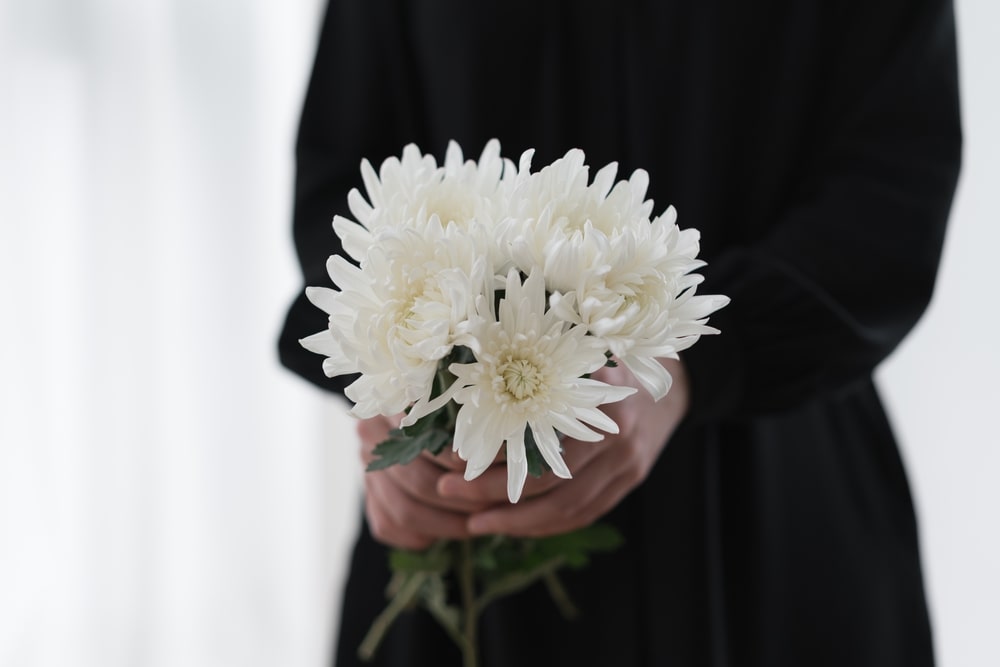
Woman wearing black clothing holding bouquet of white chrysanthemums

Funeral Flowers Around the World

By Educational, Grief/Loss, Memorial

For millennia, flowers have been a universal representation of love, life, and loss. In many cultures, funeral flowers carry deep-rooted and cherished significance. They create a soothing atmosphere, evoke positive emotions, create connections, and convey messages of love and support. Today, let’s discuss several prominent funeral flowers around the world and why they may be more culturally significant in one area of the world than another.

White lily on black background

White Lilies

In many cultures, the white lily is commonly used for funerals. These trumpet-shaped blooms represent purity, innocence, peace, and the resurrection of the soul. Because of their close association with the soul, white lilies are often seen at religious ceremonies and other commemorative events in Western, Latin American, and Asian cultures. A traditional choice for funerals since ancient times, the lily is fitting for a time of reflection and mourning.

Bouquet of red roses with glimpse of green stems

Roses

Roses are practically synonymous with profound love. In Latin American and Western cultures, any color rose can be offered as a remembrance after a loved one’s death, though red and white are perhaps the most common. However, in some Asian cultures, the color red represents celebration and happiness, and because of that, red roses are inappropriate for a funeral. They use white instead for its connection to purity and reverence.

Marigolds in clay vase against wooden wall

Marigold (Cempoalxochitl)

Perhaps most well-known for its use during Dia de Los Muertos in Mexico, the marigold is considered the “flower of the dead.” Its color and fragrance are thought to guide the souls of the deceased back to the world of the living, where family and friends leave offerings to pay their respects. The bright, cheery color celebrates life instead of focusing on the bitterness of death. Additionally, the marigold is essential to Hindu funerals because it symbolizes the cycle of life and death, guiding the soul to its next incarnation.

Woman wearing black clothing holding bouquet of white chrysanthemums

Chrysanthemum

In many Asian cultures, the lovely chrysanthemum is closely associated with death and funerals. These delicate plants convey grief, lamentation, respect for the deceased, and condolence for the family. White and yellow are considered the most suitable colors. The chrysanthemum may also be used in Western culture funerals, though there’s less emphasis on specific colors. Instead, you can include chrysanthemums of any shade at a loved one’s final tribute.

Jasmine

While flowers are used more sparingly in Middle Eastern funerals, jasmine and white lilies are often considered acceptable choices. Jasmine is associated with death, remembrance, spiritual realms, and the afterlife. Some families may use the strong, sweet fragrance to scent their homes. Other families will leave the flowers at the grave to offer respect to the departed. Middle Eastern cultures often focus more on spiritual connection through prayers, but there is still room for personal expression through floral arrangements.

Hawaiian leis resting in a woven basket

Lei

Hawaii is well-known for its use of the lei for many occasions. One of these occasions is the funeral, where the lei is used to express condolences and respect for the deceased and their family. In Hawaii, the lei represents love, respect, and the circle of life and may be worn by guests, draped over photos or the casket/urn, or set out to decorate the funeral service area. In some cases, the lei may be thrown out into the ocean, symbolizing the release of a loved one’s spirit. Various types of leis can be used, including maile, ti leaf, and orchid leis.

A bunch of vibrant King Protea flowers

King Protea

The national flower of South Africa, the King Protea symbolizes strength, resilience, and the enduring nature of life. The flower’s ability to survive harsh conditions created a cultural connection to overcoming adversity and embracing the future. Because of its deep roots in South African culture, the artichoke-like flower is often used at funerals. It gives mourners a way to express their love and care for a lost loved one in a way that is uniquely suited to South African traditions.

Flowers are used all over the world to convey sympathy, respect, and remembrance. If you are selecting flowers for a culture that is not your own, consider asking which flowers would be appropriate. For example, flowers are not part of the Jewish funeral tradition. Because of that, they wouldn’t be the best choice for paying respects and supporting the grieving family. When in doubt, ask someone who knows, like a family member, friend, or even the funeral director.

If you’d like to learn more about funeral flowers, check out 7 Popular Sympathy Flowers and Their Meanings and Gifting Sympathy Flowers: A Practice that Goes Back Millennia.

Man and woman sitting in a secluded space with a telescope, looking at the night sky

Naming a Star in a Loved One’s Memory

By Educational, Grief/Loss, Memorial

There are so many beautiful ways to honor a loved one’s life. Etching their name in the night sky may be one option you’ve never considered. Perfect for an astronomer, sci-fi nerd, or general space enthusiast, it’s possible to name a star after your loved one and keep their memory alive in the night sky for generations to come.

There are several companies that offer star registration, but we aren’t going to talk about all of them. Instead, we will focus on three big ones to give you an idea of what types of services are available.

Milky Way galaxy in the night sky

International Star Registry (ISR)

One of the first companies to offer star registration, ISR has been helping families honor and memorialize loved ones since 1979. They offer a variety of packages for every budget, starting at around $30 and going up to around $200 (prices subject to change). Each package offers the ability to choose your preferred constellation and receive an authentic Star Registry certificate (with additional add-ons depending on the package you select).

Additionally, every star registration is included in the world’s only published catalog of named stars, which is registered with the US Copyright Office and the Library of Congress. The catalog includes coordinates for every star registered.

To learn more about ISR and its mission to help families honor and remember loved ones through the naming of a star, click here to visit their website.

Man looking up at the darkening sky with telescope beside him

Star Name Registry

With its “Find My Star” app, Star Name Registry gives you the ability to view your star at any time of day or night using your smartphone. They also offer a variety of packages, starting at around $30 and going up to roughly $120 (prices subject to change). Every package comes with a star certificate, welcome letter, star info pack, and app entry. The “star info pack” includes a sky atlas, star location guide, constellation booklet, universe booklet, and an explanation of your star.

The company guarantees your registered star, but if you have concerns, they do offer a 30-day money back guarantee. To learn more about Star Name Registry, click here to visit their website.

Man and woman sitting in a secluded space with a telescope, looking at the night sky

Global Star Registry

Based in Sweden, Global Star Registry is available in multiple languages, including English, German, Spanish, amongst others. Similar to ISR (see above), all stars registered through Global Star Registry are recorded with the US Copyright Office.

Packages start around $30 and go up to $94 (prices subject to change). However, if you elect for any of the packages above $30, you will also receive a gift pack. (Other add-ons may also be listed.) The gift pack includes a star certificate, an engraved pendant or keychain, and a sky map.

To read reviews or check out the package options, click here to visit their website.

Stars in the night sky

Are There Other Star Registration Services Out There?

Absolutely! You aren’t limited to these three services if they don’t appeal to you. You could check out Online Star Register, Name a Star, or Starify, for example.

As you research which star registration service to use, here are some important things to consider:

  • Does the company offer a package that suits your budget?
  • Do the add-ons appeal to you?
  • Is your star registered with the US Copyright Office (if that’s important to you)?
  • Do they offer returns or a money-back guarantee if you should change your mind?
  • Is the company transparent and clear on what you will receive?
  • Does the company offer clear ways to reach out for customer support?

Young girl looking up at the night sky, looking for a registered star

A Quick Note on Star Registration

Naming a star in memory of a loved one is a beautiful way to keep their memory alive. It will blaze in the night sky forever. However, it’s important to note that no one legally owns outer space. Any naming of stars is for sentimental purposes only. Your star registration exists on paper and does not affect the star’s official name with the International Astronomical Union (IAU). The IAU officially tracks the scientific names of all stars and celestial bodies.

If you decide that naming a star in your loved one’s honor is a meaningful way to remember them, may you find comfort, peace, and joy each time you see them shining brightly on the darkest nights.

*DISCLAIMER: We do not endorse any of these companies; we are merely stating the options available to you when honoring a loved one by naming a star. 

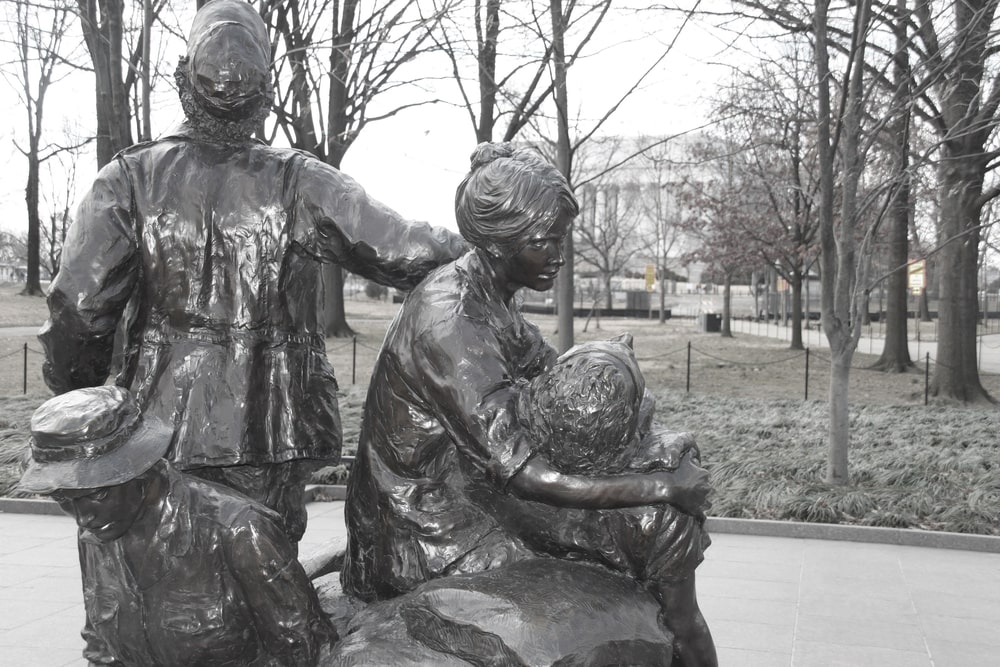
Image of Vietnam Women's Memorial sculpture

Honoring Our Fallen Heroes: Vietnam Women’s Memorial

By Memorial, Veterans

I want to say how proud I was of the women I served with, and how much we cared for these young men who served during that era. I’m so grateful to all those wounded soldiers in particular who came to stand by our side and support us to help us get [the] memorial built. They were so appreciative and so grateful.”  – Diane Carlson Evans, Captain in the Army Nurse Corps

Memorial Day is a day set aside every year to honor and remember the many men and women who have died while serving the United States of America and its people. As we seek to honor them, let us remember them and the great sacrifices they made to preserve life, liberty, and the pursuit of happiness.

Image of Vietnam Women's Memorial sculpture

Vietnam Women’s Memorial

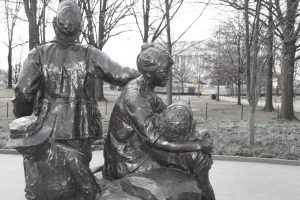
More than 265,000 military and civilian women served around the world during the Vietnam War era. They filled professional, technical, leadership, and humanitarian roles. Around 11,000 women served directly in Vietnam, and 90% of them were nurses. The Vietnam Women’s Memorial honors every woman who served in the Vietnam War, particularly the eight nurses who lost their lives.

Dedicated on November 11, 1993, the memorial highlights the stories of women in the military, ensuring that their dedication, resolve, and courage are remembered right alongside the servicemen they partnered with during the conflict. Situated just south of the Vietnam Veterans Memorial, the Vietnam Women’s Memorial is a stunning bronze sculpture that depicts three women in various roles of service. It stands nearly 7 feet (2.1 meters) tall and weighs 2,000 pounds (907 kilograms).

How It Came to Be

Without Diane Carlson Evans, it’s possible that the Vietnam Women’s Memorial would not exist today.

As a former Army combat nurse and Vietnam veteran, Evans made a point of attending the dedication ceremony of the Vietnam Veterans Memorial in 1982. The following year, she saw a picture of the statue depicting three servicemen (called “The Three Soldiers”). It was slated to be added to the Vietnam Veterans Memorial. At that moment, she decided that women should also be honored, or their contribution to the war might be forgotten by future generations.

Evans founded the Vietnam Nurses Memorial Project (now called Vietnam Women’s Memorial Foundation), and she championed the creation of a memorial to honor the women who served during the Vietnam War. It would take 10 years, but on November 11, 1993, the Vietnam Women’s Memorial was dedicated as an act of honor and remembrance.

Army medical kit, possibly used by nurses

Meaningful Features of the Memorial

The Sculpture of Three Women

While Congress approved the creation of the memorial in 1988, they rejected the initial design. This led to an open design competition with 350 submissions. Of the submissions, Glenna Goodacre’s design came out on top, and she received a commission to create the statue.

Renowned for her bronze work, Goodacre has won numerous awards and honors for her skill. When asked about the design for the Vietnam Women’s Memorial, she said:

The emphasis of this tribute is centered on their emotions: their compassion, their anxiety, their fatigue, and above all, their dedication. The photos from Vietnam often included stacks of sandbags. It seemed natural for a nurse – in a moment of crisis – to be supported by sandbags as she serves as the life support for a wounded soldier lying across her lap. The standing woman looks up, in search of a med-i-vac helicopter or, perhaps, in search of help from God. The kneeling figure has been called “the heart and soul” of the piece because so many vets see themselves in her. She stares at any empty helmet, her posture reflecting her despair, frustrations, and all the horrors of war.”

Leaves from yellowwood tree

8 Yellowwood Trees

George Dickie, a  professor of architecture at Penn State University, was chosen as the landscape designer for the memorial. His challenge was to create a landscape concept that would seamlessly incorporate the Vietnam Veterans Memorial, the Three Soldiers statue, and the Vietnam Women’s Memorial. The three pieces were all added to the memorial at different times.

By adding pathways and a terrace, Dickie was able to bring the three separate elements together. Perhaps the most significant landscaping feature is the 8 yellowwood trees that surround the Vietnam Women’s Memorial sculpture. Each tree represents one of the eight women killed in action in Vietnam.

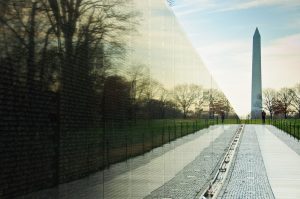
These women are also recognized on the Memorial Wall, alongside more than 58,000 names of men who lost their lives or were missing in action. The women, all nurses, named on the Wall are:

  • 1st Lt. Hedwig Orlowski
  • 2nd Lt. Carol Drazba
  • 1st Lt. Sharon Lane
  • Captain Mary Klinker
  • Captain Eleanor Alexander
  • 2nd Lt. Elizabeth Jones
  • 2nd Lt. Pamela Donovan
  • Lt. Colonel Annie Graham

To learn more about these brave nurses, click here to read about their service during the Vietnam War.

Vietnam Memorial Wall with Washington Monument in background

Why Do We Have Memorials?

Permanent memorials ensure a lasting tribute for those who have been loved and lost. They also allow us, as people, to honor those we wish to always remember. Just as we create memorials for our heroes, we also create them for our loved ones. There are five key reasons why permanent memorials are important, whether it is to commemorate an event, a group of people, or just one person, like a close loved one.

  1. A permanent memorial provides a place for people to mourn.
  2. It gives all mourners (not just family) access to pay their respects and connect with those who have died.
  3. It provides a permanent place that will exist for generations to come.
  4. It allows people the opportunity to remember and reflect on the lives lived.
  5. It ensures that the dead are remembered and respected.

For many of our veterans, a large-scale memorial honors the group as a whole. The Vietnam Women’s Memorial stands proudly alongside the Three Soldiers statue and the Vietnam Veterans Memorial Wall. Together, they honor all who served in the conflict. However, for individuals, families set headstones, grave markers, or inscriptions in place. Both types of memorialization are important and honor our veterans and our loved ones.

Picture of woman in uniform, standing by American flag and saluting

Want to Get Involved?

If you’d like to assist the Vietnam Women’s Memorial with its mission, you can donate to their cause at www.vietnamwomensmemorial.org.

Additionally, if you are planning a visit to Washington, D.C., consider stopping at the Military Women’s Memorial Museum. The well-reviewed museum features an education center, interactive exhibits, and an impressive collection of stories from women in the military.

Honoring Our Fallen Heroes: Air Force Memorial

By Memorial, Veterans

“A soldier can walk the battlefields where he once fought, a Marine can walk the beaches he once stormed, but an airman can never visit the patch of sky he raced across on a mission to defend freedom. And so, it’s fitting that, from this day forward, the men and women of the Air Force will have this memorial, a place here on the ground that recognizes their achievements and sacrifices in the skies above.” President George W. Bush

Memorial Day is a day set aside every year to honor and remember the many men and women who have died while serving the United States of America and its people. As we seek to honor them, let us remember them and the great sacrifices they made to preserve life, liberty, and the pursuit of happiness.

Sunset view of the Air Force Memorial

Air Force Memorial

Opened in 2066, the Air Force Memorial is an impressive structure with three spires soaring to the sky. The memorial honors both current active-duty Air Force servicemembers as well as airmen and women killed in action. Strategically located at a promontory point, the monument overlooks Arlington National Cemetery, the Pentagon, the Potomac River, and the Washington, D.C. skyline.

The memorial stands at 402 feet (123 meters) high, and the tallest of the three spires is 270 feet (82 meters). The memorial is flanked by two granite walls, each highlighting inscriptions based on the three core values of the Air Force: “Integrity First, Service Before Self, and Excellence in All We Do.” The Air Force Memorial receives hundreds of thousands of visitors every year and is a visually stunning tribute to aviation and the United States Air Force.

How It Came to Be

In the 1990s, the Air Force Association (AFA) and the Air Force Sergeants’ Association (AFSA) began efforts to create a memorial honoring the Air Force. In 1992, Oliver “Ollie” Crawford – a WWII U.S. Army Air Corps veteran – established the Air Force Memorial Foundation with the intent to raise funds to construct an Air Force memorial.

In 1993, legislation passed authorizing the creation of an Air Force memorial. With that approval, the Air Force Memorial Foundation worked closely with the National Park Service to survey 18 possible sites. After much contemplation, the Air Force Memorial Foundation selected three acres at the memorial’s current location. The groundbreaking ceremony was held on September 15, 2004. The event was attended by dozens of renowned military aviators and featured a flyover of both vintage and modern aircraft.

Six Air Force jets in the sky with white jet stream following them

The Unique Design and Its Meaning

As with any memorial, the creators approached the design with intentionality and purpose. The Air Force Memorial Foundation selected architect James Ingo Freed to design the memorial. Freed’s previous designs include the United States Holocaust Memorial Museum and the Ronald Reagan Building and International Trade Center.

Curving Spires “Soaring to Glory”

Perhaps the most striking feature of the memorial is its centerpiece – three stainless steel and concrete spires that rise more than 200 feet (61 meters) in the air. Collectively called “Soaring to Glory,” the spires are visible for miles and evoke the Air Force’s three core values. Additionally, each spire represents different members of the Air Force – active, guard, and reserve. According to James Freed, the memorial’s “array of arcs against the sky evokes a modern image of flight by jet and space vehicles. At the same time, it enshrines the past in permanent resemblance of the pioneers of flight who came before and pays homage to the future.”

Honor Guard sculpture at the Air Force Memorial

Air Force Honor Guard Sculpture

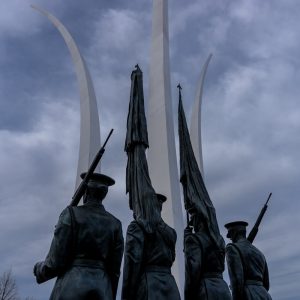
Another signature feature of the memorial is the Air Force Honor Guard sculpture. The bronze image depicts four figures dressed in precisely replicated USAF Honor Guard clothing. The sculptor paid meticulous attention to every detail, from the crossing of the shoelaces to every aspect of the clothing. Two of the figures are flag bearers (holding the U.S. flag and the Air Force ceremonial flag). The other two figures are weapons bearers. When speaking about his vision for the sculpture, artist Zenos Frudakis says that the figures “came into view as unique people, with faces and bodies infused with life, inspiring connections to the real people who serve and sacrifice. They reflect the diversity of gender and race that strengthens the Air Force and the nation.”

Other Notable Features

While the spires and the Honor Guard sculpture are the focal points of the memorial, other notable elements were included. The Parade Ground (walkway) leads visitors to two granite walls. Each wall is engraved, including Medal of Honor recipients and quotes relating to the USAF’s three core values. Additionally, there is a glass wall that honors missing Air Force members. Each element invites visitors to reflect on the courage, sacrifice, and dedication of the Air Force.

Air Force ceremonial flag

Why Do We Have Memorials?

Permanent memorials ensure a lasting tribute for those who have been loved and lost. They also allow us, as people, to honor those we wish to always remember. Just as we create memorials for our heroes, we also create them for our loved ones. There are five key reasons why permanent memorials are important, whether it is to commemorate an event, a group of people, or just one person, like a close loved one.

  1. A permanent memorial provides a place for people to mourn.
  2. It gives all mourners (not just family) access to pay their respects and connect with those who have died.
  3. It provides a permanent place that will exist for generations to come.
  4. It allows people the opportunity to remember and reflect on the lives lived.
  5. It ensures that the dead are remembered and respected.

For many of our veterans, a large-scale memorial honors the group as a whole. This is the case with Air Force servicemembers and the Air Force Memorial. However, for individuals, families set headstones, grave markers, or inscriptions in place. Both types of memorialization are important and honoring to our veterans and our loved ones.

Runway filled with Air Force fighter jets

Want to Get Involved?

There are many ways to support the United States Air Force, its members, and their families. If you are interested, consider looking into the following charitable organizations to see if one appeals to you:

Airmen Memorial Foundation
Folds of Honor
Air Force Aid Society
Air Force Assistance Fund

Shows a view of graves at Arlington National Cemetery with cherry blossom trees

Honoring Our Fallen Heroes: Arlington National Cemetery

By Memorial, Veterans

Our debt to the heroic men and valiant women in the service of our country can never be repaid. They have earned our undying gratitude. America will never forget their sacrifices.” – President Harry S. Truman

Memorial Day is a day set aside every year to honor and remember the many men and women who have died while serving the United States of America and its people. As we seek to honor them, let us remember them and the great sacrifices they made to preserve life, liberty, and the pursuit of happiness.

Arlington National Cemetery

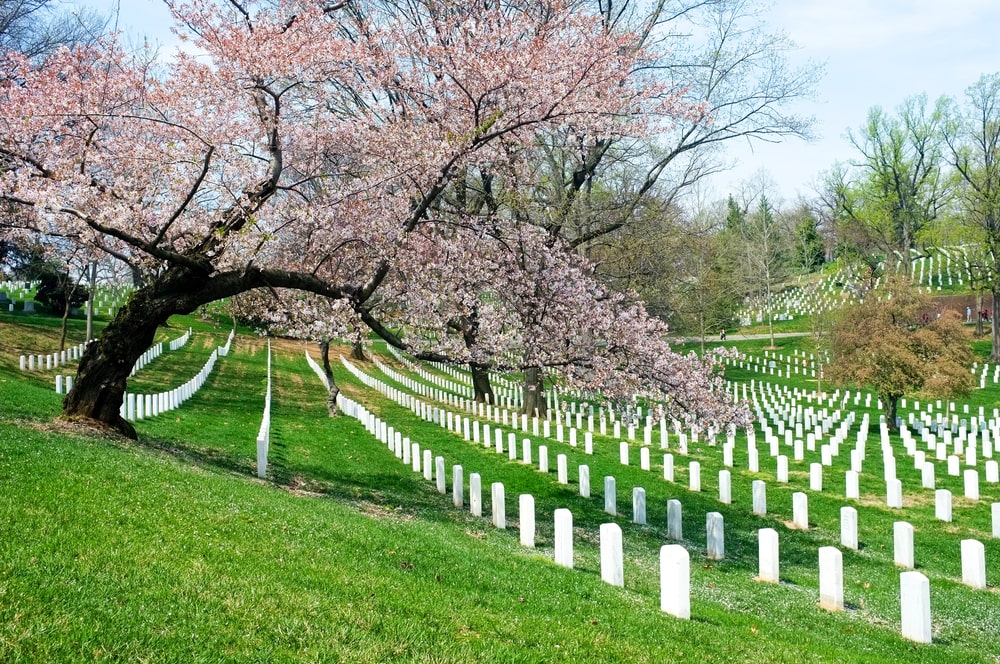
Shows a view of graves at Arlington National Cemetery with cherry blossom trees

The most well-known of all military cemeteries in the United States, Arlington National Cemetery is a beautiful, solemn, and reverent place, filled with a spirit of heroism, courage, sacrifice, and dedication. With occupants from every major American conflict since the Revolutionary War, Arlington National Cemetery is the final resting place of more than 400,000 military service members and their eligible dependents.

In the beginning, the cemetery was just 200 acres (1864) but has since grown to 639 acres (2020). At present, 25-30 funerals are conducted every weekday and 7-8 each day of the weekend. With burial space dwindling, the National Cemetery Administration is looking into options for how they can ensure military members can continue to request interment at Arlington National Cemetery.

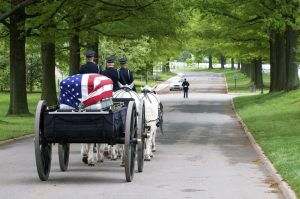
Shows military funeral procession at Arlington National Cemetery complete with horse-drawn caisson

How It Came to Be

The cemetery has a rather unusual history. Arlington National Cemetery used to be Arlington House, the historic family residence of Robert E. Lee. Yes, that Robert E. Lee. Originally established by George Washington Parke Custis, adoptive grandson of George Washington, Arlington House was passed down to Mary Custis Lee, wife of Robert E. Lee.

The Lee family made their home at Arlington House prior to the American Civil War, but they were forced to abandon it after war was declared. Then, the U.S. Army seized the estate for its strategic location overlooking every federal building in the nation’s capital. On May 13, 1864, the first burial was conducted – for Private William Christman. By the end of the war, approximately 16,000 soldiers were interred on the grounds.

However, after the war ended, the Lee family challenged ownership of the estate, saying that it had been illegally confiscated during the war. Taxes had been due, but the family was denied the opportunity to pay the taxes, resulting in the loss of the home. After many years and court dates, the U.S. Supreme Court agreed with the Lee family in 1882. Ownership was returned to George Washington Custis Lee, son of Robert and Mary Custis Lee. He then sold the land back to the U.S. federal government, so it could continue as a national cemetery.

For an even more in-depth history of the cemetery, click here to read an article from Smithsonian Magazine.

Significant Features of the Cemetery

In addition to paying their respects and taking in the sea of white headstones, many visitors to Arlington National Cemetery will stop by three main features: the Eternal Flame, the Tomb of the Unknown Soldier, and Arlington House.

The Eternal Flame

Shows Eternal Flame at John F. Kennedy's gravesite

Of the many Americans buried in Arlington National Cemetery, John F. Kennedy (commonly called JFK), the 35th president of the United States, is perhaps one of the most famous. After his assassination in 1963, his wife Jackie Kennedy wanted the American public to have access to JFK’s grave, so they might pay their respects. As a veteran, JFK was eligible for burial at Arlington National Cemetery.

In the three years following his death, it’s estimated that more than 16 million people visited his final resting place. Because of the large crowds, the Kennedy family constructed a larger grave site and included the Eternal Flame, a symbol of hope and renewal, at the center of its circular design. Jackie Kennedy first lit the flame in 1967.

Tomb of the Unknown Soldier

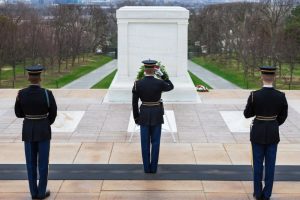
Three soldiers standing in front of The Tomb of the Unknown Soldier, saluting and honoring the soldiers represented

Another prominent and well-known feature of the cemetery is the Tomb of the Unknown Soldier. The most hallowed of all graves at Arlington National Cemetery, the tomb is dedicated to the unidentified dead of war.

Constructed in 1921 following World War I, an unidentified solider was selected at random to represent all U.S. unidentified fallen soldiers of the conflict. Now, the tomb also holds the remains of unidentified service members from World War II and the Korean War. Until 1998, a Vietnam War soldier also lay to rest in the tomb. However, through DNA testing, he was identified and returned to his family. His place remains vacant to this day.

The tomb is also famous for its Sentinels or tomb guards. The memorial is guarded 24 hours a day, 365 days a year, and this elite group of soldiers consider it the highest honor to serve. They wear no rank insignia, command silence and respect at the tomb, and actively guard the tomb from any threat. For more information about the tomb, click here.

Arlington House

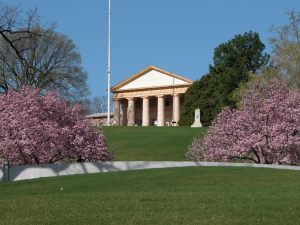
Shows Arlington House high on the hill, surrounded by blossoming trees and green grass

Originally built by George Washington Parke Custis, the house was intended to be a living memorial to President George Washington. Designed in the Greek revival style, the house includes several wings with bedrooms, formal dining and sitting rooms, a large hall, and a parlor. Following the death of her father, Mary Custis Lee inherited the home, and she and her husband Robert E. Lee lived there for 30 years until the outbreak of the American Civil War.

Built high on a hill overlooking the Potomac River, the house’s memorable exterior includes eight, massive columns. Today, Arlington National Cemetery visitors can tour the home at their leisure. A National Park Ranger is always on duty to answer questions. Arlington House is the most visited home in the entire National Park system, and it’s in the top 5 of most visited historical homes in the United States. It is a striking addition to any visit to the beautiful cemetery grounds.

Shows the inscription on a military headstone

Why Do We Have Memorials?

Permanent memorials ensure a lasting tribute for those who have been loved and lost. They also allow us, as people, to honor those we wish to always remember. Just as we create memorials for our heroes, we also create them for our loved ones. There are five key reasons why permanent memorials are important, whether it is to commemorate an event, a group of people, or just one person, like a close loved one.

  1. A permanent memorial provides a place for people to mourn.
  2. It gives all mourners (not just family) access to pay their respects and connect with those who have died.
  3. It provides a permanent place that will exist for generations to come.
  4. A permanent memorial allows people the opportunity to remember and reflect on the lives lived.
  5. It ensures that the dead are remembered and respected.

For many of our veterans, a large-scale memorial honors the group as a whole, as is the case with the Vietnam Veterans Memorial or the World War II Memorial. However, at Arlington National Cemetery, individuals are honored. Each headstone states the name and rank of a specific person and remembers their individual service and sacrifice for our nation.

Wreaths on veteran gravesites

Want to Get Involved?

If you would like to honor those buried in Arlington National Cemetery, consider giving to Wreaths Across America. Every December, this organization lays wreaths at veteran graves at more than 3,700 locations across the nation. If you’d like to get involved, consider sponsoring a wreath or volunteering to participate in a wreath-laying ceremony. For more details, visit the Wreaths Across America website here.

Shows image of full memorial

Honoring Our Fallen Heroes: Marine Corps War Memorial

By Memorial, Veterans

Among those who served on Iwo Jima, uncommon valor was a common virtue.” – Fleet Admiral Chester W. Nimitz

Memorial Day is a day set aside every year to honor and remember the many men and women who have died while serving the United States of America and its people. As we seek to honor them, let us remember them and the great sacrifices they made to preserve life, liberty, and the pursuit of happiness.

Marine Corps War Memorial

Shows image of full memorial

Also known as the Iwo Jima War Memorial, the Marine Corps War Memorial is dedicated to the lives and memory of all Marines who have given their lives in service to the United States since November 10, 1775. A commanding presence, the monument rests on a 7 and ½ acre tract of land approximately 100 feet above the Potomac River. While the monument honors Marines across nearly three centuries, the statue depicts events from Iwo Jima during World War II, a much-contested island during the battle for the Pacific.

How It Came to Be

After the end of World War II, Congress commissioned a memorial to honor the United States Marine Corps. During the Battle for Iwo Jima, six Marines hoisted an American flag atop Mount Suribachi, and photographer Joe Rosenthal of the Associated Press captured the iconic moment. The photo went on to win a Pulitzer Prize and became an inspiration for the Marine Corps War Memorial.

It took sculptor Felix de Weldon nine years to complete the project (1945-1954). Using a design created by Horace W. Peaslee, de Weldon first created the statue in plaster before taking it to Brooklyn, N.Y., for casting in bronze. The casting process alone took three years to complete. Once cast, the disassembled pieces were taken to Washington, D.C., where they were bolted and welded together. To make the statue as realistic as possible, de Weldon even modeled the faces of the men after the original flag-raisers. He was able to cast the faces of two of the surviving flag raisers faces in clay. He also scoured available pictures and records for the likenesses of the remaining four flag raisers.

The total cost of the memorial was $850,000, paid for with private donations from Marines and friends of the Marine Corps.  President Dwight D. Eisenhower dedicated the memorial on November 10, 1954, the 179th anniversary of the U.S. Marine Corps.

Shows dedication plaque that is affixed to Marine Corps War Memorial

The Story Behind the Marine Corps War Memorial

The island of Iwo Jima was considered strategically important during the Pacific theater of World War II. It was valuable for its ability to support long-range bombing missions against mainland Japan. Additionally, the Allies planned to use the island for sea and air blockades, intensive air bombardment, and a greater ability to destroy enemy air and naval capabilities.

The fighting began on February 19, 1945, and lasted 36 days. One regiment – the 28th Marines – sought to capture the extinct volcano Mount Suribachi. They did so on February 23, and as a result, there were actually two flag raisings. The first occurred on the morning of February 23 when the Marines first took the volcano, but the American flag was very small. As a result, Marines fighting all over the island couldn’t see the flag and gain encouragement from it. For that reason, later that same afternoon, six Marines hoisted a larger American flag in its place. It is this second flag raising that photographer Joe Rosenthal captured and became the inspiration for the Marine Corps War Memorial.

The six flag raisers were:

For many years, Rene Gagnon was believed to be one of the six, but the Marine Corps has since corrected that. However, Gagnon did play a major role. He carried the larger flag to the summit and then brought the smaller flag back down.

By the end of the fight for Iwo Jima on March 26, nearly 7,000 Marines had lost their lives. Amongst their number were Sergeant Strank, Corporal Block, and PFC Sousley. But the courage and determination of the Marines live on through the gratitude of an entire nation and the creation of the Marine Corps War Memorial.

Shows illustration of which figures are which men

Marine Corps War Memorial Statistics

  • The figures are 32 feet tall.
  • The bronze flagpole is 60 feet tall.
  • The flag flies 24 hours a day, 365 days a year.
  • The figures occupy the same positions they did in the iconic Rosenthal image.
  • The M-l rifle and the carbine featured in the statue are 16 and 12 feet long, respectively.
  • The canteen would hold 32 quarts of water.
  • The figures stand on a rock slope above a granite base. The granite came from Sweden.
  • The entire memorial is about 78 feet tall.
  • The names and dates of every principal Marine Corps engagement form a gold ring around the base.

Why Do We Have Memorials?

Permanent memorials ensure a lasting tribute for those who have been loved and lost. They also allow us, as people, to honor those we wish to always remember. Just as we create memorials for our heroes, we also create them for our loved ones. There are five key reasons why permanent memorials are important, whether commemorating an event, a group of people, or just one person, like a close loved one.

  1. A permanent memorial provides a place for people to mourn.
  2. It gives all mourners (not just family) access to pay respects and connect with those who have died.
  3. It provides a permanent place that will exist for generations to come.
  4. A permanent memorial allows people to remember and reflect on lives lost.
  5. It ensures that the dead are remembered and respected.

Large-scale memorials, such as the Vietnam Veterans Memorial or the World War II Memorial, honor an entire group. However, for individuals, families set headstones, grave markers, or inscriptions in place. Both types of memorialization are important and honoring to our veterans and our loved ones. 

Shows Marine uniform, dog tags, and boot

Want to Get Involved?

If you’d like to honor the Marines, consider volunteering with or donating to non-profits that support Marines and their families. A few reputable organizations to check out are the Marine Corps Association, the Marine Corps League Foundation, Semper Fi & America’s Fund, and the Marine Corps Scholarship Foundation.

Skip to content