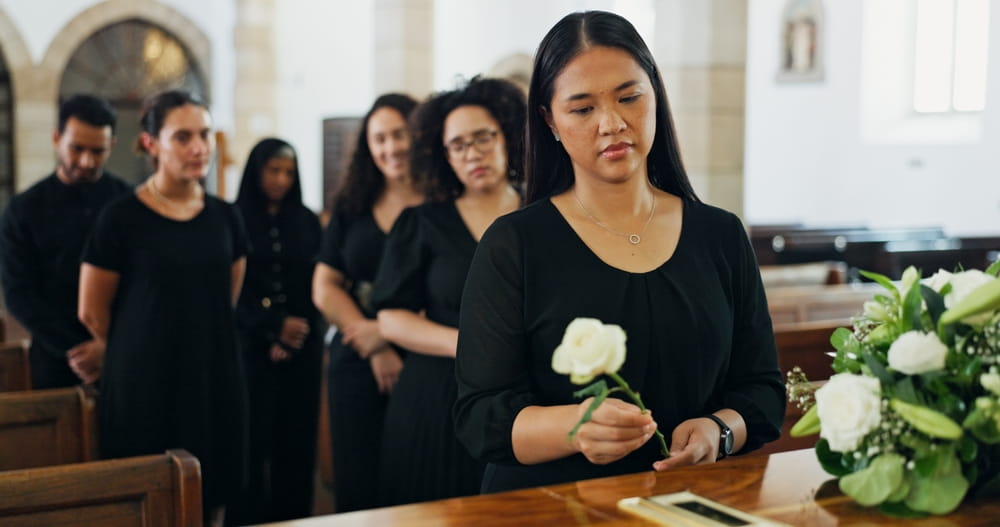
Every funeral is different, which means the cost can vary widely. While funeral homes provide clear pricing for their services through the General Price List, funerals often require additional services that can only be supplied by a third party. Because these items are provided by an outside entity, the pricing isn’t up to the funeral home. However, the funeral home staff know what to do and can ensure these services aren’t overlooked!
Today, let’s talk about 9 third-party funeral costs that are often overlooked but can be essential to creating a meaningful final tribute for a loved one.

1. Cemetery and Monument Charges
Whether you choose burial or cremation, you will likely need to consider cemetery costs in your plans. Cemetery charges would include the cost of a burial plot or a niche in a columbarium or mausoleum, plus any fees associated with opening and closing the grave.
Also, consider the cost of a grave marker or monument, along with a monument installation fee. Cemetery proprietors and monument companies determine these fees because many funeral homes do not own a cemetery or monument company themselves.
If you don’t already have a plan in place for cemetery needs, your funeral director can provide a recommendation or discuss your local cemetery options.

2. Death Certificates
Most people don’t realize how many death certificates they will need. As a rule of thumb, purchase multiple copies – more than you think you will need. Copies of a death certificate are typically requested as proof of death for life insurance policies, social security or veterans’ benefits, stocks, bonds, and banks, to name a few.
The state or municipality determine the cost of a death certificate, and that amount can change over time. While death certificates are typically inexpensive, you can make the process a bit easier by relying on the funeral home to complete all the paperwork and request certificates on your behalf. Just let your funeral director know how many you want.

3. Obituary/Death Notice
Many people are surprised at the cost associated with publishing an obituary or death notice in a newspaper, especially in a larger city. In most cases, the funeral home will publish an obituary to the funeral home’s website at no cost, but if you wish to post it elsewhere, the fee may be higher than you expect. If there’s a particular place you’d like to publish the obituary, let your director know so you can discuss any fees or requirements.
4. Church or Venue Charges
If you choose to have a funeral or memorial service outside the funeral home’s facility, the venue you choose may charge a fee to use the space. Your funeral director will help you coordinate and discuss any rental fees for the location you’ve selected. Choosing a special location can add a beautiful touch to the ceremony and may be just the right way to honor your loved one’s life.

5. Flowers
Depending on the time of year, the cost of flowers will fluctuate. Unfortunately, this makes it hard to pin down the actual cost. While most funeral homes don’t have their own florists, they do have positive working relationships with local businesses. If you’d like, the funeral home can purchase floral arrangements on your behalf. You can work with your funeral director to set a budget and discuss which types of flowers you prefer.
6. Live Music
Music is a very personal and touching way to create a one-of-a-kind tribute. If you elect to have live music, it is likely that an honorarium (monetary token of appreciation) will be necessary. Most of the time, the musician or group you choose to hire will determine the honorarium amount. If you don’t already have a musician in mind, you can ask your funeral director for recommendations.

7. Officiant Honorarium
It’s common practice to have an officiant at the funeral, who will act as host for the service and ensure that events move along smoothly. It is customary to offer this person an honorarium for their time and effort.
In many cases, the officiant will be a clergy person or a celebrant. A celebrant is a non-clergy person who has trained to eulogize and coordinate funeral services. However, anyone can do it. If you have a friend who is willing to officiate for free, you can do that.
No matter whom you choose, discuss that person’s fee expectations before you hire them.

8. Pallbearers
In many cases, pallbearers are family members and friends. However, for some, it is difficult to identify six to eight pallbearers. If you require assistance, the funeral home can help by hiring the extra hands needed. This service will come with a small fee for each hired pallbearer, which your funeral director will discuss with you before anyone is employed.
9. Police Escort
In many states, it is common practice to request a police escort for the funeral procession to the final resting place. With an escort, the funeral procession can move through traffic in an orderly way and without traffic delays. The cost for this service is determined by the local police department, and your funeral director is likely to already know the cost (if any).

10. Catering
And finally, if you choose to have a reception following the service, don’t forget to count the cost of catering. Whether you decide to serve refreshments or a full meal, pricing will be subject to whatever catering service or restaurant you select. You can, of course, make any food yourself (or go potluck style), but catering can make a stressful time a bit easier. If you aren’t sure how to proceed with catering, your funeral director can help you get everything ordered and set up.
While not all-inclusive, you now have a better understanding of these 9 often overlooked funeral costs. Thankfully, you have an advocate and a guide in your trusted funeral director. They can help you navigate through the funeral planning process from beginning to end.
Whether you are planning ahead for your own funeral wishes or creating a meaningful final tribute for a loved one, your funeral director will sit down with you to discuss all the options, ensuring that nothing is forgotten or left unconsidered.