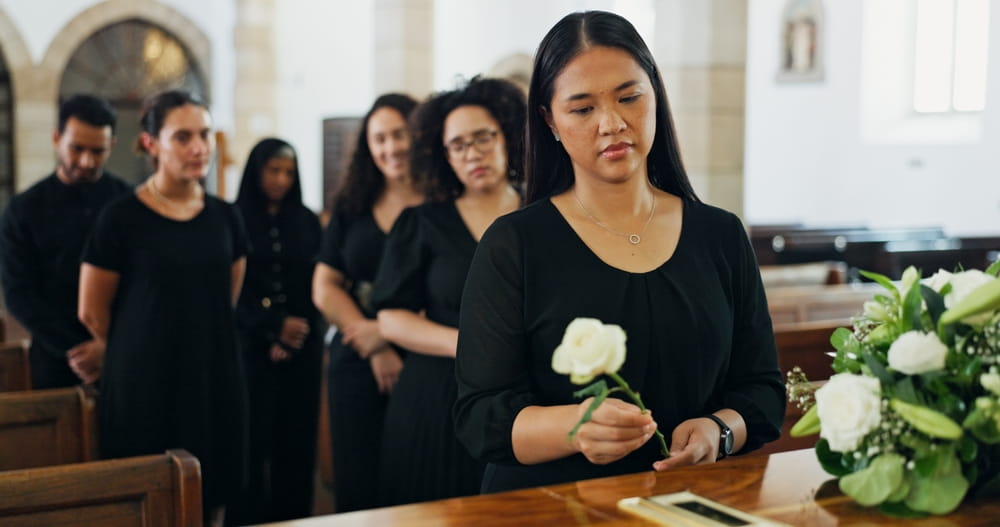

Up until the mid-1800s, the coffin was the most common burial container, but due to cultural shifts, the casket came into popularity around the time of the Civil War. For Americans living during and after this tumultuous time, there was a push to beautify death and distance themselves from its harsh realities.
The casket was one way the culture chose to enact this philosophy. Though it might seem strange to us today, the casket was viewed as more aesthetically pleasing than the coffin (it wasn’t shaped like the human body), and it was considered easier to customize to the family’s specifications.
But the casket is actually more complex than its simple design implies. Today, let’s talk about the different parts of a casket and how they contribute to the overall design.
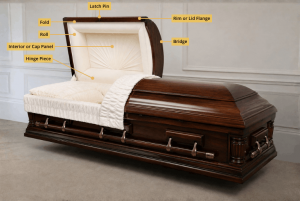
Head Panel of the Casket
First, let’s talk about the head panel of the casket and all the parts that go into opening and closing the front lid of the casket.
Bridge
With half-couch caskets that split into two sections, the bridge refers to the smooth, interior section of the transverse cut in the lid where the split occurs. The bridge contributes to the casket’s shape and stability while also ensuring that the split in the lid is pleasing to look at (doesn’t look unfinished).
Cap Panel
Also called the interior panel, the cap panel refers to the inside of the casket lid. This section of the casket is easily customizable, and many families choose to include an image (often embroidered) that will be visible at an open-casket service.
Fold
Also called the gimp, the fold is a strip of metal, plastic, or cloth attached to the inside of the panel. It covers the area where the roll is attached and secures everything in place.
Hinge Piece
As you would expect, the hinge connects the lid to the body of the casket, making it possible to seal the casket and carry it without fear of the two pieces disconnecting.
Latch Pin
The latch pin is mounted on the edge of the casket and ensures that the lid closes firmly and securely, preventing an accidental opening. The pins come in various styles and in both right- and left-hand configurations.
Lid Flange
Sometimes called a rim or ogee flange, the lid flange plays a key role in providing a stable base for the casket lid. Made from durable materials like metal or plastic, the flange works with the latch pin to ensure the casket seals firmly for transport and burial.
Roll
Also known as puffing or the cove, the roll is the curved interior part that lines the rim and surrounds the cap panel. It provides a protective covering for the casket’s interior and improves the casket’s appearance.
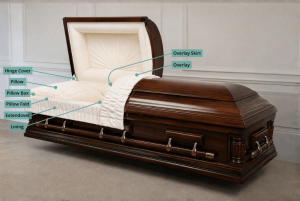
Interior of the Casket
Next, let’s talk about the interior of the casket, where the body will lay in comfort and repose.
Extendover
This component of the casket interior wraps over the rim of the head panel, allowing the interior lining to fall over the edge for a more pleasing look. Used for purely aesthetic purposes, the extendover is not a functional part of the casket.
Hinge Cover
The hinge cover does what you’d expect: it covers the hinges to create a cleaner, polished look to the casket interior. Typically, the hinge cover is the same color as the roll and the lining to ensure a more cohesive appearance.
Lining
Caskets have an interior lining, often made from crepe, velvet, or satin. The material lines the entire interior of the casket and essentially creates a bed for the person who has died. The lining comes in various colors, and you can personalize it with designs or embroidery.
Overlay
The overlay is also called the throw or overthrow because it resembles a blanket draped over the foot panel of the casket. Often made from the same material as the lining, you can also add a little personalization with embroidery or other embellishments.
Overlay Skirt
The part of the overlay that is not visible to the eye (lines the interior of the foot panel) is called the overlay skirt or the apron. It extends downward into the casket, covering the entire interior of the foot panel section.
Pillow
The pillow is simply a cloth bag filled with soft materials that supports the head of the deceased as they lay inside the casket.
Pillow Box
To create the preferred reclining placement, the body must stay in a particular position. The pillow box is arranged under the pillow to ensure the person’s head remains in a comfortable place.
Pillow Fold
The pillow fold’s job is similar to the pillow box, in that it holds the body in position throughout services. It is a large, overstuffed pillow that is placed strategically around the deceased to ensure placement and create a natural look for mourners.
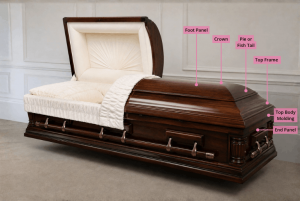
Foot Panel of the Casket
Next up, let’s discuss the foot panel and the parts of the casket associated with the bottom half of the lid.
Crown
The crown is another term for the top lid of the casket. It refers to basically every part of the lid that covers the casket above the rim.
End Panel
You might think the foot panel and the end panel are the same, but they aren’t. The foot panel is the bottom half of the lid while the end panel is the end cap of the bottom half of the casket.
Foot Panel
The foot panel is the bottom section of the lid of the casket (opposite the head panel).
Pie or Fish Tail
A wedge-shaped portion at the end of the crown that slants downward toward the top frame.
Top Body Molding
Also called the body ledge, the top body molding rests along the uppermost edge of the body panels. It is a decorative element, but it does contribute to the casket’s structural integrity and presentation.
Top Frame
Another component of the casket lid, the top frame is sometimes referred to as the rim or the ogee. Resembling a bit of an elongated “S,” the top frame’s shape keeps the casket from looking like just a big box. The top frame helps connect the pie tail to the top body molding, creating a seamless design.
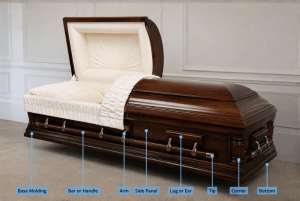
Bottom of the Casket
To round out our exploration of casket design, let’s talk about the bottom half of the casket and all the components that create the base.
Arm
The arm connects the handle to the lug, and without it, the handle would not work. But with a strong, secure arm, pallbearers can carry the casket without worrying that the casket will slip from their grip.
Bar or Handle
The bar or handle gives pallbearers a place to grip the casket, making it easier to carry. There are three types of handles: the swing bar, the stationary bar, and the bail handle. A swing bar does what you’d expect: it is moveable and swings with the momentum of the casket. On the other hand, a stationary bar remains fixed in place. A bail handle combines the lug, arm, and bar into one unit and screws into the side panel.
Base Molding
The base molding is the trim that runs along the bottom edge of the casket. It provides both structural support and aesthetic appeal, creating a finished look for the casket overall.
Bottom
Unsurprisingly, the bottom is simply the lowest part of the casket, creating the base. Often, the interior will include additional padding to support the body.
Corner
The corner is the place where the sides and ends of the casket meet. In some cases, you can customize the corner by adding a piece that is straight, curved, or even in an urn style. If you’d like to personalize the corner, speak with your funeral director about the available options.
Lug or Ear
The lug is a component of the handle, attaching it to the casket body. Generally, there are eight lugs per casket (three on each long side and one on each short side).
Side Panel
The long right and left sides of the casket are called the side panels.
Tip
The tip covers the exposed end of the handlebar and adds a decorative element to the design.

Casket Customization
Now you know more about standard casket design! But don’t forget that you can commission a custom casket. By working with a casket designer, you can create a personalized casket that matches your loved one’s life. Whether you are interested in a unique shape, color, or decorative elements, the designer can help. Keep in mind, designing a custom casket will cost more. But if a custom design is important to you, talk to your funeral director about trusted local craftsmen.
If you’d like to learn more about caskets, check out these additional resources:
5 Differences Between Sealer & Non-Sealer Caskets
Rental Caskets: What You Need to Know
A Quick Guide to Oversized Caskets
A Quick Guide to Cremation Caskets
5 Questions to Ask When Selecting a Casket