The holidays are a great time to gather with friends and family to share delicious meals, reminisce together, and lean into community. But after a loss, dinner table conversations can bring up unexpected feelings you didn’t see coming: a well-meaning relative asking too many questions, or an awkward silence where your loved one’s voice used to be.
 So, how can you navigate uncomfortable moments at the dinner table? And how do you still find joy in the holiday when some moments feel heavy? You might feel torn between showing up for the people you love and being gentle with yourself as you grieve. However, there are ways to approach holiday dinner conversations with grace while setting boundaries and still enjoying your time with friends and family.
Give yourself permission to sit this one out
Grief can affect your emotional, physical, and social energy in ways that are hard to predict. Some days you may feel ready to show up, and other days the mere thought of small talk can feel exhausting. That’s why it’s worth checking in with yourself before you RSVP, especially if your energy and emotions are already stretched thin.
 While it may feel uncomfortable to decline an invitation, you’re allowed to say “no.” You can even pair your response with a simple “thank you for inviting me,” and just like that, you’ve set a boundary that honors where you are right now. If you don’t have the energy for a particular gathering, a dinner, or certain conversations, that’s completely okay.
Grief doesn’t follow a social calendar, and the people who care about you will understand your need for space. They may even save you a plate for later.
Set the tone
If you do decide to go, you don’t have to meet every unspoken holiday expectation, like feeling cheerful or put together. Even a small game plan, like how long you’ll stay or a quick heads-up to the host or group about where you’re at emotionally, can give you some peace of mind.
 Most people want to be supportive; they just don’t always know how. Something as simple as, “I may need to step away if it gets to be too much,” or “I’d love to talk about them, but I may not be up for a lot of questions,” takes away the guesswork so people can show up for you in ways that actually help. Most people are relieved when you tell them what you need. It takes the pressure off and gives them a clearer way to support you.
If you’re going to the gathering with a close friend or family member, they can help you step away if you need to. For extra peace of mind, you might also choose a simple code word that lets them know when you need a break or an exit strategy. It can be something straightforward like “I need a minute” or something more lighthearted, like “mongoose.” Giving yourself room to pivot is not a failure; it’s a way to care for yourself in a hard moment.
Anticipate that moments might feel awkward
Even with the best preparation, remind yourself that there’s no such thing as a perfect response. Grief doesn’t come with a script, and neither does navigating it in a room full of people. What can help is simply acknowledging ahead of time that some conversations may catch you off guard and reminding yourself that showing up is already enough.
 Maybe you’re heading to a Friendsgiving where most people didn’t know your loved one, sitting across from in-laws who never met the person you lost, or grieving a close friend rather than a family member. In spaces like these, grief doesn’t always have an obvious place at the table, and people may not bring it up because they don’t know what to say, or they may mention it briefly and move on before you are ready. Whether the conversation is too much or not enough, it can leave you feeling alone in a space full of people who care about you.
Try going into the gathering with a simple reminder to yourself: “There may be some uncomfortable moments, and there is nothing wrong with how I feel.” Give yourself permission to feel what you feel, even if the conversation takes a hard turn.
Make room for your loved one
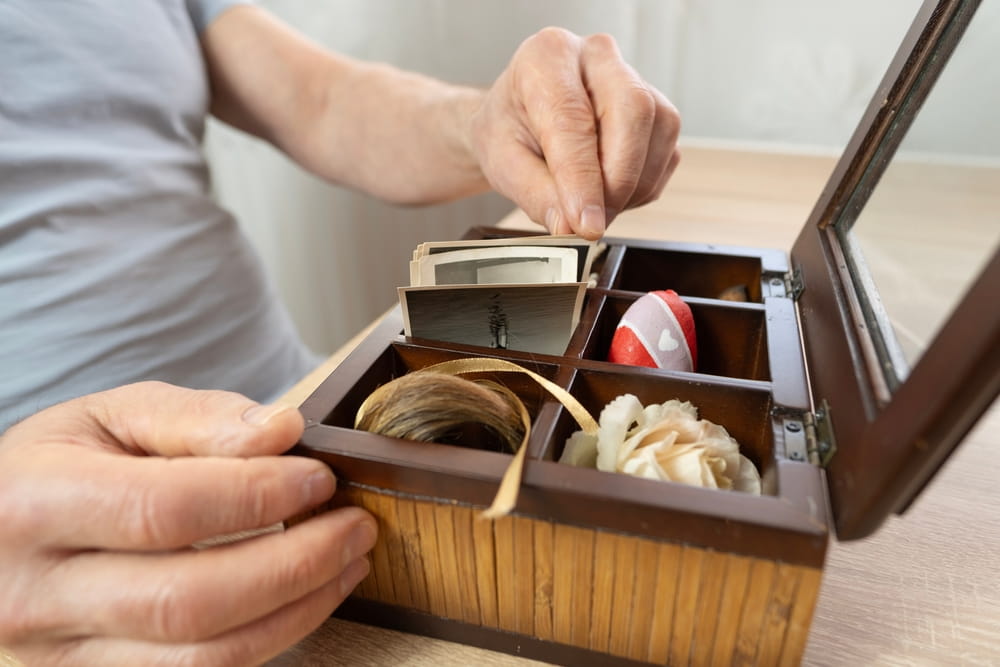
Once the pressure to perform is off the table, something surprising can happen. There’s room to remember your loved one, to invite memories of their presence into the gathering, and in a way, let them be a part of it even in their absence.
 You can incorporate simple actions, such as offering a toast: “We miss (name), but we’re so glad we can still be here together.” You can also make a dish they loved as a small way to include them at the table. Acknowledging a lost loved one’s absence, even lightly, can give people permission to talk rather than dance around the topic.
If your family or friends lean into humor, don’t be afraid to laugh. Grief and laughter aren’t complete opposites, and sometimes enjoying a good laugh is easier than finding the right thing to say. Go around the table to share a memory or story about your loved one’s questionable cooking, their signature complaint about the weather, or the way they always tried to take the last roll or piece of pie.
Intentional moments let everyone know that it’s okay to acknowledge the loss without making the whole gathering feel heavy. These small touches can make your loved one’s presence feel welcome in the room, even as everyone feels the ache of their absence.
Keep these gentle reminders in mind
Grief and relationships are complex, and when they meet around a holiday table, it can feel messy, tender, and overwhelming all at once. You do not have to navigate the holidays perfectly, especially when you are carrying your own sadness while fielding other people’s questions, comments, silence, or expectations. That is a lot to hold, and it makes sense if you need to move slowly.
 No matter what the day looks like, remember that you are not alone. Other people may not always know the perfect thing to say, but the people who love and support you want to be there for you in the ways they can.
Be gentle with yourself, and take things one conversation, one gathering, and one breath at a time. Some moments may feel awkward. Some may surprise you with comfort or even laughter. However the day unfolds, you are allowed to honor your grief and protect your peace. You may even leave the gathering feeling lighter than you expected, not because your grief disappeared, but because you honored your feelings honestly and still found moments of connection this holiday season.
If you need more support for yourself or for someone you love, the resources below offer practical guidance, remembrance ideas, and encouragement for navigating the holidays while walking through grief.
Holiday Remembrance Activities for Grieving Parents
Kid-Friendly Holiday Remembrance Ideas
Remembering Loved Ones Through Baking
Practicing Remembrance & Gratitude During Times of Grief
Supporting Grieving Friends on “Special Days”