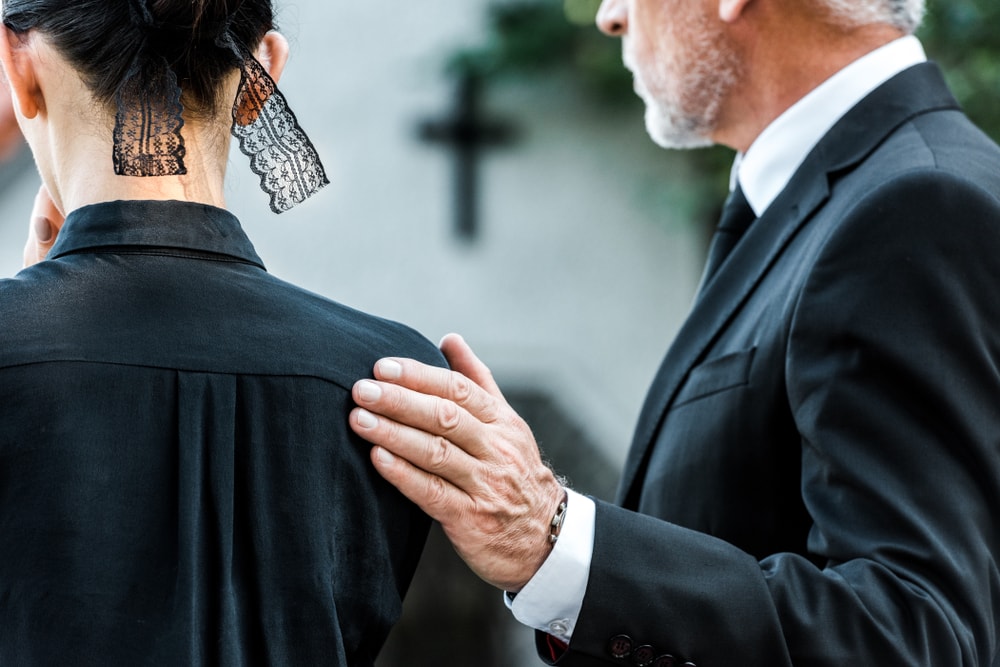
Over the past few weeks, we’ve seen how important funeral and memorial services are to the grieving. Funerals serve two very important functions. First, they honor the life of the person who has died, and second, they bring comfort and solace to the grieving. With social distancing restrictions in place, many families feel an extra blow after a loss. They not only lose someone they love, they also lose their chance to grieve surrounded by the comfort of family and friends.
The news is now riddled with heartbreaking headlines telling the story of these difficult days:
- “The coronavirus is depriving people of the rituals needed to process pain”
- “Burials without funerals, grief without hugs: Coronavirus is changing how we say goodbye”
- “Coronavirus disrupts mourning, funerals for all families”
- “Virus robs families of rituals”
However, all is not lost. Across the nation, families and funeral homes have been working together to implement innovative and creative ways to navigate our grief with meaningful ceremonies. Let’s take a look at a few ideas for holding a meaningful funeral service while practicing social distancing.
Online Arrangements

After the loss of a loved one, the family sits down to plan a meaningful final tribute. Now, families can meet with the funeral home staff virtually through video conferencing technology like Zoom, Microsoft Teams, or Skype. By going virtual, the family can stay within the safety of their own home while getting the details of a service taken care of. And with the addition of technology to sign contracts online, the family can sign all the necessary documents without ever leaving home.
Drive-thru Viewing/Visitation
The viewing or visitation can be one of the most meaningful parts of the grieving process. But with social distancing restrictions, friends and family are not able to attend these types of events. To fill the need, funeral homes are now offering “drive-thru” and “walk-through” viewings and visitations. In this way, mourners can pass by a window to view the body of the deceased and pay their final respects in person. Some funeral homes have offered “walk-through” visitations, where supporters can wave to immediate family members from a window or from a safe distance.
Stand-in Supporters

Grieving without the presence of loved ones is one of the most painful results of experiencing a loss during the coronavirus pandemic. So, several funeral homes have come up with ideas for helping the grieving family feel that their friends and family are with them in spirit. Some place long-stem roses in the empty chairs and some chapels have started offering a “Hugs from Home” program, which gives family, friends, coworkers, and neighbors the opportunity to submit a message of love, support, and encouragement for the family’s private service. Then, the funeral home prints the messages and attaches it to a white balloon. When the grieving family comes to the private funeral ceremony, the chapel is filled with white balloons. These messages of support show the family that friends and relatives are there with them.
Livestream Services
Another way that families can include their extended network at a funeral or memorial service is to livestream the event. More and more funeral homes have added livestream services so families can easily request this service. Families can also use services such as Facebook Live to stream events from a tablet or smartphone. Using these services allows family and friends to view a service from the safety of their own home. Also, in some cities, funeral homes have set up drive-in funeral theaters in parking lots and cemeteries, allowing mourners to come together within the safety of their vehicles to watch the livestreamed service together.
Processions

Funeral processions are a powerful symbol of solidarity and support for a grieving family. Thankfully, they are one aspect of the funeral that allows mourners to maintain social distancing. Some funeral processions during the coronavirus outbreak have become more elaborate, including 50 tractors for a local farmer who died.
Sympathy Gifts and Messages
Many friends, coworkers, and extended family are unable to attend funeral or memorial services, so they are showing their support through an abundance of flowers and memorial gifts, not to mention sympathy cards, phone calls, texts, and social media messages. All of these thoughtful actions create a sense of support. This way, the grieving family feels the presence of friends and family, even though they cannot be there in person.
As each day passes, families and funeral directors are collaborating to come up with innovative ideas for grieving. If you have lost a loved one and need to plan a service, contact the funeral homes in your area. They can share with you how they are helping families stay safe and grieve well during this COVID-19 crisis.











 8. You have the right to search for meaning.
 10. You have the right to move toward your grief and heal.









 This triangle graphic captures the purposes of the funeral ceremony. It puts the simplest and most fundamental reasons on the bottom and works it way up to more esoteric yet significant reasons. Let’s review each “WHY,” then let’s consider how COVID-19 is interfering…and what you can do about it.








 Again, it’s common to experience a wide range of emotions about this unprecedented global threat. I mentioned a number of them in the second paragraph: shock, disbelief, anxiety, sadness, loneliness, anger, guilt, and regret. Whatever you are feeling, know that it’s normal. Yet I understand that most of these feelings are unpleasant and uncomfortable. If you spend time each day on being aware of them, naming them, and expressing them outside of yourself in some way, they will soften. So talk about them with others, or write about them in a journal or on tools like social media. You’ll find that fully and honestly expressing all of your feelings will provide you with instant comfort and relief.
 Now is an essential time to be mindful of the good in your life. Spend at least a few minutes each day calling to mind the people, experiences, and things that have been and are the most precious to you, then find ways to express those memories and awarenesses. For example, while you’re at home sheltering in place, you might write one personalized thank-you note each day to someone who has meant a lot to you. Tell them about moments and memories that have been particularly meaningful in your life. Starting a gratitude journal is another excellent option. Having gratitude for what was and what is will help you foster hope for what will be.
 Treat yourself with patience and compassion. Your pandemic grief needs and deserves tender loving care. Every morning, make a commitment to take care of yourself physically, cognitively, emotionally, socially, and spiritually in at least some small way on that day— for example, a ten-minute walk outside, a crossword puzzle, a brief FaceTime with a friend, a board game or online game with a loved one, and a five-minute prayer or meditation session. All five of these aspects of yourself are crucial to give attention to. If you neglect one or more of them, you’ll find yourself getting out of balance and your pandemic grief and health worsening.
 Loss and grief always spur us to search for meaning. It’s natural to wonder why all of this is happening. We’re in what’s called “liminal space” right now, which means we’re suspended in this long, weird pause. There was our life before the pandemic, and in the future there will be our (unknown) life after the pandemic…but right now there is just this period of transition. It’s the time betwixt and between, and it’s uncomfortable. Yet it’s often this enforced discomfort that ultimately transforms us. In liminal times, it’s normal to search for spiritual answers and try to find steady ground. To meet this mourning need, work on mindfulness. Be present in this day and this moment. And devote some time every day to caring for your spirit. Whatever helps you feel joy, meaning, and purpose—do that.
 Even during periods of isolation, we as human beings need personal contact. When we are grieving, we also need emotional support. So I encourage you to use this difficult time to build relationships. Talk openly and honestly with the people in your home and be as empathetic as you can. To communicate with others outside your home, video calls are probably the best substitute for face-to-face conversations. Voice calls come second. After that, emails, texting, and social media work too. And don’t forget the power of the handwritten letter! The point is to stay connected as much as possible AND to be open and honest in those communications about whatever it is you are feeling or struggling with at the moment. Your candor will encourage others to be honest as well, creating the opportunity for mutual support and kindness.











 How do you know someone is hope-filled? Look for friends and family members who have a hopeful outlook on life. They are people who have a positive energy when they are in your presence, and they make you smile when you simply hear their voice. They are also usually caring, nonjudgmental listeners. The energy they radiate can anchor you right now. Remember—hope is a renewable resource. Borrow it now, and know that in the future, when the time is right, you can pay it forward to someone else in need.