I often say that when words are inadequate, have a ceremony. However, as you well know, right now is a challenging time to fully make use of ceremonies that help grieving families.


As I draft this article in early April 2020, the novel coronavirus has brought almost the entire world to a standstill—except grocery workers, healthcare providers and, as you well know, your profession. Funeral homes and other death-care organizations are needed now more than ever. Tragically, not only are more people dying and more dismayed at-need families in need of especially compassionate and capable care, but humankind is suffering from a pandemic of grief.
At this critical moment, you occupy a critical role. We need you to lead. You have the opportunity to use this pivotal time to educate and inspire the families you serve as well as your communities about why excellent death care and meaningful funerals are so necessary when someone loved dies. Yet at the same time, given the current restrictions, you must also be creative and persistent about finding new ways of doing funerals. It’s a challenge, to be sure—but one I believe you can meet.
The “WHYs” of the Funeral
As you know, we have funerals for many essential reasons. For thousands of years, in addition to offering a way to respectfully dispose of the body of someone we love, they have been a means of expressing our beliefs, thoughts, and feelings about life and death.
This triangle graphic captures the purposes of the funeral ceremony. It puts the simplest and most fundamental reasons on the bottom and works it way up to more esoteric yet significant reasons. Let’s review each “WHY,” then let’s consider how COVID-19 is interfering…and what you can do about it.
Reality

It’s hard to truly accept the finality of death, but the funeral helps us begin to do so. At first we accept it with our heads, and only over time do we come to accept it with our hearts.
Unfortunately, the pandemic is wreaking havoc with this “WHY.” Many can’t visit family members who are dying (of COVID-19 or any cause) in the hospital, distant family members can’t travel to be near, and spending time with the body has also become more complicated. It’s much harder to acknowledge the reality of the death when you never see the person who died.
You can help families with this “WHY” by encouraging them to view the body if at all possible, even if only a few people can be in the room at a time. Tele-viewings are also an option. And while it’s not typically done in recent times, this is a circumstance in which it is appropriate to take photos of the body to share with family members if they request them or you believe the photos would be helpful to them. And finally, holding an immediate service, even if it has to be held online, will also help families with this “WHY.”
Recall

Funerals help us begin to convert our relationship with the person who died from one of presence to one of memory. When we come together to share our memories, we learn things we didn’t know, and we see how the person’s life touched others.
Families aren’t able to get together right now, however, so ensuring they have other means of gathering up and sharing memories is something you can do to help with this “WHY.” In addition to offering online memorials, be creative and innovative. For example, what if the obituary suggested that the family would like to receive notes containing special memories?
Support

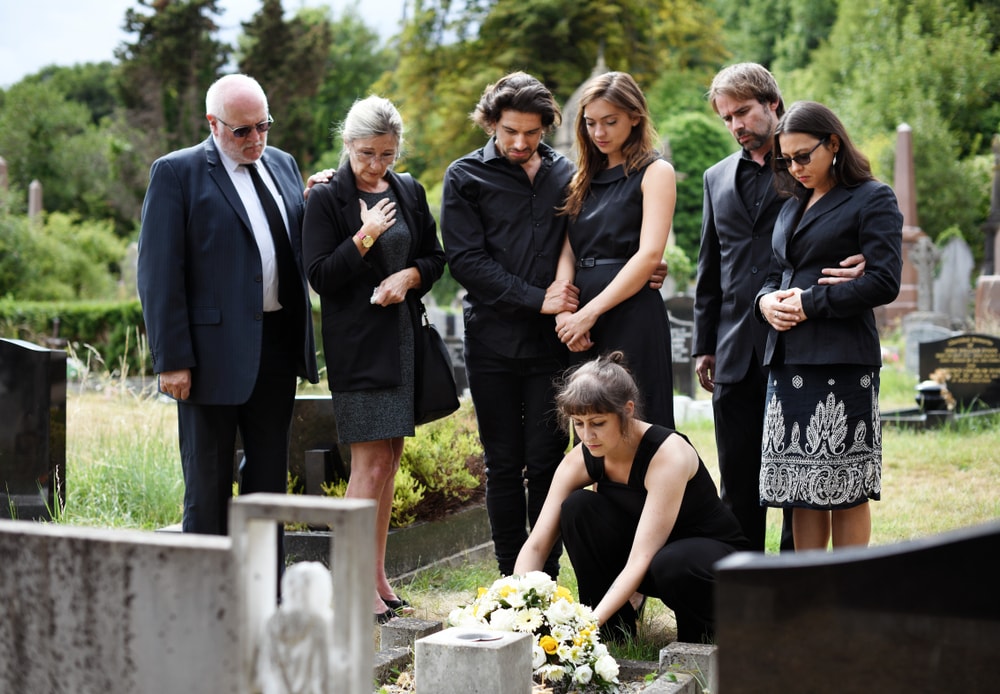
Funerals are social gatherings that bring together people who cared about the person who died. Funerals are in remembrance of the person who died, but they are for the living. The funeral is a special time and place to support one another in grief.
But how do people support one another when they can’t gather together? Like many of us, you’ve probably had a crash course in technology alternatives over the past month. Video meetings are so much better than no gathering at all, and you can help facilitate this. Also, encourage the family to begin to plan a larger memorial service to be held later on. This will be an essential part of helping grieving families affected by the pandemic support one another, and you can take the lead and be a part of the solution.
Expression

When we grieve but don’t mourn, our sadness can feel unbearable, and our many other emotions can fester inside of us. Mourning helps us heal, and the funeral is an essential rite of initiation for mourning. It helps us get off to a good start and sets our mourning in motion.
Because mourners can’t gather for funerals right now, they’re being deprived of a special, sacred time of expression. Funeral elements such as the presence of the body, meaningful music, and the eulogy facilitate the expression of feelings—and those elements are absent right now. Perhaps the best way for you to help families meet this need is to offer some education about the need for expressing their inner thoughts and feelings (grief) outside of themselves (mourning). In fact, I hope you are routinely educating the families you serve about all of these “WHYs” of the funeral, because that is where the true value lies.
Meaning

Did the person I love have a good life? What is life, anyway? Why do we die? There are no simple explanations, but the funeral gives us a time and a place to hold the questions in our hearts and begin to find our way to answers that give us peace.
Without a funeral ceremony, there isn’t an event that helps families embark together on this search for meaning. Instead, their grief experience tends to be more chaotic and unanchored. Many people end up feeling lost and alone. One way you can help with this “WHY” during this time is by making sure families who are so inclined are connected to a religious or spiritual leader in their communities.
Transcendence

Funerals have a way of getting us to wake up—to think about what we truly care about and how we want to spend our precious remaining days. Ultimately, funerals help us embrace the wonder of life and death and remind us of the preciousness of life.
This “WHY” of the funeral is the most esoteric, but it is ultimately the most important. A good aftercare program may the best way for your funeral home to help families work on this need over time, especially in cases when a meaningful ceremony wasn’t possible.
Perhaps the most important overall lesson you can impart to grieving families at this unprecedented time is that a funeral or memorial ceremony will transform their grief journey. It’s best to have a small service (in person, online, or a combination) right now, and a larger service when the restrictions are lifted. If even a small service right now isn’t possible, then it’s absolutely essential to have a memorial service as soon as possible. Please teach families that it’s never too late to have a ceremony, and more than one ceremony is even better in complicated loss situations.
COVID-19 has brought death and grief to the fore in ways not seen in generations. You are in the spotlight, and people are eager to listen and learn. I truly believe that now is a rare opportunity for you to educate, lead, and renew our cultural understanding of and respect for excellent funeral experiences. As Simon Sinek says, “People don’t buy WHAT you do; they buy WHY you do it.” So use this time to teach people the “WHYs”…and watch what happens.
About the Author
Dr. Alan Wolfelt is an author, educator, and grief counselor. Recipient of the Association of Death Education and Counseling’s Death Educator Award, he presents workshops to bereaved families, funeral home staffs and other caregivers, and teaches courses for bereavement caregivers at the Center for Loss and Life Transition in Fort Collins, Colorado, where he serves as director. He provides training to cemetarians and funeral directors on the “WHY” of both meaningful funerals and permanent placement. To contact Dr. Wolfelt, email him at [email protected] or phone him at 970-217-7069. To explore additional resources related to meaningful funerals, go to his website at www.centerforloss.com


Again, it’s common to experience a wide range of emotions about this unprecedented global threat. I mentioned a number of them in the second paragraph: shock, disbelief, anxiety, sadness, loneliness, anger, guilt, and regret. Whatever you are feeling, know that it’s normal. Yet I understand that most of these feelings are unpleasant and uncomfortable. If you spend time each day on being aware of them, naming them, and expressing them outside of yourself in some way, they will soften. So talk about them with others, or write about them in a journal or on tools like social media. You’ll find that fully and honestly expressing all of your feelings will provide you with instant comfort and relief.
Now is an essential time to be mindful of the good in your life. Spend at least a few minutes each day calling to mind the people, experiences, and things that have been and are the most precious to you, then find ways to express those memories and awarenesses. For example, while you’re at home sheltering in place, you might write one personalized thank-you note each day to someone who has meant a lot to you. Tell them about moments and memories that have been particularly meaningful in your life. Starting a gratitude journal is another excellent option. Having gratitude for what was and what is will help you foster hope for what will be.
Treat yourself with patience and compassion. Your pandemic grief needs and deserves tender loving care. Every morning, make a commitment to take care of yourself physically, cognitively, emotionally, socially, and spiritually in at least some small way on that day— for example, a ten-minute walk outside, a crossword puzzle, a brief FaceTime with a friend, a board game or online game with a loved one, and a five-minute prayer or meditation session. All five of these aspects of yourself are crucial to give attention to. If you neglect one or more of them, you’ll find yourself getting out of balance and your pandemic grief and health worsening.
Loss and grief always spur us to search for meaning. It’s natural to wonder why all of this is happening. We’re in what’s called “liminal space” right now, which means we’re suspended in this long, weird pause. There was our life before the pandemic, and in the future there will be our (unknown) life after the pandemic…but right now there is just this period of transition. It’s the time betwixt and between, and it’s uncomfortable. Yet it’s often this enforced discomfort that ultimately transforms us. In liminal times, it’s normal to search for spiritual answers and try to find steady ground. To meet this mourning need, work on mindfulness. Be present in this day and this moment. And devote some time every day to caring for your spirit. Whatever helps you feel joy, meaning, and purpose—do that.
Even during periods of isolation, we as human beings need personal contact. When we are grieving, we also need emotional support. So I encourage you to use this difficult time to build relationships. Talk openly and honestly with the people in your home and be as empathetic as you can. To communicate with others outside your home, video calls are probably the best substitute for face-to-face conversations. Voice calls come second. After that, emails, texting, and social media work too. And don’t forget the power of the handwritten letter! The point is to stay connected as much as possible AND to be open and honest in those communications about whatever it is you are feeling or struggling with at the moment. Your candor will encourage others to be honest as well, creating the opportunity for mutual support and kindness.


How do you know someone is hope-filled? Look for friends and family members who have a hopeful outlook on life. They are people who have a positive energy when they are in your presence, and they make you smile when you simply hear their voice. They are also usually caring, nonjudgmental listeners. The energy they radiate can anchor you right now. Remember—hope is a renewable resource. Borrow it now, and know that in the future, when the time is right, you can pay it forward to someone else in need.