
Did you know that cremation dates back to ancient times? With a history going back so far, it’s no wonder cremation is making a comeback today! Although burial was often the most common disposition for people in Europe, cremation was more common in various Asian countries.
This article provides a look into the earliest records of cremation and its evolution throughout history. Without understanding the past, we can’t fully appreciate cremation’s significance or the modern methods we use today. Let’s dive in!

Early Cremation Practices
While it remains unclear when and by whom cremation first began, various civilizations throughout history have used it to honor their deceased loved ones.
Greece
Historical records show that cremation was a key part of traditional burial customs in ancient Greece. It was particularly practical for death in battle. Cremation was seen as an honorable and peaceful way for the soul to be released from the physical body before journeying to the underworld, the gods’ realm of the dead.
India
According to Hindu teachings, cremation is known as mukhagni. It is part of samsara, the cycle of birth, death, and rebirth, and prepares the soul for its departure from the mortal world. For over 3,000 years, this traditional practice of disposition has been used by Hindus everywhere.
China
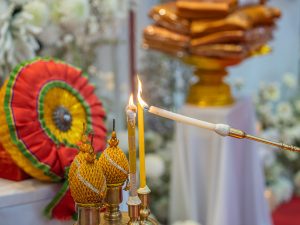
The earliest records of cremation in China date back to 3000 BC. Originally, burial was the standard practice in China, and cremation was viewed as uncivilized and taboo. However, views around cremation changed as Buddhism grew in popularity. The teachings of Buddhism changed the country’s mindset and encouraged people to think of cremation as a practice of bringing peace to the deceased’s spirit and returning the mortal body to nature.
Advancement and Evolution
As the world’s scientific knowledge expanded and technology advanced, the development of a new cremation furnace made cremation more popular. At the 1873 Vienna Exposition, Professor Ludovico Brunetti of Italy introduced a cremation chamber that could replace the open-air pyre. His invention addressed people’s concerns about bacteria and toxic chemicals released during open-air cremation.
The following year, Sir Henry Thompson, one of Queen Victoria’s top surgeons, founded the Cremation Society of England. Thompson was a strong advocate of cremation, especially in Europe, where the population was rapidly increasing and living space was decreasing. Cremation allowed communities to safely and sanitarily take care of the dead while conserving much-needed resources. The Cremation Society of England advocated for legislation to legalize cremation in England but faced strong criticism in a society that relied heavily on burial traditions. England later legalized cremation in 1902, twenty-eight years after the society was founded.
Across the sea, Dr. Francis Julius LeyMoyne performed the first modern cremation by building and using the first crematorium in America in 1876. More cremation societies were established across the country soon after. Thompson’s and LeyMoyne’s advocacy and ideals would spread across the western world as more people became interested in cremation. However, some religious institutions had strict policies about the practice.

The Changing Christian Perspective of Cremation
Religion today still plays a hand in influencing people’s perception of cremation.
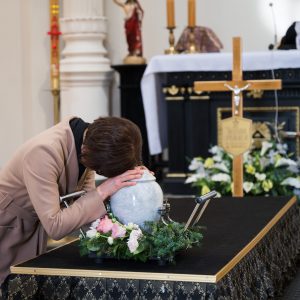
On the one hand, the Catholic Church used to prohibit the practice of cremation among its followers because of the Romans, who practiced it to follow paganism. The Church believes that the human body is created in the image and likeness of God, so burial was their original disposition preference. Over time, the Church has become more flexible about cremation, provided it is used for faithful purposes and follows certain guidelines.
On the other hand, the Protestant faith was more open-minded towards cremation, because its beliefs aren’t centered around ritual practices for death the way Catholicism’s are. Protestant denominations generally believe that if the individual has accepted that they are a sinner and that Jesus is their savior, they will be welcomed into heaven. The final disposition form does not matter as long as the body is taken care of with reverence and care.
Popularity of Cremation Today
Cremation’s popularity has increased due to several societal and religious factors. About 63% of American people prefer cremation, and there are many beneficial reasons to choose it:
- You can still have a service to honor a loved one’s life before or after cremation takes place
- You have varied memorial options, including customized urns or unique keepsakes
- There are many choices for a final resting place, such as scattering, burial, or placement in a columbarium
- Pet cremation is more accessible, and many families are choosing it to honor their beloved pets
Cremation Options to Consider
Today, you can choose between two cremation options: flame cremation and water cremation.
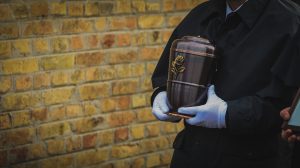
Traditional cremation involves placing the body in a cremation retort, a chamber built to withstand high temperatures, where the cremation takes place over several hours. A crematory operator oversees the process and ensures that the entire body is cremated completely. The bones are removed and processed into ashes after the cremation. The family then receives and honors the ashes of their loved one.
Water-based cremation, or aquamation, involves placing the body in a sealed chamber before filling it with water and a controlled amount of alkaline chemicals. The chamber is heated at low temperatures, and the body decomposes and dissolves. The liquid byproduct is returned to the earth in an environmentally friendly way, and the remaining bones are transformed into fine powder before being returned to the family. A quick note: Aquamation isn’t widely available yet, so ask your funeral director about the possibility.
These options are scientifically tested and considered safe ways of handling a body. If you have any questions about today’s cremation processes, your funeral director is an excellent source for up-to-date, comprehensive information.

Throughout history, cremation has seen its ups and downs. Today’s practices remain rooted in religion and culture. Thanks to scientific innovation, the cremation process is available today. Cremation is widely available, and the possibilities for personalization and memorialization are nearly endless.