Needless to say, the coronavirus pandemic of 2020 is a challenging time for everyone. But if someone you love has died, it is likely that the current social distancing orders and travel restrictions are making funeral planning especially difficult for your family.
Losing a loved one is hard enough. Losing a loved one at a time of unprecedented upheaval and limitations may seem overwhelming. I am sorry you have been put in this position, and I hope this article will help your family find ways to meet your mourning needs and honor the person who died while making any necessary adjustments to keep everyone safe.
Spending Time with the Body
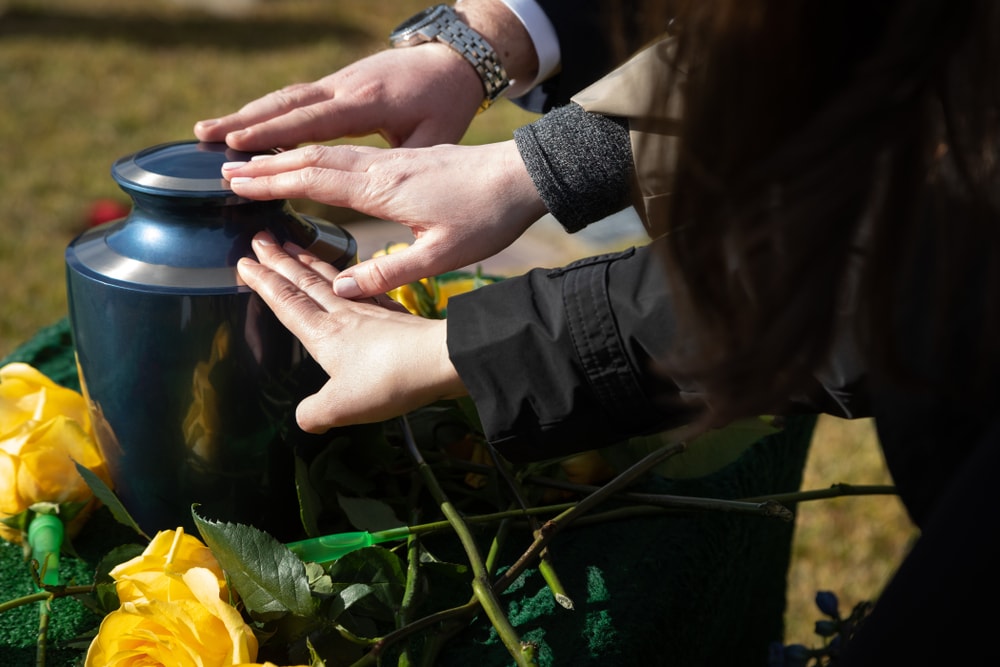
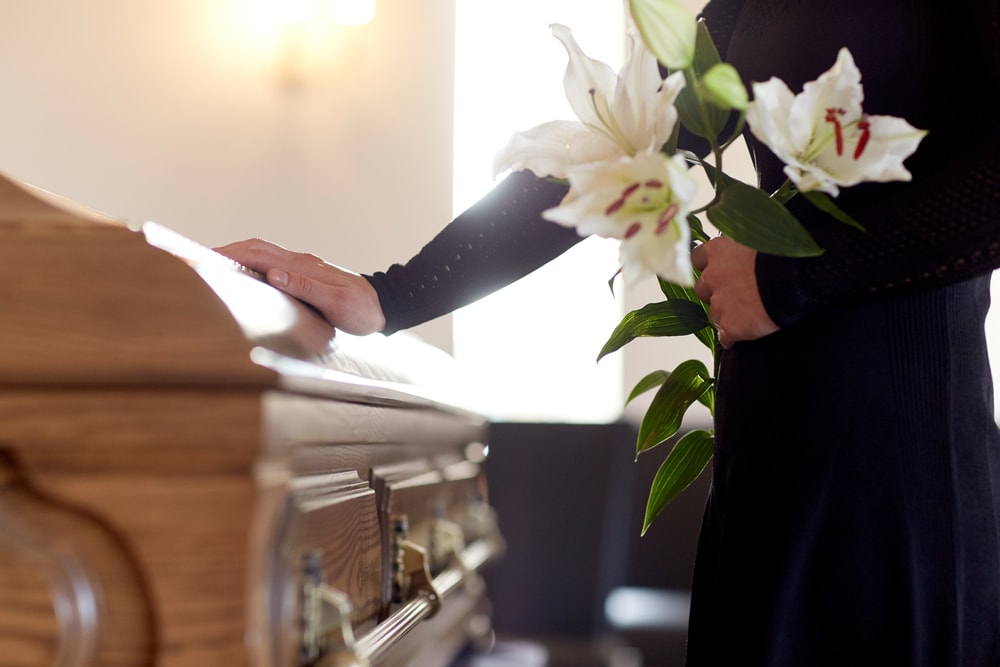
Before cremation or burial, spending time with the body of a loved one who has died helps mourners truly and fully acknowledge the reality of the death. It also provides a precious last chance to say goodbye “in person.” When possible and culturally appropriate, I always recommend at least a few minutes of private family time with the body, both at the place of death, when possible, and at the funeral home. Public visitations for all mourners are also very meaningful, as are funerals in which the body is present (in a casket or urn) during the ceremony.
During the pandemic, you may encounter hurdles, however. If visitor or travel restrictions made it impossible for you to be with the dying person at home or in the hospital or nursing home, I urge you to spend time with the body at the funeral home if you can (again, whether before burial or cremation). If the person died of COVID-19, you may wonder if it is safe to spend time with the body or have an open-casket visitation. Rest assured that at the time of this writing, the Centers for Disease Control and Prevention has stated that because the virus spreads by exhaled or sneezed droplets, there is no known risk associated with spending time with the body after death, though out of an abundance of caution, they have advised families not to touch, kiss, or handle the body. The funeral home you are working with has the expertise to manage this situation safely.

Planning the Funeral
First let me say that funerals are meaningful, essential rites of passage. We have had funerals since the beginning of time because they help us:
- acknowledge the reality of a death
- remember the person who died and share those memories with others
- support one another in our grief
- express our inner thoughts and feelings
- mark the significance of the life that was lived
- embrace the wonder of life and death
I realize that many people today, through no fault of their own, have never been taught these reasons why funerals are so critically important. And so, especially during this strange, stressful time, you may be tempted to simply skip the funeral altogether. It may seem an easier and more practical choice. Yet for you and for the other mourners, this would be a lasting mistake. When no ceremony is held, I have learned from many mourners that in the months and years after the death, they often feel a surreal sense that the death didn’t really happen. They commonly feel lonely and unsupported, and they also tend to feel regret over not having adequately honored the life of the person who died.
Yet while funerals are extremely important, I also understand that funeral planning may be much more difficult right now. I hope the following ideas will help you find ways to address any hurdles you may be encountering.
Try to have an initial funeral service in a timely fashion.
Because funerals are so effective at helping us embark on a healthy mourning path, anything that delays the funeral also delays the natural healing process. I recommend having a service shortly after the death if at all possible. Keep in mind that you can have more than one service for a loved one, however. If pandemic gathering and travel restrictions prevent you from having a larger ceremony, consider having a small, brief service right now (possibly a graveside committal service or a brief service preceding cremation), with the closest mourners present, followed by a larger memorial service later on. If there are more than ten people in your group of primary mourners and it would be wrong to exclude anyone from this small initial service, please talk to the person officiating the service about holding it more than once. I personally know families who have done this in recent weeks. When asked, their officiants were gracious enough to recognize the need to accommodate more than ten mourners and simply held two services back-to-back, with a short break in between.
Consider having a small ceremony wherever you are.
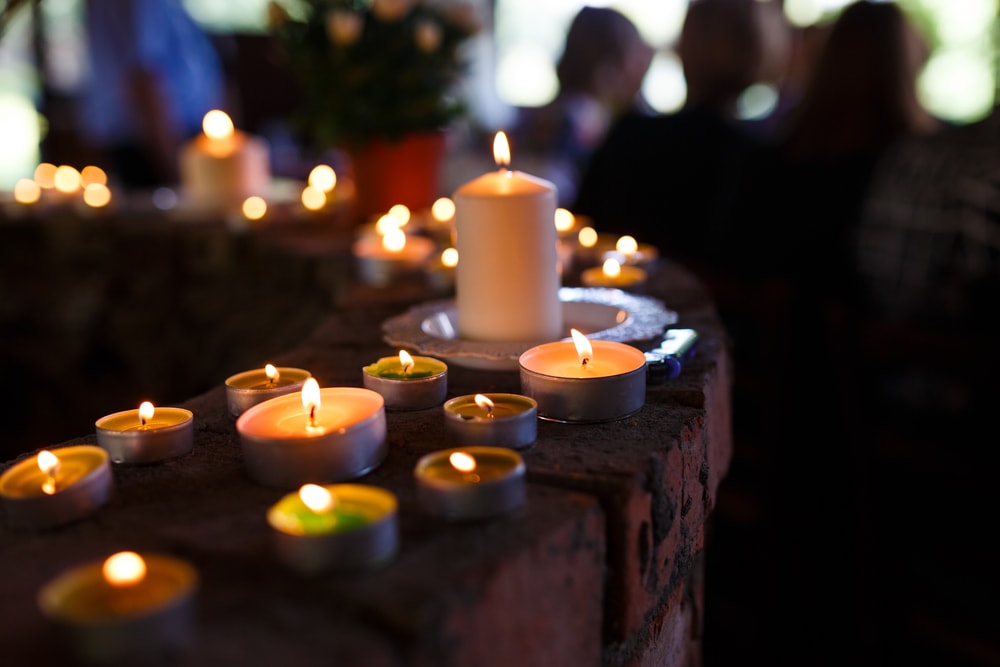
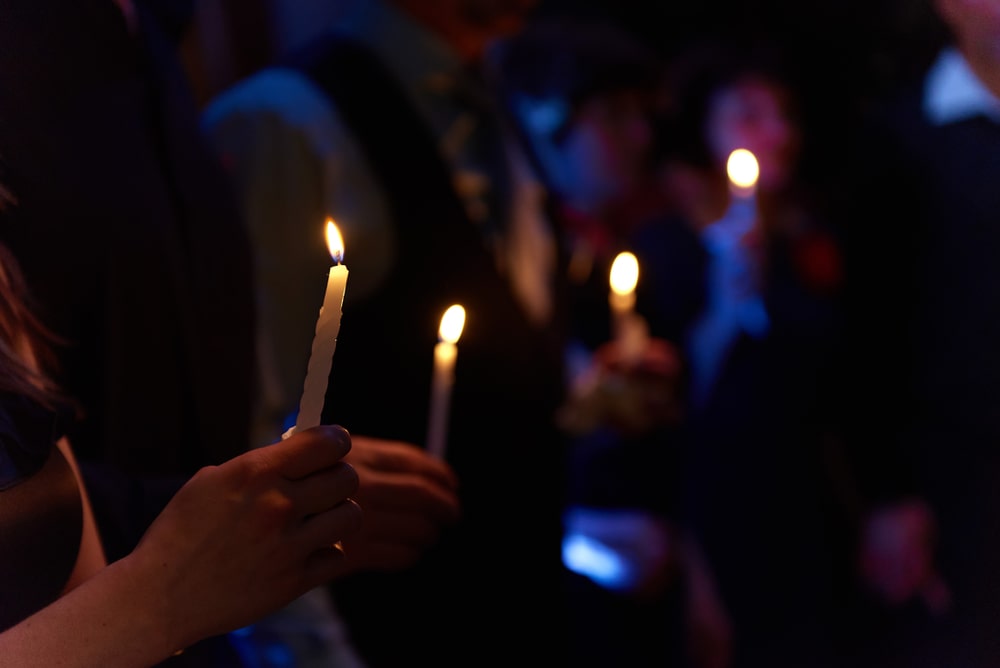
If you cannot be close to the person who died, it is still helpful and healing to hold a small ceremony right now wherever you are. Simply gather a few close friends or family members, display photos of the person who died, light a candle, say a prayer or read a text aloud that is meaningful to you, play music if you’d like, and share thoughts and memories. You will find that this informal “funeral” will help you mark the occasion of the death, pay tribute to person who died, and feel that sense of acknowledgment, remembrance, and support.

Leverage technology to foster closeness and participation.
At a time of great loss, we want our loved ones close. If the pandemic is making this impossible, the next best thing is to use technology to reach out to the people you care about to share news of the death, support one another, and discuss funeral planning. Video calls are probably the best substitute for face-to-face conversations. Voice calls come second. After that, emails, texting, and social media work too. And don’t forget the power of the handwritten letter! The point is to stay connected as much as possible AND to be open and honest in those communications about whatever it is you are feeling or struggling with at the moment. Your candor will encourage others to be honest as well, creating the opportunity for mutual support and kindness.
Technology can and should also be used to help overcome any limitations of the funeral service itself, of course. Services can be webcast or recorded and made available online later. Obituaries, guest books, and video tributes can be (and often are) placed online. Mourners can video themselves talking about the person who died, recording their condolences, or even recording themselves reciting a poem, playing a hymn on a musical instrument, or singing a meaningful song. Social media is also very effective at helping keep everyone up-to-date about details and providing chances for far-flung friends and family to support one another. And turning to technology is also a good way to involve others in the funeral-planning process. People always want to help—and that is especially true right now, when many are stuck at home, feeling bored and helpless. Tech-savvy friends and family members can all pitch in to help create those videos, edit and upload those photos, write those social media posts, etc. The more people who participate, the better.
Plan a larger service and/or reception when pandemic restrictions have lifted.
The social distancing restrictions have made us all more aware of our human need to be with and touch the people we care about. When death affects our social circle, we naturally feel the need to congregate and support one another in person. Even if you must delay a larger public gathering, those who want to support you will still be happy to attend months from now. Don’t assume that there’s a time limit on holding this larger public gathering. Everyone understands that the pandemic is affecting public events. Again, I encourage you to hold a small initial service right away and then schedule the additional service down the line.
As you make final plans for your loved one during this historic pandemic, you will probably come up with other innovative ideas to pay tribute, foster community, and share hope. If you do, I hope you will tell me about them by emailing me at [email protected]. You and all families touched by death during the coronavirus outbreak are in my thoughts and prayers. Godspeed.
About the Author
Dr. Alan D. Wolfelt is an author, educator, and grief counselor. He serves as Director of the Center for Loss and Life Transition in Fort Collins, Colorado, and is on the faculty at the University of Colorado Medical School’s Department of Family Medicine. Among his many bestselling books are Understanding Your Grief, Grief Day by Day, and Creating Meaningful Funeral Ceremonies: A Guide for Families. To order Dr. Wolfelt’s books and for more information, visit www.centerforloss.com.





 8. You have the right to search for meaning.
 10. You have the right to move toward your grief and heal.









 This triangle graphic captures the purposes of the funeral ceremony. It puts the simplest and most fundamental reasons on the bottom and works it way up to more esoteric yet significant reasons. Let’s review each “WHY,” then let’s consider how COVID-19 is interfering…and what you can do about it.








 Again, it’s common to experience a wide range of emotions about this unprecedented global threat. I mentioned a number of them in the second paragraph: shock, disbelief, anxiety, sadness, loneliness, anger, guilt, and regret. Whatever you are feeling, know that it’s normal. Yet I understand that most of these feelings are unpleasant and uncomfortable. If you spend time each day on being aware of them, naming them, and expressing them outside of yourself in some way, they will soften. So talk about them with others, or write about them in a journal or on tools like social media. You’ll find that fully and honestly expressing all of your feelings will provide you with instant comfort and relief.
 Now is an essential time to be mindful of the good in your life. Spend at least a few minutes each day calling to mind the people, experiences, and things that have been and are the most precious to you, then find ways to express those memories and awarenesses. For example, while you’re at home sheltering in place, you might write one personalized thank-you note each day to someone who has meant a lot to you. Tell them about moments and memories that have been particularly meaningful in your life. Starting a gratitude journal is another excellent option. Having gratitude for what was and what is will help you foster hope for what will be.
 Treat yourself with patience and compassion. Your pandemic grief needs and deserves tender loving care. Every morning, make a commitment to take care of yourself physically, cognitively, emotionally, socially, and spiritually in at least some small way on that day— for example, a ten-minute walk outside, a crossword puzzle, a brief FaceTime with a friend, a board game or online game with a loved one, and a five-minute prayer or meditation session. All five of these aspects of yourself are crucial to give attention to. If you neglect one or more of them, you’ll find yourself getting out of balance and your pandemic grief and health worsening.
 Loss and grief always spur us to search for meaning. It’s natural to wonder why all of this is happening. We’re in what’s called “liminal space” right now, which means we’re suspended in this long, weird pause. There was our life before the pandemic, and in the future there will be our (unknown) life after the pandemic…but right now there is just this period of transition. It’s the time betwixt and between, and it’s uncomfortable. Yet it’s often this enforced discomfort that ultimately transforms us. In liminal times, it’s normal to search for spiritual answers and try to find steady ground. To meet this mourning need, work on mindfulness. Be present in this day and this moment. And devote some time every day to caring for your spirit. Whatever helps you feel joy, meaning, and purpose—do that.
 Even during periods of isolation, we as human beings need personal contact. When we are grieving, we also need emotional support. So I encourage you to use this difficult time to build relationships. Talk openly and honestly with the people in your home and be as empathetic as you can. To communicate with others outside your home, video calls are probably the best substitute for face-to-face conversations. Voice calls come second. After that, emails, texting, and social media work too. And don’t forget the power of the handwritten letter! The point is to stay connected as much as possible AND to be open and honest in those communications about whatever it is you are feeling or struggling with at the moment. Your candor will encourage others to be honest as well, creating the opportunity for mutual support and kindness.











 How do you know someone is hope-filled? Look for friends and family members who have a hopeful outlook on life. They are people who have a positive energy when they are in your presence, and they make you smile when you simply hear their voice. They are also usually caring, nonjudgmental listeners. The energy they radiate can anchor you right now. Remember—hope is a renewable resource. Borrow it now, and know that in the future, when the time is right, you can pay it forward to someone else in need.